By Thomas AxelssonPublished Updated 4 min read
Germany is easy to cross without a plane: of its 537 destinations, 410 are connected to the route network. From Munich you can reach 1,436 places within eight hours, and the train from London to Berlin takes 9h 32m and emits 15 kg of CO₂, against 119 kg for the flight.
How do you get around Germany without flying?
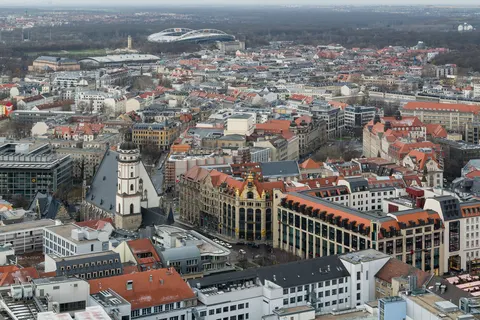
Start with the big cities, because the trains between them are quick. Berlin to Hamburg takes 1h 49m with DB Fernverkehr AG and emits 4.5 kg of CO₂, against 59 kg for the flight, a saving of 92%. Leipzig is just 1h 14m from Berlin at 2.6 kg, and Bremen is 1h 15m from Hamburg at 1.7 kg. Munich to Berlin is a 240-minute DB train at 5 kg, against 116 kg for the flight.
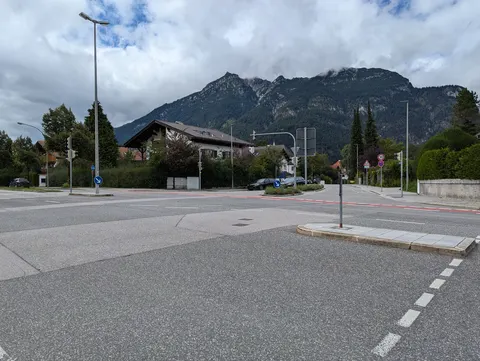
Where the rail map thins out, buses fill the gaps. From Hamburg, a FlixBus-eu coach runs to Prague in 7h 55m and emits 13 kg, against 63 kg for the flight, a saving of 79%. Garmisch-Partenkirchen is linked to Munich by bus in 1h 11m, to Innsbruck in 1h 05m, and to Trento in Italy in 3h 59m.
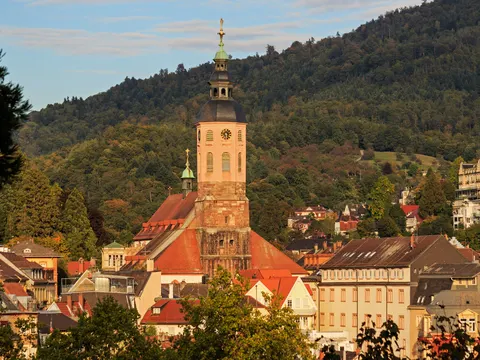
You do not have to begin in a big name, either. The best-connected cities include Munich with 52 direct links, Hamburg with 29 and Berlin with 28. Not every famous name is on the network, though: Baden-Baden has no direct links in Sustainate's data, so you would plan that stop from a nearby hub.
Which cities in Germany have the most direct links?
Munich tops the list of main destinations with 52 direct links, ahead of Hamburg with 29 and Berlin with 28. The table also shows how far you can get from each one in a day.
| Destination | direct links | reach in 8 hours | reach in 14 hours |
|---|---|---|---|
| Munich | 52 | 1,436 | 2,681 |
| Hamburg | 29 | 800 | 2,264 |
| Berlin | 28 | 1,010 | 2,398 |
| Leipzig | 22 | 1,094 | 2,449 |
| Garmisch-Partenkirchen | 7 | 914 | 2,551 |
Berlin sends trains to Vienna in 8h 00m and to Prague in 4h 30m, and to Hamburg in under 2 hours. Munich reaches Berlin in 4h 00m and Vienna in 4h 00m, both by train.
Smaller places are worth a look. Leipzig has 22 direct links, with Berlin 1h 14m away by train, Prague 3h 15m away by bus, and Munich 5h 21m away by bus at 9.7 kg, against 83 kg for the flight. Garmisch-Partenkirchen has only seven links, yet it reaches 914 destinations within eight hours.
Which trips cross the border from Germany?
Germany's international routes run well beyond its neighbours. Austria, Belgium, Denmark, France, Italy, Norway, Poland, Sweden, Switzerland and others are among the connected countries, and the list goes on to Hungary, Romania and Serbia. The listed crossings below show what each costs in time and CO₂.
- Berlin to Prague in the Czech Republic: a 270-minute train on CD/DB, emitting 8 kg of CO₂ against 36 kg for the flight, a saving of 78%.
- Berlin to Vienna in Austria: a 480-minute train, emitting 10 kg against 67 kg, a saving of 85%.
- Munich to Vienna in Austria: a 240-minute ÖBB train, emitting 5 kg against 45 kg, a saving of 89%.
- Leipzig to Prague: a 195-minute bus, emitting 5.5 kg against 26 kg, a saving of 79%.
- Munich to Prague: a 286-minute FlixBus-eu bus, emitting 8.1 kg against 38 kg, a saving of 79%.
The long hauls still work. Berlin to Rome takes 13h 49m and emits 20 kg of CO₂ against 151 kg for the flight, a saving of 87%. Berlin to Budapest takes 10h 50m at 13 kg, against 88 kg by air.
Which month suits each kind of trip in Germany?
The seasons pull in different directions. Winter sports have the shortest list, with 30 destinations in January for Snow & Ski, while Nature & Hiking peaks in June with 115. City & Culture offers the widest choice in September, with 126.
- Snow & Ski: January, with 30 destinations.
- City & Culture: September, with 126 destinations.
- Nature & Hiking: June, with 115 destinations.
For city breaks, the sweet spot depends on where you are heading, and winter is the cold end of the scale: Berlin, Hamburg, Munich and Leipzig all have their lowest highs, 3 °C, in January. Spring and early autumn are kinder. Berlin, Munich and Leipzig peak in May at 18 °C, while Baden-Baden peaks in May at 19 °C. Hamburg peaks in September, also at 18 °C. In July and August, Berlin reaches 23 °C and Hamburg 22 °C. Garmisch-Partenkirchen peaks for skiing in January at 2 °C and for hiking in June at 20 °C.
How much CO₂ does going by train save?
Every route in the table saves between 84% and 96%. London to Cologne is the quickest of them, a Eurostar of 4h 07m that emits 6 kg of CO₂ against 64 kg for the flight.
| Route | train time | train CO₂ | flight CO₂ | saved |
|---|---|---|---|---|
| London to Berlin | 9h 32m | 15 kg | 119 kg | 87% |
| London to Hamburg | 9h 09m | 15 kg | 92 kg | 84% |
| London to Munich | 8h 14m | 6.4 kg | 117 kg | 95% |
| London to Cologne | 4h 07m | 6 kg | 64 kg | 91% |
| Berlin to Paris | 8h 15m | 12 kg | 112 kg | 89% |
| Berlin to Rome | 13h 49m | 20 kg | 151 kg | 87% |
Time is the price you pay on most of them. Door to door, London to Berlin is 3h 46m slower than flying and London to Hamburg 3h 41m. London to Cologne is the exception, 1h 03m faster than the flight. The carbon gain is large: London to Berlin saves 104 kg of CO₂ and London to Hamburg saves 77 kg. A night train is an option on the Berlin route, taking 13h 35m with Eurostar, DB Fernverkehr AG and European Sleeper and emitting 12 kg, which is 4h 03m longer than the daytime journey. The method behind these figures is set out on the methodology page.