By Thomas AxelssonPublished Updated 4 min read
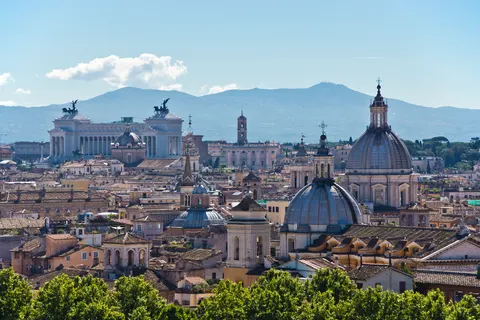
Italy has 689 destinations in Sustainate's data, 449 of them connected to the route network, and you can cross much of it without a plane. Rome has 38 direct links, and the Berlin to Rome journey takes 13h 49m and emits 20 kg of CO₂ against 151 kg for the flight.
How do you get around Italy without flying?
Rail does most of the work between the big cities, and buses carry the rest. A Trenitalia train from Rome to Milan takes 3h 00m and emits 4 kg of CO₂, against 109 kg for the flight, a saving of 96%. Rome to Florence takes 1h 32m at 2.9 kg over 231 km, against 53 kg by air.
Buses fill the gaps where trains do not reach. FlixBus-eu runs from Rome to Siena in 2h 39m, emitting 5 kg against 42 kg for the flight, a saving of 88%. Siena to Bologna by the same operator takes 2h 16m at 3.5 kg, while the train from Siena to Florence takes 1h 28m at 0.6 kg over 51 km.
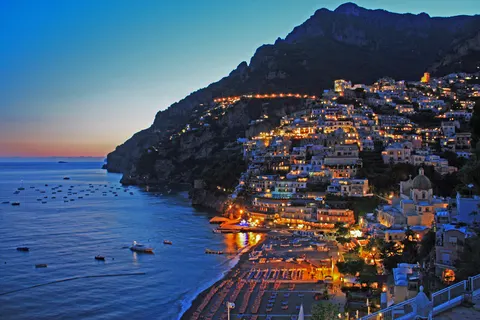
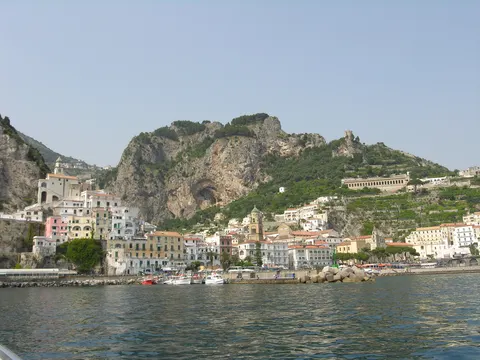
The south and the coast rely more on buses. Matera links to Bari in 1h 05m, to Altamura in 19 minutes and to Policoro in 1h 05m, all by FlixBus-eu. On the Amalfi coast, SITA buses join Positano and Amalfi in 48 minutes at 1 kg, and Amalfi to Sorrento takes 1h 30m at 2 kg.
How many direct links do the main Italian destinations have?
Rome has 38 direct links, far ahead of the others in this guide. The table sets the links beside how far each place reaches in a day.
| Destination | direct links | reach in eight hours | reach in fourteen hours |
|---|---|---|---|
| Rome | 38 | 482 | 1,701 |
| Siena | 11 | 381 | 1,564 |
| Pompei | 4 | 277 | 1,257 |
| Matera | 3 | 145 | 499 |
| Amalfi | 3 | 145 | 797 |
| Positano | 1 | 77 | 540 |
The gap between Rome and the small places is wide, and it matters when you plan. The south and the coast reach far fewer destinations in a day than the capital, so build in more time and expect to change at a bigger hub.
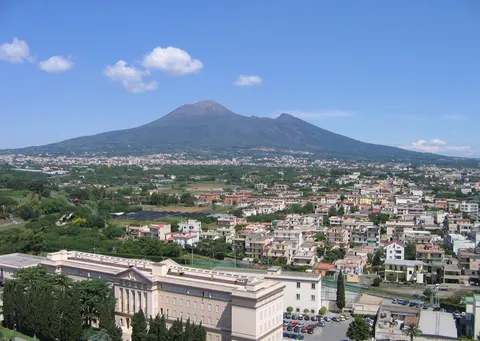
Pompei has four links, all short buses: Naples in 26 minutes, Salerno in 29 minutes and Sorrento in 55 minutes, run by FlixBus-eu. Positano has a single link, the 48-minute SITA bus to Amalfi, so you come in through another town first. Amalfi has three, with Ravello 24 minutes away by SITA Sud.
Which trips cross the border from Italy?
Italy has 174 international routes, to Albania, Austria, Croatia, France, Germany, Malta, Monaco, San Marino, Slovenia, Spain and Switzerland. Four crossings show the range.
- Berlin to Rome from Germany: 13h 49m with two changes, combining train and bus, emitting 20 kg against 151 kg, a saving of 87%.
- Berlin to Milan from Germany: 10h 42m with three changes, all by train on DB, DB/ÖBB, ÖBB/Trenitalia and Trenitalia, emitting 12 kg against 108 kg, a saving of 89%.
- London to Genoa from the United Kingdom: 10h 35m with three changes, by train and bus on Eurostar, SNCF VOYAGEURS and FlixBus-eu, emitting 8.1 kg against 133 kg, a saving of 94%.
- Rome to Budapest: 14h 40m at 15 kg, against 103 kg for the flight.
Madrid to Milan takes 15h 01m and emits 19 kg against 152 kg, a saving of 88%. Rome to Hamburg takes 15h 58m at 24 kg, against 167 kg by air. Each crossing is a chain of listed links, so allow slack and check the connections for your travel date before you plan the rest of the trip.
Which month suits each kind of trip in Italy?
Each kind of trip has its own season, and the number of destinations that qualify shows how wide the choice is.
- Sun & Beach: July, with 316 destinations.
- Snow & Ski: January, with 106 destinations.
- City & Culture: October, with 136 destinations.
- Nature & Hiking: June, with 182 destinations.
Within those months, places differ, and so does the weather you can expect. Rome peaks for city trips in April at 18 °C, and Siena in October at 19 °C. Matera peaks in April at 17 °C, though its July high reaches 30 °C. Positano and Amalfi share a May peak for hiking and culture at 19 °C, and Pompei peaks for culture in May at 20 °C. Beach weather peaks in August at Positano, 26 °C, and in July at Amalfi and Pompei, 26 °C and 27 °C. Rome's highs reach 30 °C in July and August, so a summer city break there is hot.
How much CO₂ does going by train save?
Every route in the table cuts emissions by at least 85%. The savings come with a longer journey, though, and the door-to-door gap is worth a look.
| Route | train time | train CO₂ | flight CO₂ | saved |
|---|---|---|---|---|
| London to Rome | 12h 52m | 10 kg | 183 kg | 95% |
| London to Genoa | 10h 35m | 8.1 kg | 133 kg | 94% |
| Berlin to Milan | 10h 42m | 12 kg | 108 kg | 89% |
| Berlin to Rome | 13h 49m | 20 kg | 151 kg | 87% |
| Rome to Budapest | 14h 40m | 15 kg | 103 kg | 85% |
| Rome to Hamburg | 15h 58m | 24 kg | 167 kg | 86% |
Door to door, the flight from Berlin to Rome takes 6h 06m, so the train is 7h 43m slower. London to Genoa is 4h 41m slower than flying and Berlin to Milan 5h 04m. In return, Berlin to Rome saves 131 kg of CO₂, London to Genoa saves 125 kg and Berlin to Milan saves 96 kg. The method behind these figures is on the methodology page.