By Thomas AxelssonPublished Updated 4 min read
You can get around Switzerland without flying: Sustainate lists 262 Swiss destinations and 459 domestic routes between them. A trip such as Madrid to Zurich takes 14h 11m by train and emits 22 kg of CO₂, against 159 kg for the flight.
How do you get around Switzerland without flying?
Many Swiss links are short enough to feel like a stroll between stops. From Interlaken, Lauterbrunnen is 10 minutes away by Busbetrieb BOB bus at 0.3 kg of CO₂, and Grindelwald is 20 minutes away by Berner Oberland-Bahnen train at 0 kg. Bern is an hour away on SBB/BLS, emitting 1 kg. In Lauterbrunnen, Mürren and Wengen are each 3 minutes away by PostAuto AG bus.
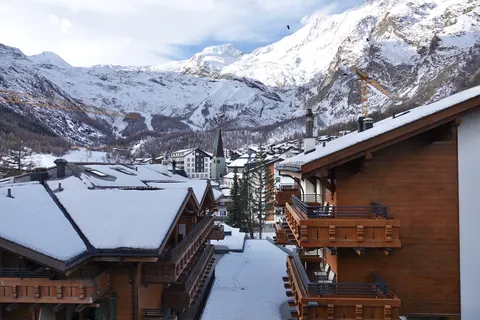
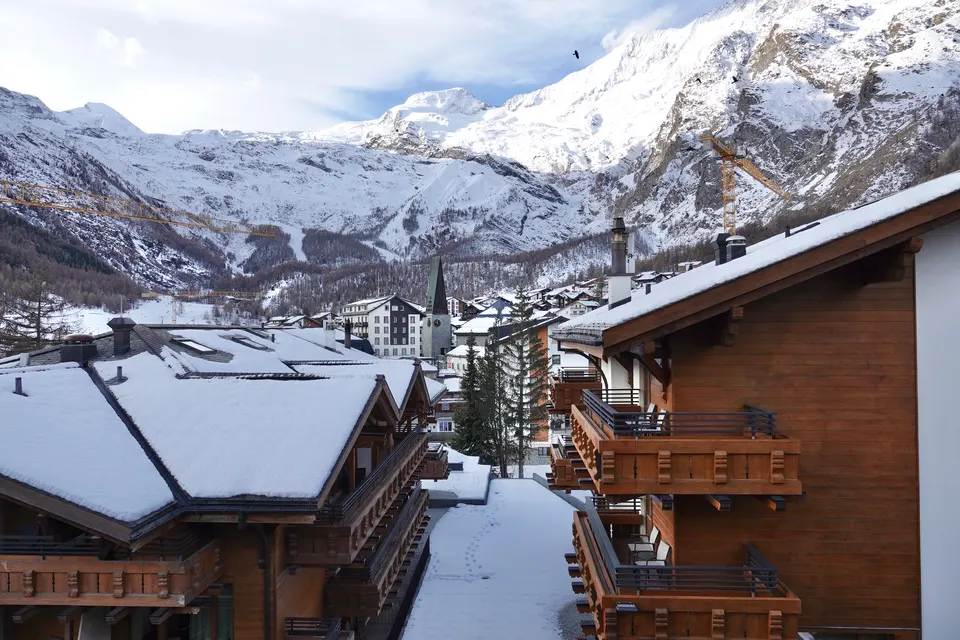
The mountain villages lean on buses. Saas-Fee has a single link, to Visp: 29 minutes by PostAuto AG bus at 0.6 kg. Grindelwald has one link too, but that one is by train.
St. Moritz shows how far the Rhätische Bahn reaches. Chur is 1h 57m away at 0.1 kg of CO₂, and Tirano, across the border in Italy, is 2h 4m away at 0.3 kg. Livigno takes 1h 30m on a Postauto bus.
Each change adds time, so leave some slack at every connection. These are journey times rather than timetables, so check the times for your travel date before you set off.
How many direct links do the hubs in Switzerland have?
Geneva leads with 24 direct links, by bus, ferry and train. St. Moritz has 10, Interlaken 8, Lauterbrunnen 3, and Grindelwald and Saas-Fee one each.
The links say where a hub leads. Geneva's 24 include Chamonix-Mont-Blanc by FlixBus-eu bus in 1h 10m, Dijon in 3h 25m and Marseille in 6h 32m. Interlaken's 8 are a mix of buses and trains.
Reach tells a different story, about how far a single day can take you. From Geneva you can get to 1,013 destinations within 8 hours, and from Interlaken to 809. Lauterbrunnen reaches 678, Grindelwald 650, Saas-Fee 612 and St. Moritz 593. Within 14 hours the figures even out: Interlaken reaches 2,233, Geneva 2,232, Lauterbrunnen 2,158, St. Moritz 2,144, Grindelwald 2,139 and Saas-Fee 2,128. A hub such as Grindelwald, with one link by train, follows the rail network alone.
Which trips cross the border from Switzerland?
Switzerland links to Austria, France, Germany, Italy, Liechtenstein, Luxembourg and Monaco, with 146 international routes against 459 domestic ones. These crossings start at Swiss hubs.
- St. Moritz to Tirano: a 2h 4m Rhätische Bahn train, emitting 0.3 kg of CO₂.
- St. Moritz to Livigno: a 1h 30m Postauto bus, emitting 0.6 kg.
- Geneva to Chamonix-Mont-Blanc: a 1h 10m FlixBus-eu bus, emitting 1.7 kg.
- Geneva to Dijon: a 3h 25m FlixBus-eu bus, emitting 4.1 kg.
- Geneva to Marseille: a 6h 32m FlixBus-eu bus, emitting 8.9 kg.
The Marseille bus shows the gap with flying clearly: it emits 8.9 kg against 42 kg for a flight, a saving of 79%. Longer trips into Geneva save more. Seville to Geneva takes 14h 9m and emits 15 kg against 179 kg, a saving of 92%, and Malaga to Geneva takes 13h 36m and emits 13 kg against 175 kg, a saving of 93%.
When should you go to Switzerland?
Each kind of trip has its own season. January suits Snow & Ski, with 93 destinations. June suits Nature & Hiking, with 112, and September suits City & Culture, with 35.
Within that, the months vary by place. Interlaken's Snow & Ski months are January, December and February. St. Moritz's run from February, December and January through March, November and April. For walking, Interlaken's Nature & Hiking months run from April to October, and St. Moritz's from June to September.
The average highs show the spread. Interlaken averages 4 °C in January and 23 °C in July and August. Geneva's high is 6 °C in January and December and 25 °C in July. St. Moritz's is -5 °C in January and 17 °C in July.
The peak months and average highs for six places:
- Interlaken, Snow & Ski: January, average high 4 °C
- Interlaken, Nature & Hiking: September, average high 19 °C
- St. Moritz, Snow & Ski: February, average high -3 °C
- Lauterbrunnen, Nature & Hiking: June, average high 19 °C
- Saas-Fee, Nature & Hiking: July, average high 16 °C
- Geneva, City & Culture: May, average high 19 °C
How much CO₂ does going by train save?
The three long trips into Zurich, from Madrid, Rome and Budapest, all cut emissions sharply. Madrid to Zurich emits 22 kg of CO₂ by train against 159 kg by air, which saves 137 kg, or 86%. Rome to Zurich saves 79 kg (91%), and Budapest to Zurich saves 88 kg (87%).
Other routes into Zurich follow the same pattern. Copenhagen to Zurich takes 13h 17m and saves 85%, Valencia to Zurich takes 13h 47m and saves 86%, and Warsaw to Zurich takes 14h 10m and saves 88%.
The train is not the faster option door to door on these pairs. The flight from Madrid to Zurich takes 6h 11m once airport time is counted, so the train is 8h 00m slower. Rome to Zurich is 1h 25m slower by train, and Budapest to Zurich is 5h 16m slower.
What should you plan around on a long rail trip?
Count the changes. The Madrid to Zurich train has two transfers across three operators: RENFE OPERADORA, SNCF / Renfe and TGV Lyria. Rome to Zurich has one transfer, on Trenitalia and SBB/Trenitalia, and Budapest to Zurich has one, on ÖBB/MAV and ÖBB. The journey times count each change as a flat allowance, so build in slack of your own.
To see what the flight figures include and how the train figures are built, read how Sustainate calculates CO₂.