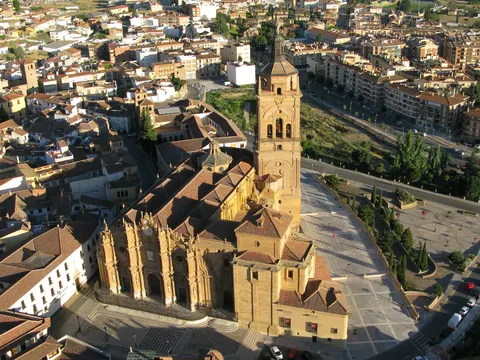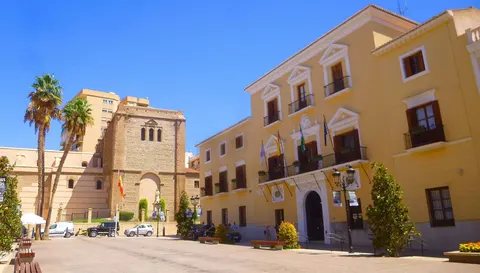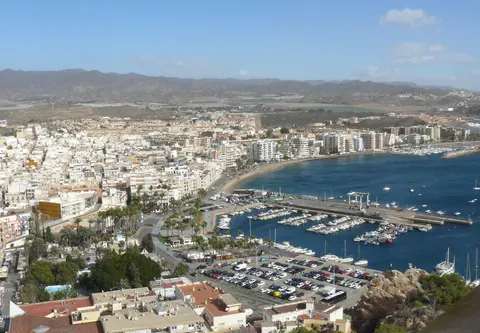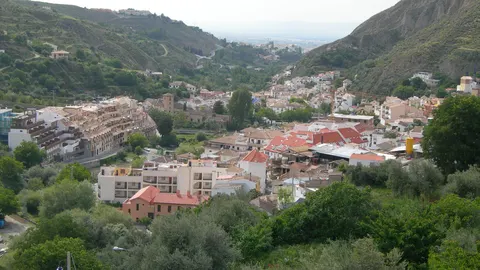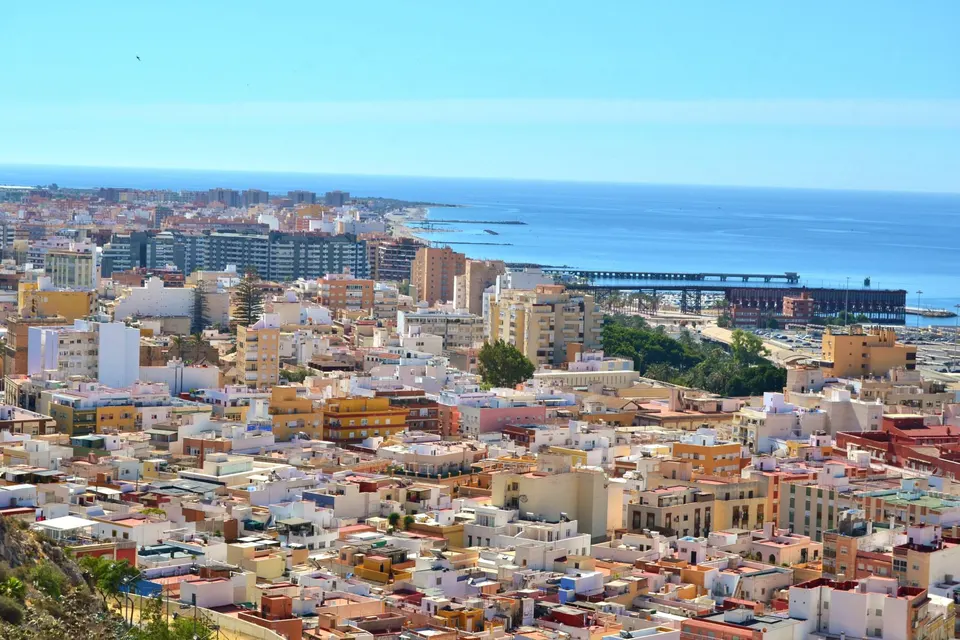

Almería is a city and municipality in Andalusia, the capital of the province of the same name. It lies in southeastern Spain, between the eastern fringes of the Sierra de Gádor and the Andarax riverbed, along the coast of the Gulf of Almería. The city was founded in 955 and grew wealthy in the Islamic era. It sits beside a small desert, so its climate is exceptionally dry by European standards.
With about 197,000 inhabitants, Almeria lies in Andalusia, Spain, and is a rail hub.
Why go to Almeria?
The dry landscape is the first draw. Numerous Spaghetti Westerns were filmed in the desert of Tabernas, and some of the film sets are still standing as a tourist attraction. David Lean and John Milius also filmed there, and Lawrence of Arabia was shot in the area. The Cabo de Gata-Níjar Natural Park, of volcanic origin, is the largest marine-terrestrial space of its kind in the European Western Mediterranean, and its former fishing villages and beaches are now tourist spots. Alborán Island, which the city administers, has a 19th-century lighthouse.
When is the best time to visit Almeria?
Average highs range from 15 °C in January to 29 °C in July and August. June, July and September are the time for beach holidays. For city breaks, any month of the year works.
How do I get to Almeria without flying?
Direct bus or train services link Almeria with 2 destinations. Allowing for changes, 268 destinations are no more than 14 hours away without flying. Murcia is 2h 30m away by bus with ALSA, with about 3 kg of CO₂ per person against 40 kg for the flight, 93% less. The train from Guadix with RENFE OPERADORA takes 1h 34m; that is about 0.8 kg of CO₂ per person.
What to do in Almeria
Spaghetti Western film sets
Sets from the films shot in the Tabernas desert, some of which still remain as a tourist attraction.
Cabo de Gata-Níjar Natural Park
A natural park of volcanic origin with beaches, running through the municipal areas of Níjar, Almerimar and Carboneras.
Alborán Island
A small island that the city administers, with a harbour, a small cemetery and a 19th-century lighthouse.