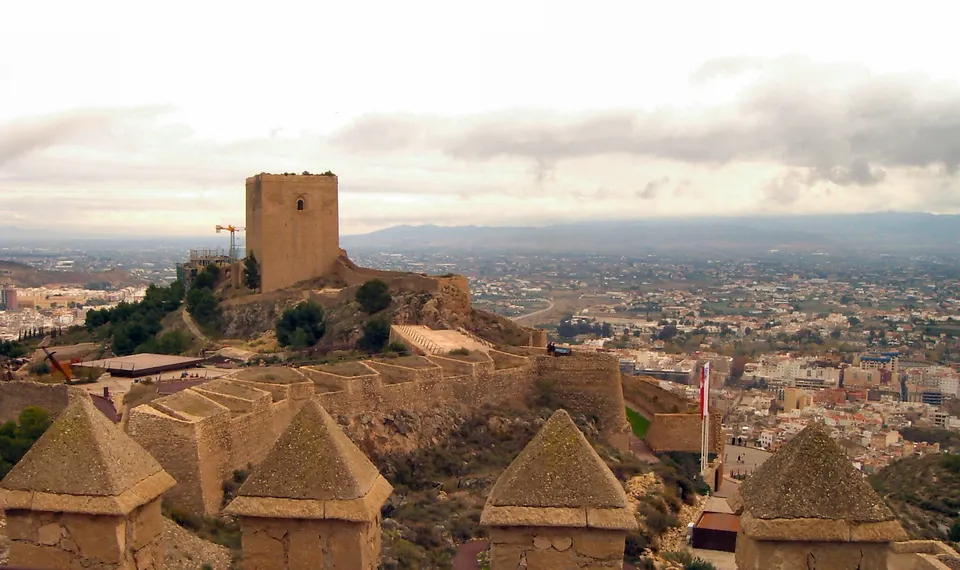

Lorca is a municipality and city in the Region of Murcia in south-eastern Spain, 58 km south-west of the city of Murcia. It stands at about 370 metres above sea level on the Guadalentín river. The city is home to Lorca Castle and a collegiate church dedicated to St Patrick, and in the Middle Ages it was a frontier city between Christian and Muslim Spain.
With about 93,000 inhabitants, Lorca lies in Murcia, Spain, and is a rail hub.
Why go to Lorca?
Lorca is a city of monuments and museums. Its baroque buildings include La Casa de Guevara, built by the Guevara family between the sixteenth and eighteenth centuries, and the Palacio de Guevara. The church of San Francisco is a national monument, with baroque altarpieces made by Ginés López. The Archaeological Museum of Lorca occupies the House of Salazar, built in the early seventeenth century, and holds finds from prehistory to Roman times. The Teatro Guerra is the oldest theatre in the Region of Murcia, inaugurated in 1861.
When is the best time to visit Lorca?
Average highs range from 14 °C in January and December to 31 °C in July and August. For city breaks, any month of the year works.
How do I get to Lorca without flying?
Direct train services link Lorca with 2 destinations. Allowing for changes, 334 destinations are no more than 14 hours away without flying. Murcia is 1h 00m away by train with RENFE OPERADORA, with about 0.6 kg of CO₂ per person. The train from Águilas with RENFE OPERADORA takes 30 min; that is about 0.3 kg of CO₂ per person.
What to do in Lorca
Lorca Castle
The castle of Lorca, one of the principal monuments of the city.
Church of San Francisco
A national monument first built by the Franciscans in the sixteenth century, with baroque altarpieces by Ginés López.
Archaeological Museum of Lorca
Housed in the early seventeenth-century House of Salazar, with finds from excavations across the area.
Teatro Guerra
The oldest theatre in the Region of Murcia, inaugurated in 1861.