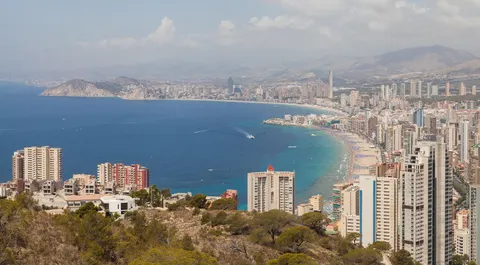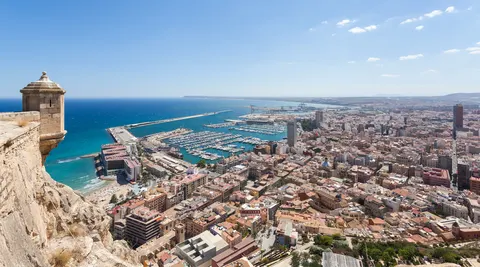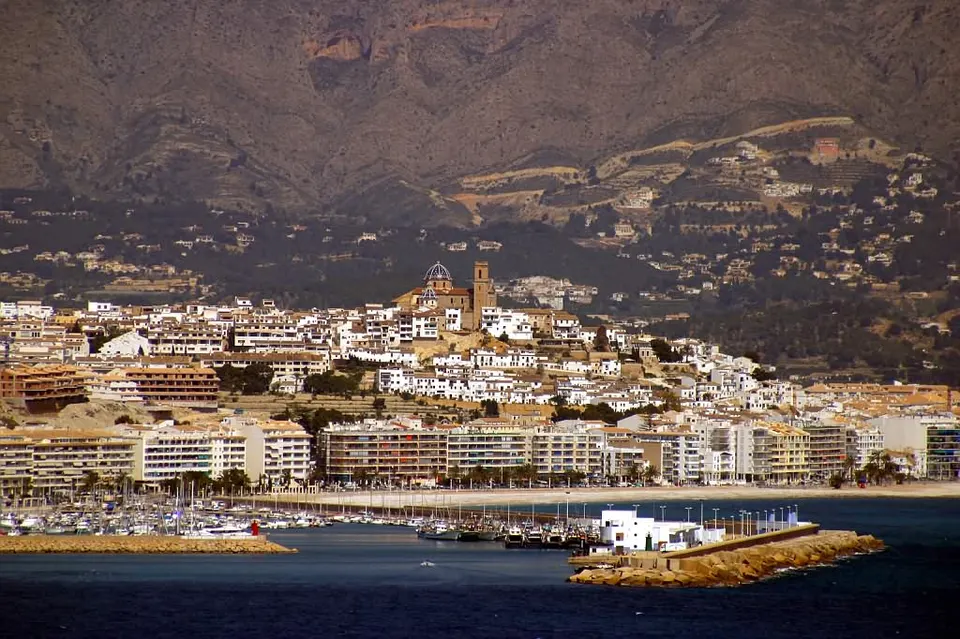

Altea is a town and municipality on the Costa Blanca in the Valencian Community. Its economy rests on tourism, which began to grow in the 1950s, drawn by its weather and beaches. The old town is a maze of whitewashed house-fronts, and the bluffs of the Serra de Bèrnia shelter the town and create a mild microclimate. Its seafront esplanade is planted with palms.
With about 24,000 inhabitants, Altea lies in Valencia, Spain.
Why go to Altea?
Altea is known for its whitewashed old town, where labyrinthine streets wind between house-fronts, and for its seafront esplanade planted with palms. The mild microclimate, sheltered by the bluffs of the Serra de Bèrnia, has drawn visitors since tourism took off in the 1950s. The settlement history goes back to Iberian towns at the mouth of the Algar river, later joined by a Greek marketplace called Althaia. The Christians retook the land in 1244 under James I of Aragon, and the town was fortified soon after. A number of affluent Russian migrants have also settled here.
When is the best time to visit Altea?
Average highs range from 14 °C in January to 29 °C in July and August. June, July and September are the time for beach holidays. For city breaks, any month of the year works.
How do I get to Altea without flying?
There are no direct train, bus or ferry links to Altea yet. The trip planner can still look for a route with changes.
What to do in Altea
Església de la Mare de Déu del Consol
A church in Altea.
Find tours and tickets: Església de la Mare de Déu del Consol
Platja de la Roda
A beach in Altea.
Beach holidays in Altea
June is the ideal month for beach holidays, with average highs of 26 °C.
City breaks in Altea
April is the ideal month for city breaks, with average highs of 19 °C.