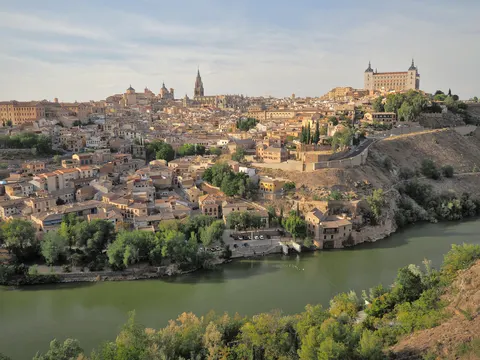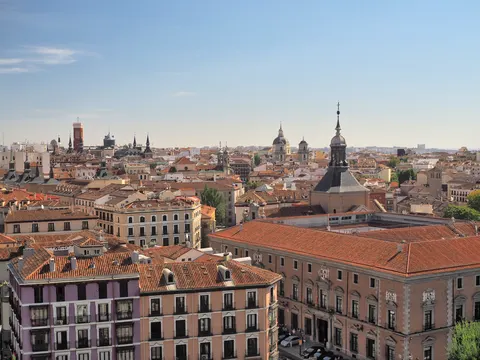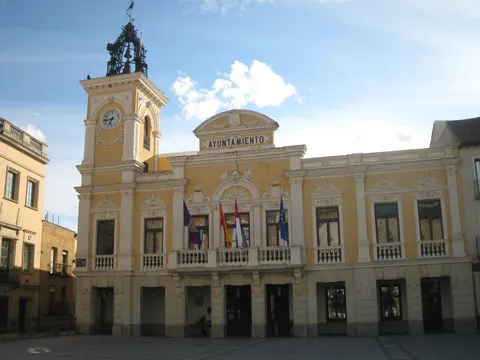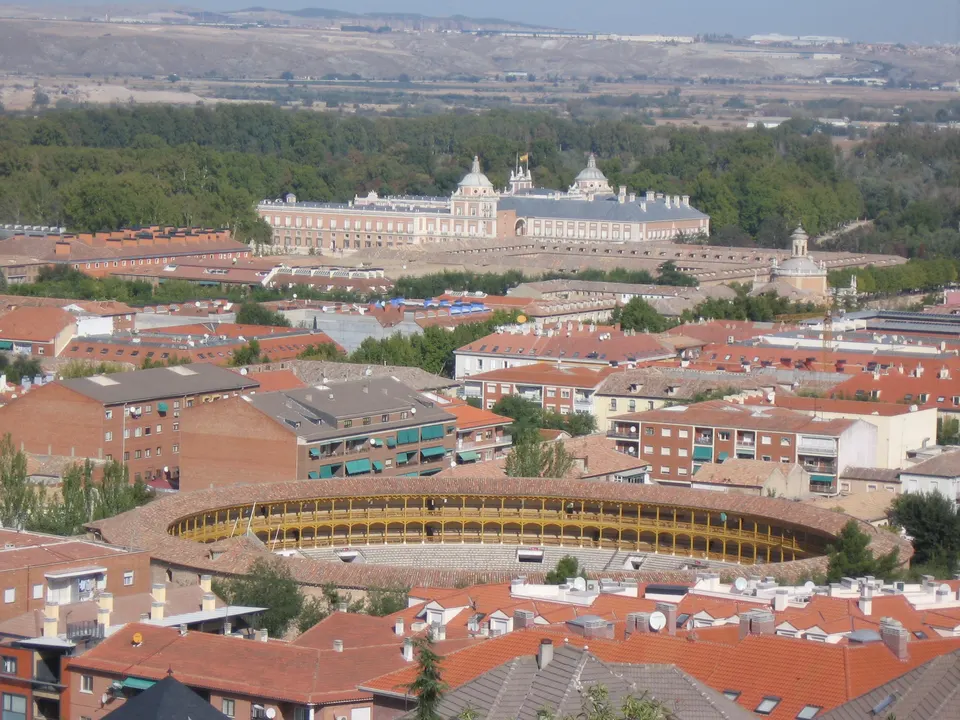

Aranjuez is known for its royal palaces and the landscape they were built within, a town in the Community of Madrid. The Royal Palace of Aranjuez anchors the centre, and the Casa del Labrador sits within the same royal setting. The UNESCO listing covers the Aranjuez Cultural Landscape, so the palaces, the open countryside and the town's squares are read together rather than as single buildings.
Aranjuez, in Madrid, Spain, is home to about 54,000 people and works as a rail hub.
Why go to Aranjuez?
Go to Aranjuez for City & Culture built around its royal setting, with the Royal Palace of Aranjuez as the sight to start with. The Casa del Labrador is the second palace on the estate, and the Casa de Caballeros y Oficios adds a civic building to the same stretch. The convent of San Pascual and the Church of San Antonio give the town its religious side, so a visit can move between palaces and churches over a short distance. The Aranjuez Cultural Landscape is the UNESCO name that ties these sites together, and it explains why the place is read as a whole. It is an easy stop for anyone who wants a day of palaces and church squares within reach of Madrid.
When is the best time to visit Aranjuez?
In July and August the average high reaches 33 °C; in January and December it is closer to 10 °C. For city breaks, go in March, April and October.
How do I get to Aranjuez without flying?
Aranjuez has direct train links to 4 destinations. Within 14 hours, travellers from 717 destinations can get here without flying. The train from Madrid with RENFE OPERADORA takes 32 min; that is about 0.4 kg of CO₂ per person. Jaen is 3h 08m away by train with RENFE OPERADORA, with about 2.4 kg of CO₂ per person against 58 kg for the flight, 96% less. Travelling from Albacete, allow 2h 00m by train with RENFE OPERADORA; that is about 1.8 kg of CO₂ per person, 96% less than the 43 kg of a flight.
What to do in Aranjuez
Royal Palace of Aranjuez
The royal palace gives the town its scale, and it sets the tone for the rest of the visit. Walk the front, then head across the grounds toward the Casa del Labrador.
Casa del Labrador
The Casa del Labrador is the second palace on the estate, and it gives the walk a different scale from the main building. Give it a visit after the royal palace.
Church of San Antonio
The church sits in the town and gives the walk its religious stop. Go in, then continue to the convent of San Pascual for a second religious building.
Casa de Caballeros y Oficios
This civic building stands among the sights of the town, and it is a useful stop for the older public life of the place. Look at its facade before moving on.