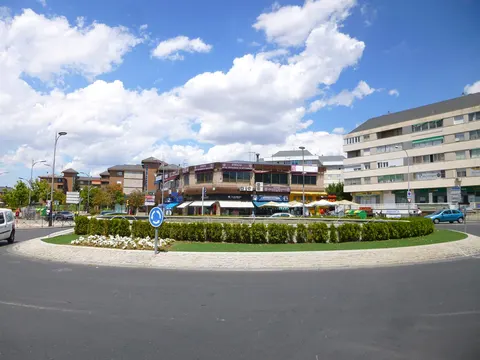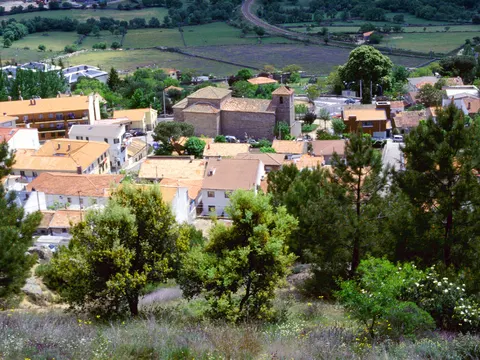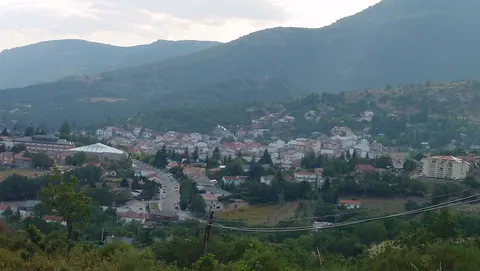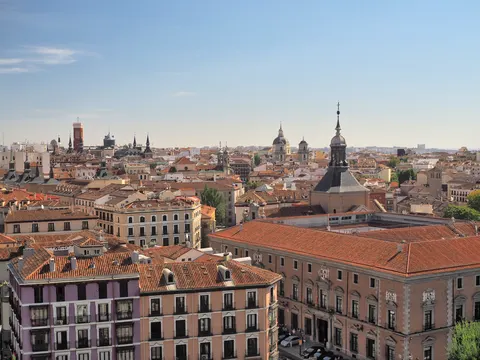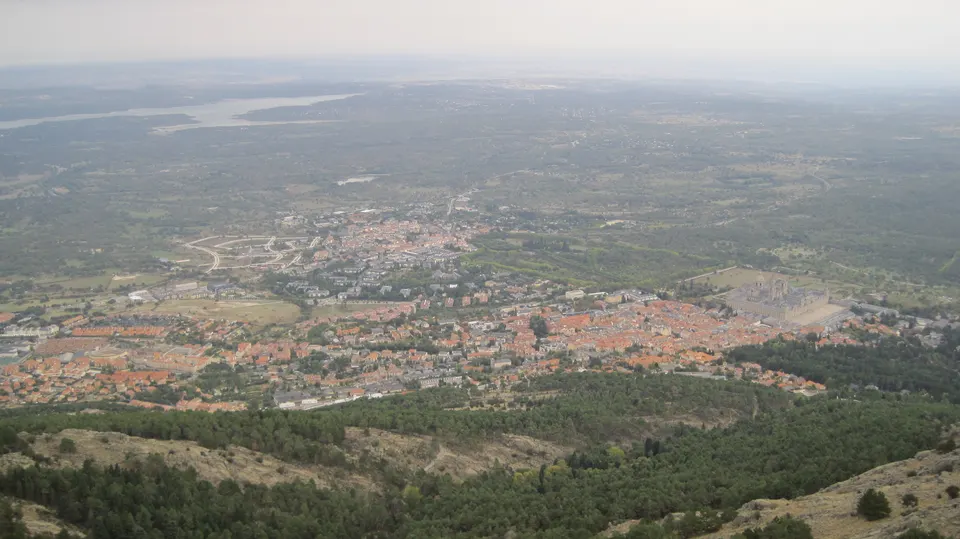

El Escorial is a municipality in the Autonomous Community of Madrid, about 45 km north-west of the Spanish capital. It belongs to the comarca of Cuenca del Guadarrama, and its territory includes the park of La Granjilla de la Fresneda. The Royal Seat of San Lorenzo de El Escorial, the monastery, lies in the adjacent municipality of San Lorenzo. Its name comes from slag deposits left by an old local foundry.
El Escorial is in Madrid, Spain, and has a population of about 16,000; it is also a rail hub.
Why go to El Escorial?
El Escorial is best understood through the buildings that Philip II had made around it. La Granjilla de La Fresneda, designed between 1561 and 1569, is a complex of woods, pastures and artificial ponds, with a palace, chapel and tower, set at the foot of Mount Abantos. The Church of St. Barnabas was built to replace an older church and is notable for its simplicity and harmony of proportion. The House of the Prince, a neoclassical summer house designed by Juan de Villanueva, marks a later era. Across the adjacent municipality, the royal monastery of San Lorenzo continues the story.
When is the best time to visit El Escorial?
July is the warmest, with highs of about 30 °C, and January and December are the coolest, at about 8 °C. Any month suits city breaks.
How do I get to El Escorial without flying?
From 2 destinations you can travel to El Escorial directly by train. Counting connections, 699 destinations can reach it within 14 hours without flying. Travelling from Ávila, allow 46 min by train with RENFE OPERADORA; that is about 0.5 kg of CO₂ per person. From Collado-Villalba, it takes 7 min by train with RENFE OPERADORA, with about 0.1 kg of CO₂ per person.
What to do in El Escorial
La Granjilla de La Fresneda
A complex of woods, pastures and granite boulders, once a cottage of Philip II, with a palace, chapel and tower.
Church of St. Barnabas
A church built at the king's wish, admired for its simplicity, balance and almost complete absence of ornament.
House of the Prince
A neoclassical summer house remodelled under Charles III by the architect Juan de Villanueva.
Cross del Tercio
A 17th-century cross that marked the old border between two neighbourhoods and now stands in a town square.