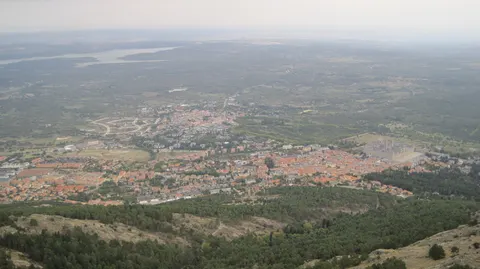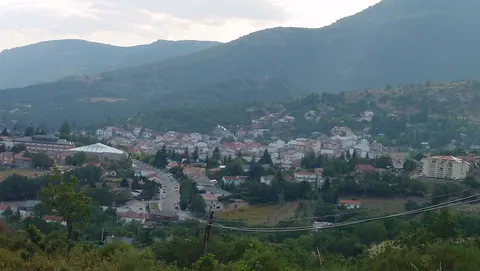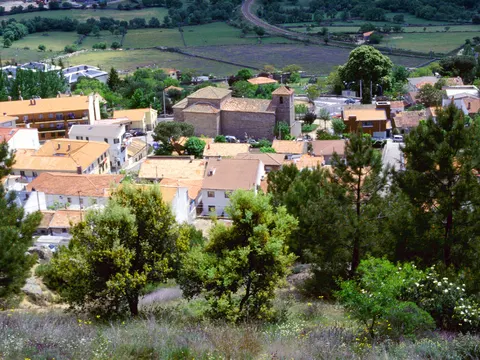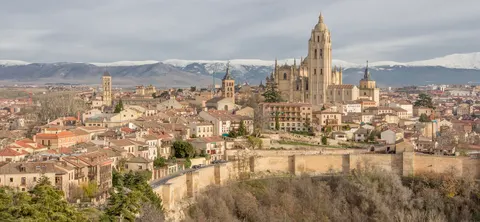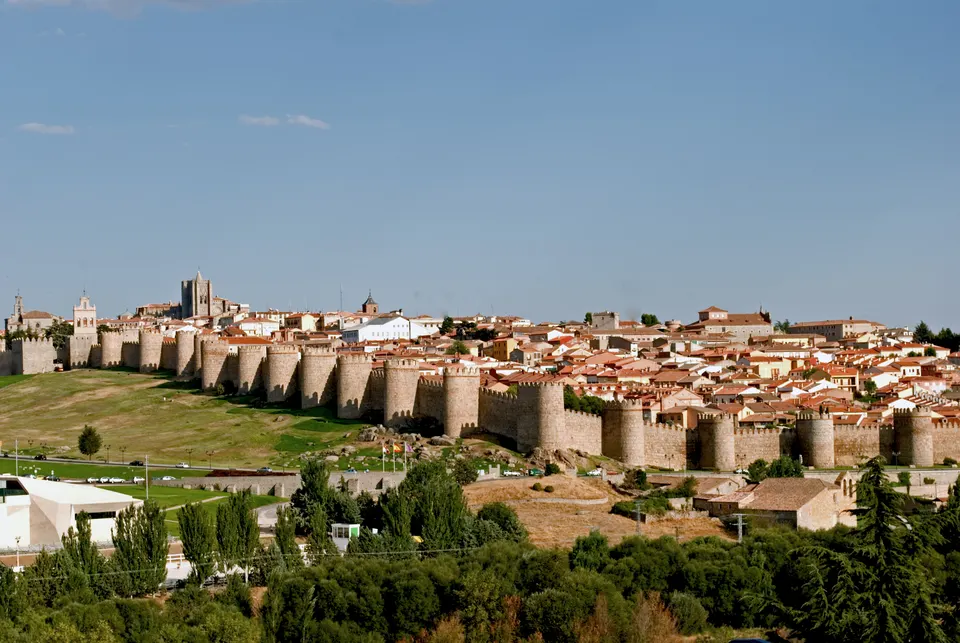

Ávila is the capital and most populated municipality of its province in Castile and León, and the highest provincial capital in Spain. It stands at over 1,100 metres on a rocky outcrop above the Adaja river, in the centre of the Iberian Peninsula. The city is called the City of Stones and Saints for its medieval architecture and its links with prominent mystics, and its old town with churches outside the walls is a UNESCO World Heritage Site.
With about 58,000 inhabitants, Ávila lies in Castille and León, Spain, and is a rail hub.
Why go to Ávila?
Ávila is built on the flat summit of a rocky hill, with grey boulders around it and lofty mountains beyond. Its secular architecture draws many visitors, with the Valderrábanos Palace and the Casa de los Deanes from the 15th and 16th centuries among the examples. The Torreón de los Guzmanes and the Verdugos Palace add to the set of medieval towers and mansions. Several museums cover the city's religious history, including the Museum of Santa Teresa and the Museum of the Cathedral. Its churches carry much of that history into the present.
When is the best time to visit Ávila?
Average highs range from 7 °C in January and December to 27 °C in July and August. For city breaks, any month of the year works.
How do I get to Ávila without flying?
Direct train services link Ávila with 3 destinations. Allowing for changes, 607 destinations are no more than 14 hours away without flying. Salamanca is 1h 05m away by train with RENFE OPERADORA, with about 0.8 kg of CO₂ per person. The train from Valladolid with RENFE OPERADORA takes 1h 10m; that is about 1.1 kg of CO₂ per person. From El Escorial, it takes 46 min by train with RENFE OPERADORA, with about 0.5 kg of CO₂ per person.
What to do in Ávila
Torreón de los Guzmanes
A medieval tower among the city's notable secular buildings, with a hall of its own inside.
Valderrábanos Palace
A 15th-century palace and one of the finest examples of the city's secular architecture.
Casa de los Deanes
A 16th-century house, another example of the city's secular architecture.
Museum of Santa Teresa
A museum devoted to Santa Teresa, one of the prominent mystics linked with the city.