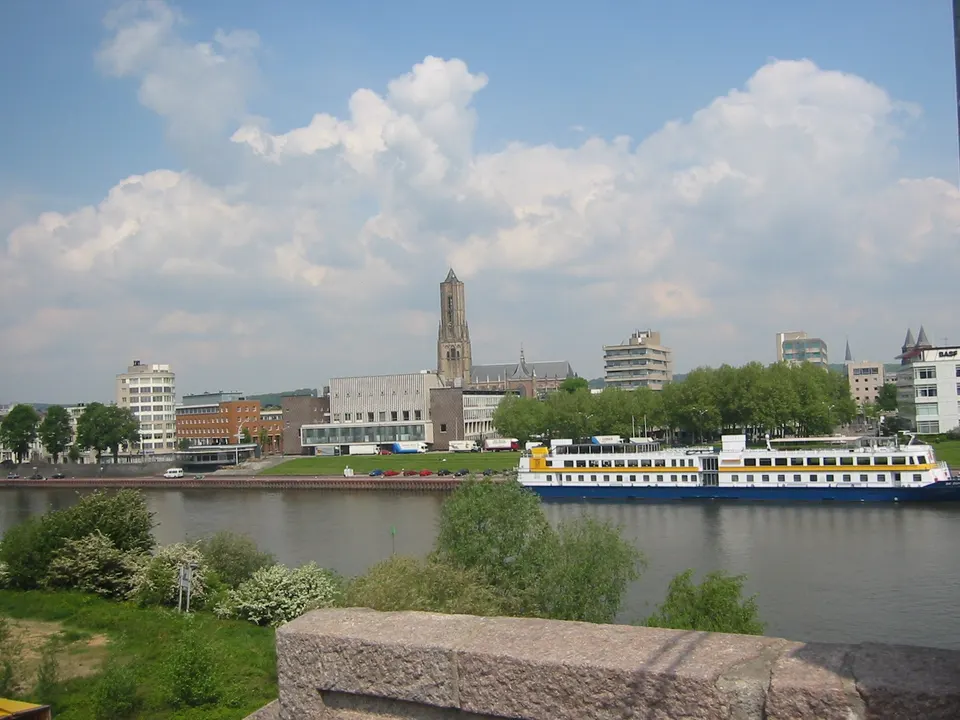

Arnhem is a city and municipality in the eastern Netherlands, close to the German border, and the capital of the province of Gelderland. It lies on both banks of the Nederrijn and the Sint-Jansbeek, two waterways that shaped its growth. The north corner of the municipality is part of the Hoge Veluwe National Park, a landscape of heathland, sand dunes and woodland.
With about 162,000 inhabitants, Arnhem lies in Gelderland, Netherlands, and is a rail hub.
Why go to Arnhem?
Arnhem is home to several institutions in sport and education, including the National Sports Centre Papendal and the ArtEZ Institute of the Arts. The Netherlands Open Air Museum, just outside the city, gathers antique houses, farms, factories and windmills from different parts of the country. The Royal Burgers' Zoo is one of the biggest zoos in the Netherlands, with an underwater walkthrough, a desert, a mangrove and a rainforest. The town hall stands in the house of the general Maarten van Rossum, whose Renaissance satyrs gave it the name Devil's House.
When is the best time to visit Arnhem?
Average highs range from 5 °C in January and December to 22 °C in July and August. For city breaks, any month of the year works.
How do I get to Arnhem without flying?
Direct bus or train services link Arnhem with 17 destinations. Allowing for changes, 2,266 destinations are no more than 14 hours away without flying. Hamburg is 4h 56m away by bus with FlixBus-eu, with about 8.8 kg of CO₂ per person against 42 kg for the flight, 79% less. The bus from Eindhoven with FlixBus-eu takes 1h 35m; that is about 1.8 kg of CO₂ per person. From Nijmegen, it takes 12 min by train with NS, with about 0.3 kg of CO₂ per person.
What to do in Arnhem
Netherlands Open Air Museum
A museum outside the city with antique houses, farms, factories and windmills brought from different parts of the Netherlands.
Royal Burgers' Zoo
One of the largest zoos in the country, with an underwater walkthrough and areas for desert, mangrove and rainforest.
Grote Kerk
St Eusebius' Church, built in the 15th and 16th centuries. Most of its tower was lost in the Second World War, and part of it was rebuilt to a modern design.
Duivelshuis
The Renaissance house of Maarten van Rossum, which has served as the town hall since the 19th century. Its satyrs earned it the name Devil's House.