
Beauvais is the prefecture of the Oise department, a town and commune in northern France in the Hauts-de-France region. Its cathedral and churches have shaped the town for centuries, and the Basse Oeuvre is one of the older buildings in the town. The Beauvais astronomical clock is one of the sights of the cathedral. The town is the seat of the department's government, and its walk is easy to follow.
Beauvais, in Hauts-de-France, France, is home to about 53,000 people and works as a rail hub.
Why go to Beauvais?
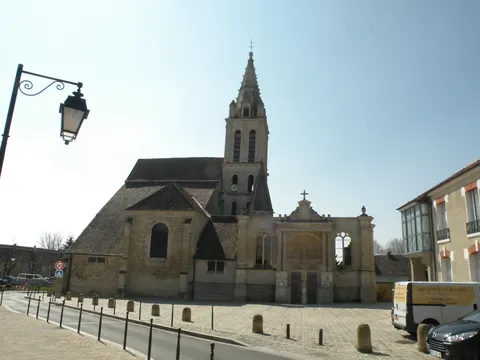
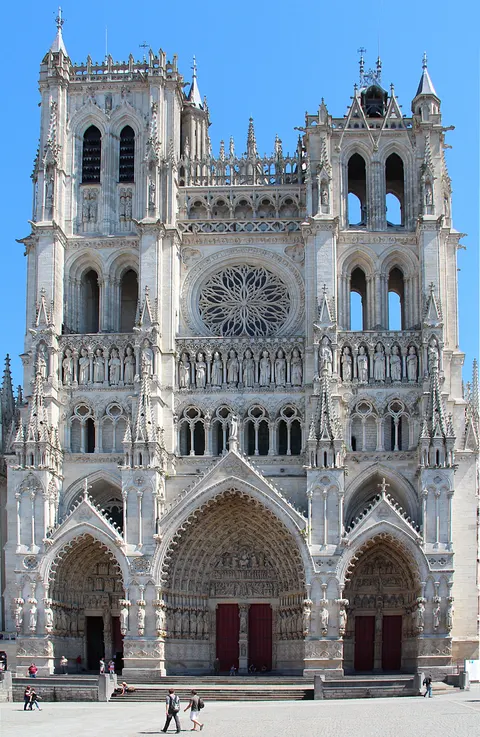
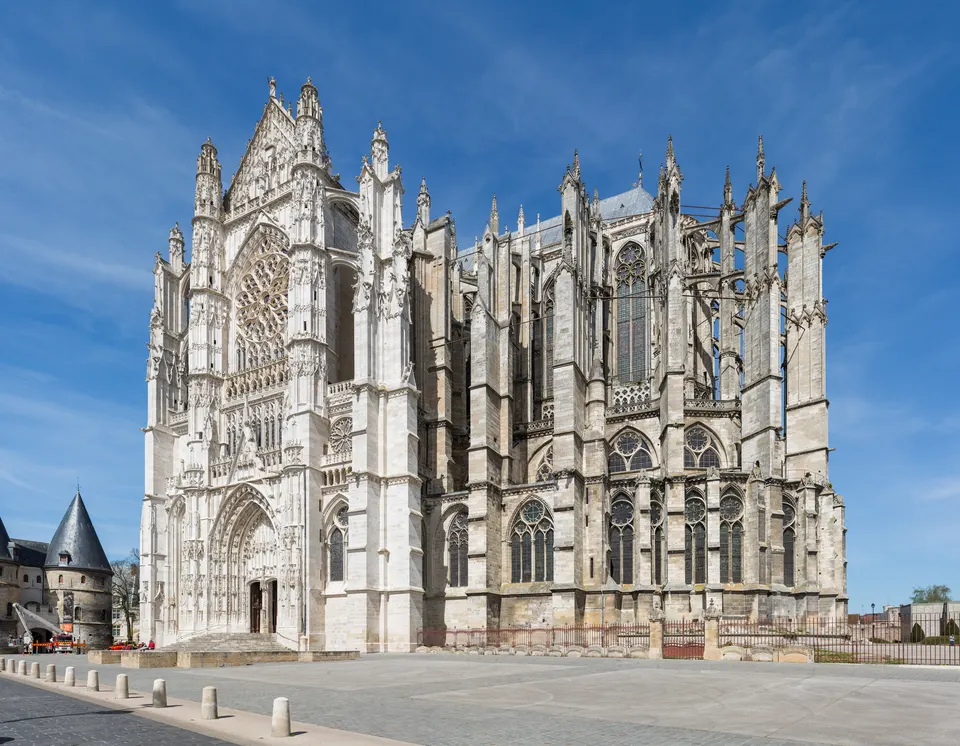
Beauvais fits a City & Culture trip with its churches and museums set around the cathedral. The Beauvais Cathedral is the central sight, and the Beauvais astronomical clock is a monument to see inside it. The Église Saint-Étienne de Beauvais and the Basse Oeuvre add more churches, and the Musée départemental de l'Oise gives the visit a museum stop. The churches and the museum sit within a short walk of the cathedral, so the route can be built around its tower and its clock. It is a compact town. The visit moves easily from the churches to the museum and back to the cathedral square.
When is the best time to visit Beauvais?
In July and August the average high reaches 23 °C; in January it is closer to 6 °C. Any month suits city breaks.
How do I get to Beauvais without flying?
Beauvais has one direct link, by train. Within 14 hours, travellers from 2,141 destinations can get here without flying. The train from Paris with SNCF VOYAGEURS takes 1h 10m; that is about 0.2 kg of CO₂ per person.
What to do in Beauvais
Beauvais Cathedral
Beauvais Cathedral is the central sight of the town, a large church whose height and vaulting make it a landmark of the region.
Beauvais astronomical clock
The Beauvais astronomical clock is a monument inside the cathedral, a mechanical clock that adds a scientific detail to the visit.
Basse Oeuvre
The Basse Oeuvre is one of the older churches of the town, a stop that shows an earlier phase of the town's religious life.
Musée départemental de l'Oise
The Musée départemental de l'Oise is the county museum, a stop that covers the wider history and art of the region.