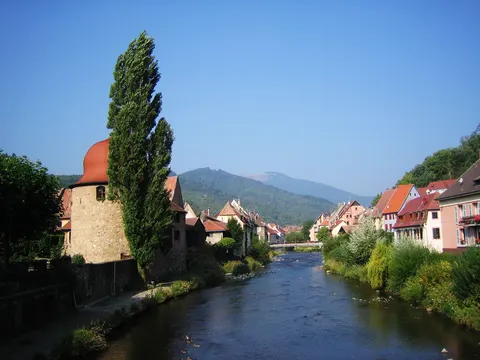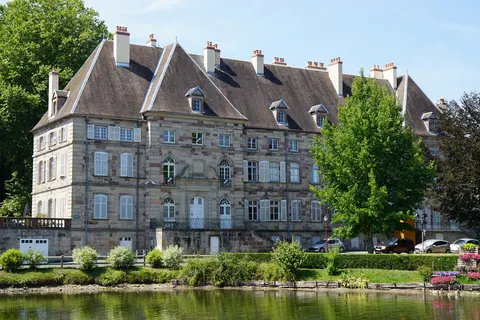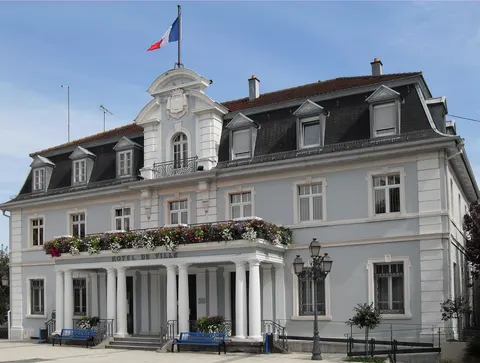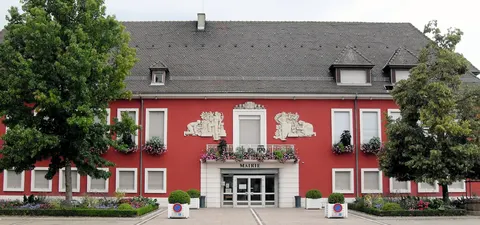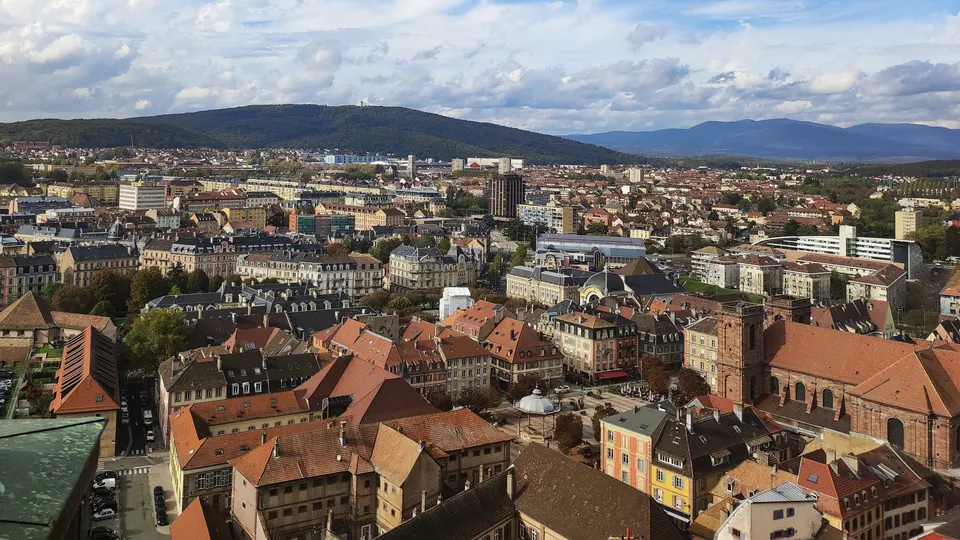

Belfort is a city in north-eastern France, about 25 kilometres from the Swiss border, and the prefecture of the Territoire de Belfort. It sits on the River Savoureuse, in the Belfort Gap, a natural route between the Rhine and the Rhône. The city has about 45,000 inhabitants and is the centre of a larger metropolitan area between Mulhouse and Montbéliard.
Belfort is in Bourgogne-Franche-Comté, France, and has a population of about 55,000; it is also a rail hub.
Why go to Belfort?
Belfort's position in the Belfort Gap has drawn armies and settlers for centuries, and its fortifications still show that history. The Citadel is a unique example of Vauban's pentagonal fortifications, and the Lion of Belfort, a sculpture by Frédéric Bartholdi, stands in the town. It marks the town's resistance during the siege of 1870. The Citadelle de la Liberté, open to the public since 2007, has a sound-and-light trail in its moats and a long underground passage. The city's museums cover history, art and modern art in separate buildings.
When is the best time to visit Belfort?
July is the warmest, with highs of about 24 °C, and January is the coolest, at about 4 °C. City breaks work best in May, June and September.
How do I get to Belfort without flying?
From 5 destinations you can travel to Belfort directly by bus or train. Counting connections, 2,332 destinations can reach it within 14 hours without flying. Travelling from Mulhouse, allow 26 min by train with SNCF VOYAGEURS; that is about 0.1 kg of CO₂ per person. From Besancon, it takes 1h 15m by bus with FlixBus-eu, with about 2.1 kg of CO₂ per person. The train from Lure with Société Nationale des Chemins de fer Français takes 17 min; that is about 0.1 kg of CO₂ per person.
What to do in Belfort
Lion of Belfort
A monument in Belfort.
Belfort Cathedral
A cathedral in Belfort.
City breaks in Belfort
May is the ideal month for city breaks, with average highs of 18 °C.