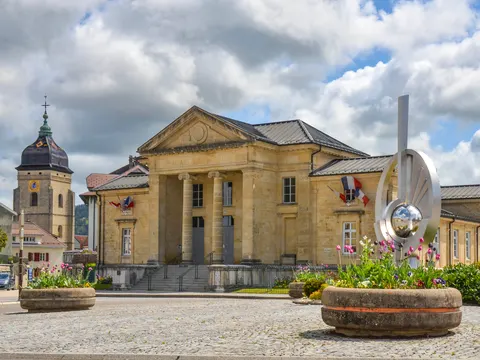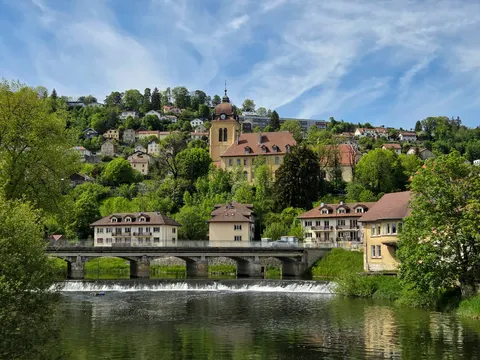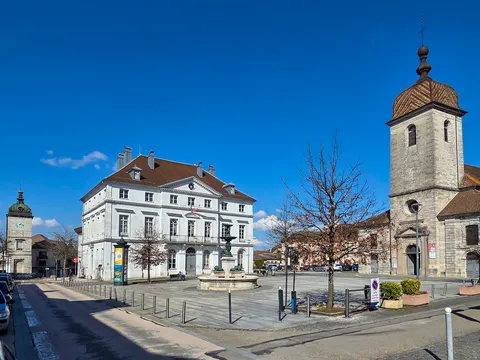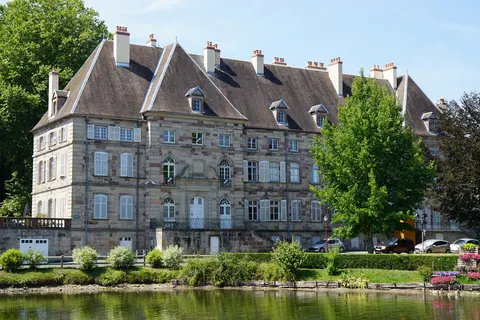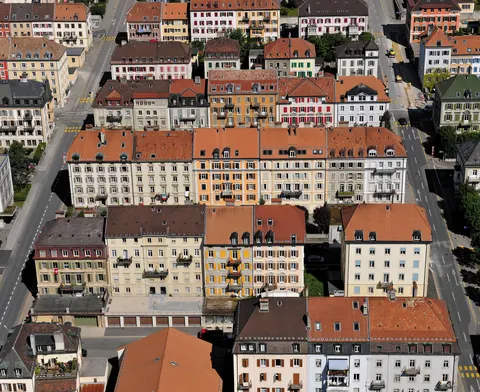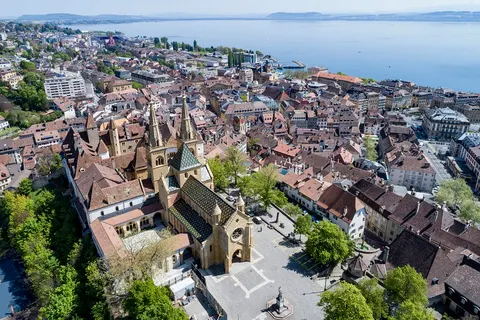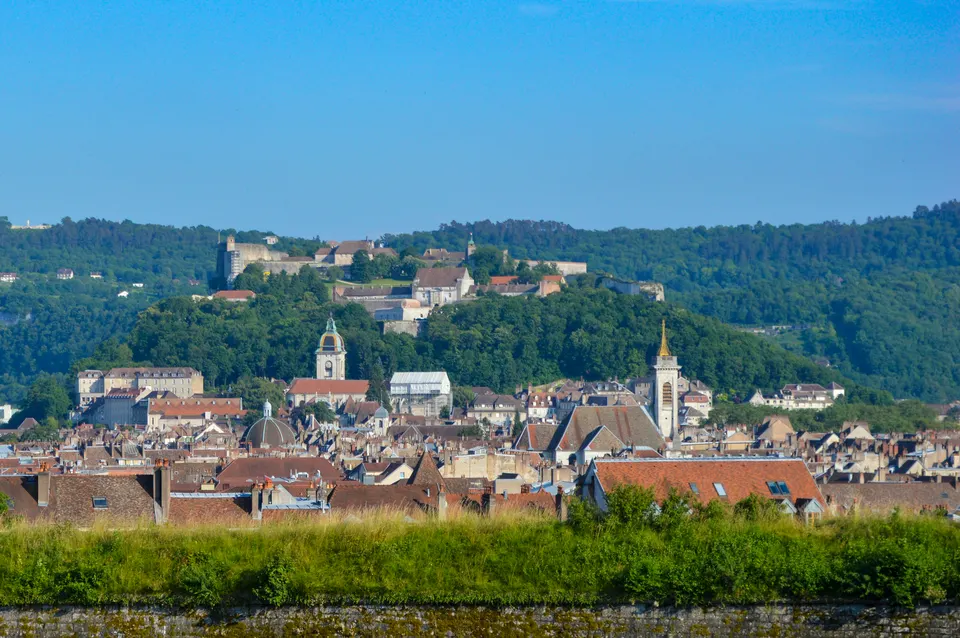

Besançon is the capital of the Doubs department in the Bourgogne-Franche-Comté region of eastern France, close to the Jura Mountains and the Swiss border. It sits in an oxbow of the river Doubs, with a mountain closing the fourth side. The city is the historical capital of watchmaking in France, and its university was founded in 1423.
With about 128,000 inhabitants, Besancon lies in Bourgogne-Franche-Comté, France, and is a rail hub.
Why go to Besancon?
Besançon is a city of watchmaking and fortification. Its fortifications, designed by Vauban, are a UNESCO World Heritage Site, and Vauban's citadel blocks off the neck of the river loop. The Musée du Temps, housed in the Granvelle Palace, groups watch collections with sundials and hourglasses. The Museum of Fine Arts and Archeology holds a rich collection of paintings, from Bellini to Picasso. The city's Roman roots go back to Vesontio, the town of the Sequani. The Comtois Museum presents regional arts and traditions through sixteen permanent exhibition halls.
When is the best time to visit Besancon?
Average highs range from 6 °C in January and December to 25 °C in July. For city breaks, any month of the year works.
How do I get to Besancon without flying?
Direct bus or train services link Besancon with 9 destinations. Allowing for changes, 2,233 destinations are no more than 14 hours away without flying. Dijon is 45 min away by train with SNCF VOYAGEURS, with about 0.2 kg of CO₂ per person. The bus from Strasbourg with FlixBus-eu takes 3h 00m; that is about 5.3 kg of CO₂ per person, 88% less than the 45 kg of a flight. From Lyon, it takes 2h 34m by train with Société Nationale des Chemins de fer Français, with about 0.5 kg of CO₂ per person against 43 kg for the flight, 99% less.
What to do in Besancon
Citadelle
Vauban's imposing citadel, which blocks off the neck of the river loop at the heart of the old town.
Museum of Fine Arts and Archeology
The city's art museum, founded in 1694 and rebuilt in the 1960s by Luis Miquel, with works from Bellini to Picasso.
Musée du Temps
A museum of time in the Granvelle Palace, with watches, sundials and hourglasses.
Birthplace of Victor Hugo
The house where Victor Hugo was born, which presents the humanist political commitment of the writer.