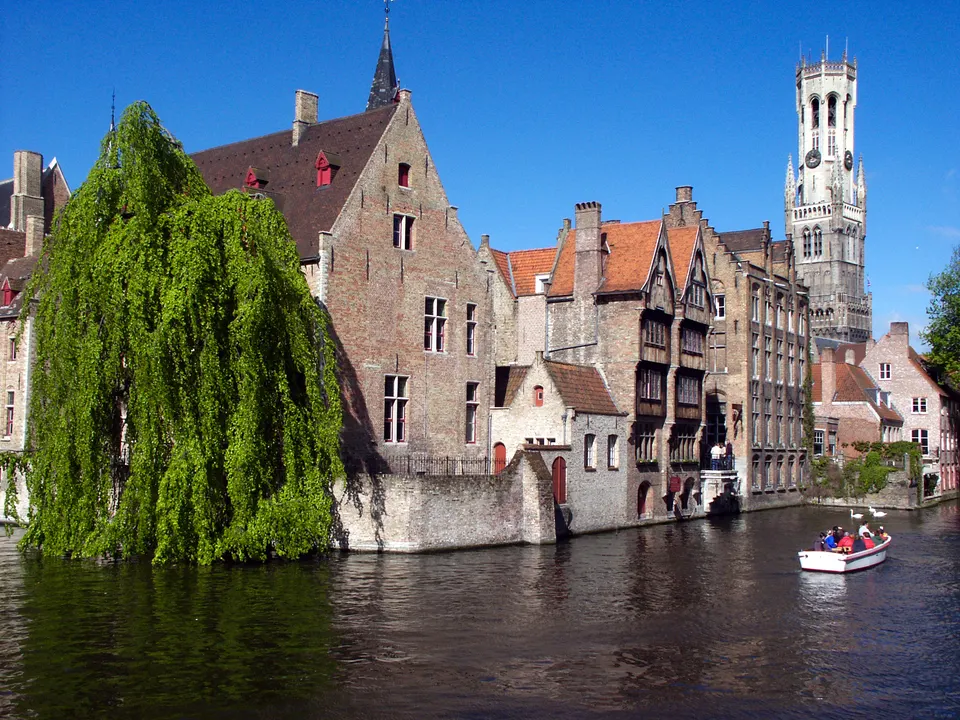

Bruges sets quiet canals against a busy centre, where old lanes give way to larger squares within a few minutes' walk. The city is the capital of West Flanders in the Flemish Region of Belgium, and the language on the signs is Dutch. It is an easy place to wander, and its Historic Centre of Brugge is a UNESCO World Heritage Site that rewards a slow walk along the water and through the old streets.
Bruges is in Flanders, Belgium, and has a population of about 119,000; it is also a rail hub.
Why go to Bruges?
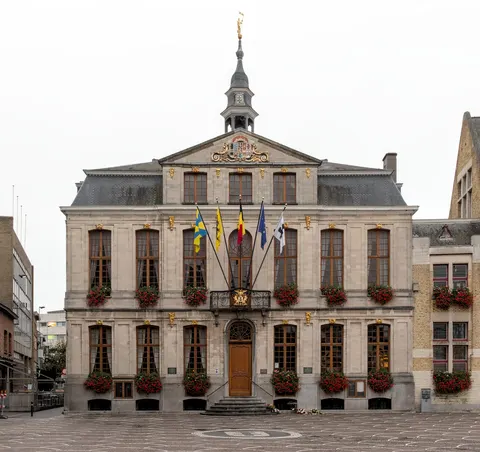
Bruges suits a slow trip built around canals, churches and museums. The Belfry of Bruges and the Bruges City Hall, both UNESCO sites, sit on the central square and give the centre its strongest landmarks. The Groeningemuseum holds Flemish paintings in a setting that suits a slow afternoon. The Sint-Salvatorskathedraal and St. Donatian's Cathedral show the city's religious life, and the Sint-Janshospitaal adds a quieter stop. The Gruuthusemuseum and the Frietmuseum offer lighter visits, and the Museum van het Heilig Bloed holds objects of devotion. Take a boat on the canals, then walk back through the lanes at your own pace.
When is the best time to visit Bruges?
July and August are the warmest, with highs of about 21 °C, and January is the coolest, at about 6 °C. Any month suits city breaks.
How do I get to Bruges without flying?
From 10 destinations you can travel to Bruges directly by bus or train. Counting connections, 2,136 destinations can reach it within 14 hours without flying. Travelling from Brussels, allow 1h 00m by train with SNCB; that is about 1 kg of CO₂ per person. From Lille, it takes 55 min by bus with BlaBlaCar Bus, with about 1.8 kg of CO₂ per person. The bus from Calais with FlixBus-eu takes 1h 31m; that is about 2.7 kg of CO₂ per person.
What to do in Bruges
Belfry of Bruges
The Belfry of Bruges rises above the square and makes a useful landmark for finding your way. Climb it for a view over the rooftops and canals below.
Groeningemuseum
The Groeningemuseum holds a strong collection of Flemish painting in a setting that suits a slow afternoon. Start here if you want to understand the city's art before you head out into the streets.
Sint-Salvatorskathedraal
The Sint-Salvatorskathedraal is the cathedral of the old centre, a large church that rewards a quiet visit. Look up at the vaults, then walk down to the canal.
Frietmuseum
The Frietmuseum is a playful stop devoted to the humble chip, and it makes a light break from the big churches. Allow an hour and take your time with the displays.