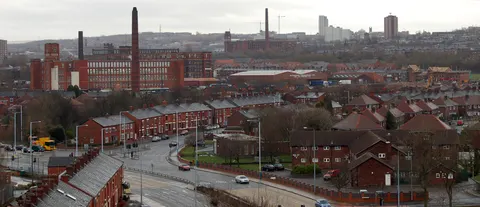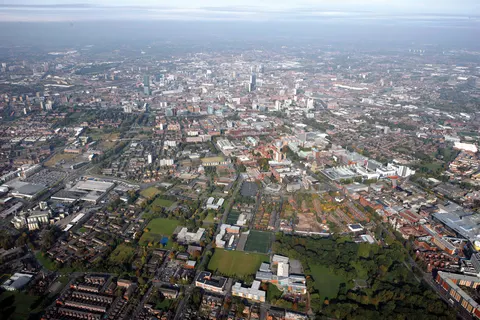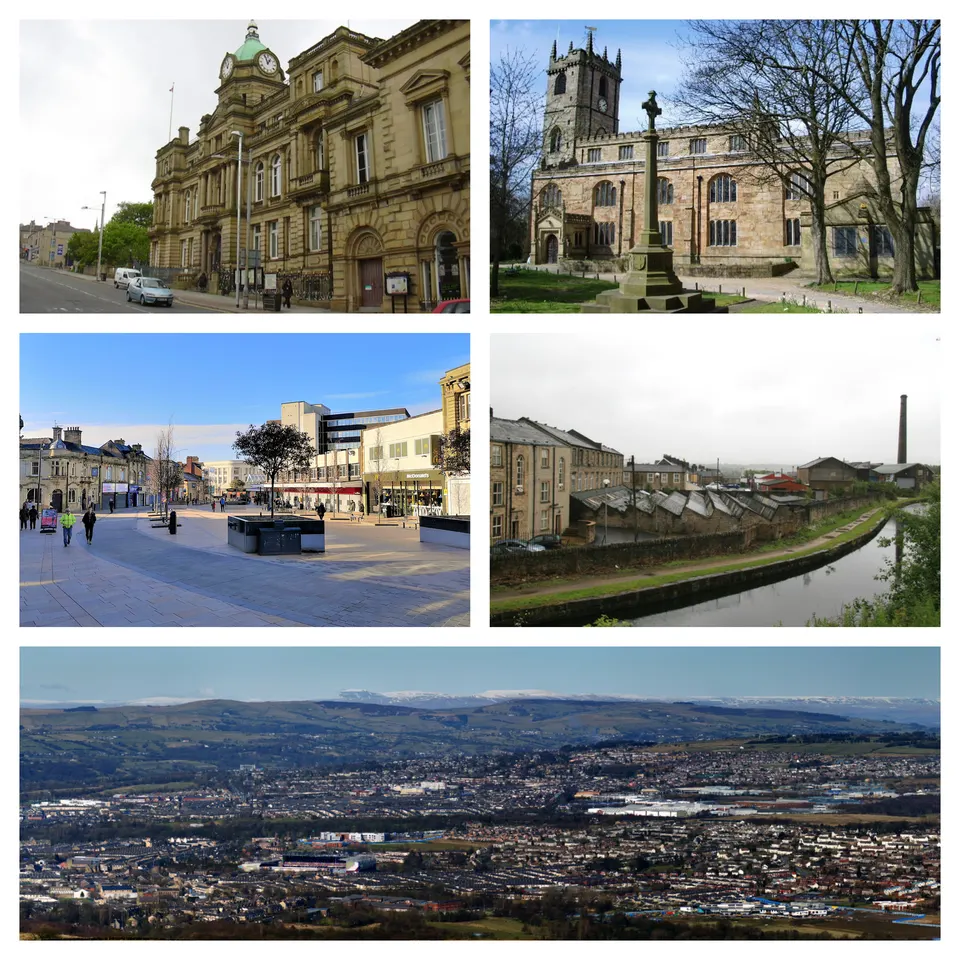

Burnley is a town and the administrative centre of the wider borough of Burnley in Lancashire, England. It lies at the confluence of the River Calder and the River Brun, about 21 miles north of Manchester, in a three-forked valley ringed by open fields, with wild moorland on the higher ground. Manufacturing and aerospace still shape the economy, a legacy of the years when the town was among the world's largest producers of cotton cloth.
With about 149,000 inhabitants, Burnley lies in England, United Kingdom.
Why go to Burnley?
Burnley is worth a stop for its mill heritage and the countryside around it. Queen Street Mill Textile Museum is the only surviving steam driven cotton weaving shed in the world, and the Weavers' Triangle Trust runs a visitor centre and local history museum in the historic Weavers' Triangle. On the outskirts of town, Towneley Hall keeps galleries in a stately home, and Gawthorpe Hall in Padiham, a National Trust property, offers more of the same. Mid Pennine Arts runs exhibitions and creative learning projects across the town and the wider area, and the moors rise above it all.
When is the best time to visit Burnley?
Average highs range from 5 °C in January and December to 18 °C in July and August.
How do I get to Burnley without flying?
There are no direct train, bus or ferry links to Burnley yet. The trip planner can still look for a route with changes.
What to do in Burnley
Queen Street Mill Textile Museum
A museum housed in the world's only surviving steam driven cotton weaving shed, a rare survivor of the town's textile past.
Towneley Hall
A stately home on the outskirts of Burnley, with galleries owned by the borough council.
Gawthorpe Hall
A stately home in Padiham, owned by Lancashire County Council and managed by the National Trust, with galleries.
Weavers' Triangle Visitor Centre
The Visitor Centre and Museum of Local History, set in the historic surroundings of the Weavers' Triangle.