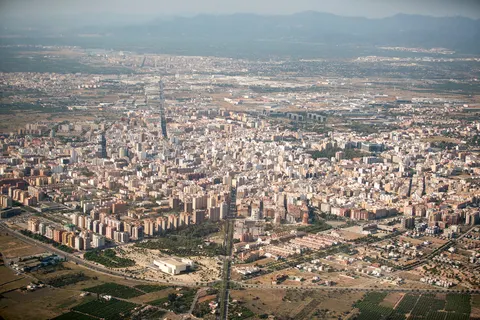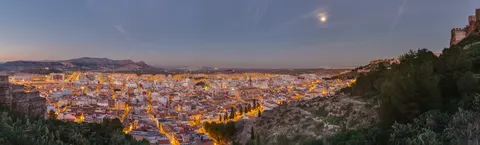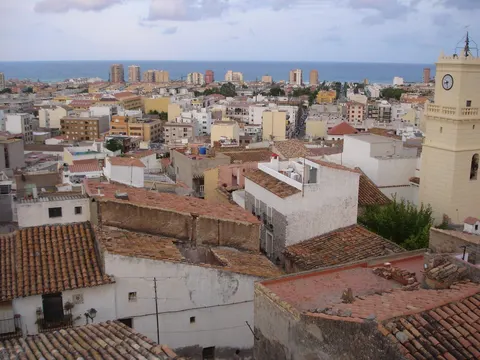

Burriana, also called Borriana in Valencian, is a town and municipality on the Mediterranean coast of eastern Spain, in the province of Castellón. It sits in the lowest part of the Plana Baixa, surrounded by orange groves watered by the Millars River, and its population exceeds 35,000. A Jewish community settled here after the Christian reconquest of the area, and its members left during the expulsion of the Jews from Spain.
Burriana, in Valencia, Spain, is home to about 35,000 people and works as a rail hub.
Why go to Burriana?
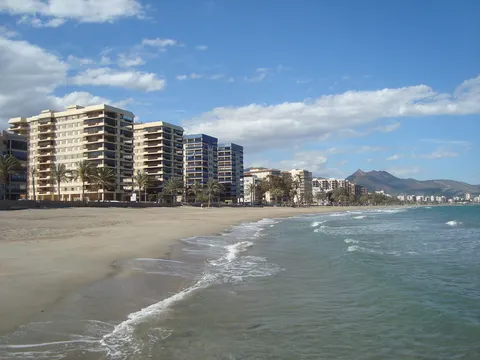
Burriana's main draw is its coast. The main beach, El Arenal, has about 2 km of shoreline and has been awarded the blue flag for its sand and water, and the seafront is a short distance from the centre. In summer the coastal population grows as townspeople and holidaymakers move to the sea. Elsewhere in town, a 16th-century Sea Tower, a Modernist house and a museum devoted to the orange, the crop that covers the fields around it, add to a visit. The town also honours the American writer James A. Michener, who landed here as a young sailor and wrote about it.
When is the best time to visit Burriana?
In August the average high reaches 28 °C; in January and February it is closer to 14 °C. Beach holidays work best in June, July and September.
How do I get to Burriana without flying?
Burriana has direct train links to 3 destinations. Within 14 hours, travellers from 1,098 destinations can get here without flying. The train from Moncofa with RENFE OPERADORA takes 9 min; that is about 0.1 kg of CO₂ per person. Almenara is 16 min away by train with RENFE OPERADORA, with about 0.2 kg of CO₂ per person. Travelling from Vila-real, allow 3 min by train with RENFE OPERADORA; that is about 0.1 kg of CO₂ per person.
What to do in Burriana
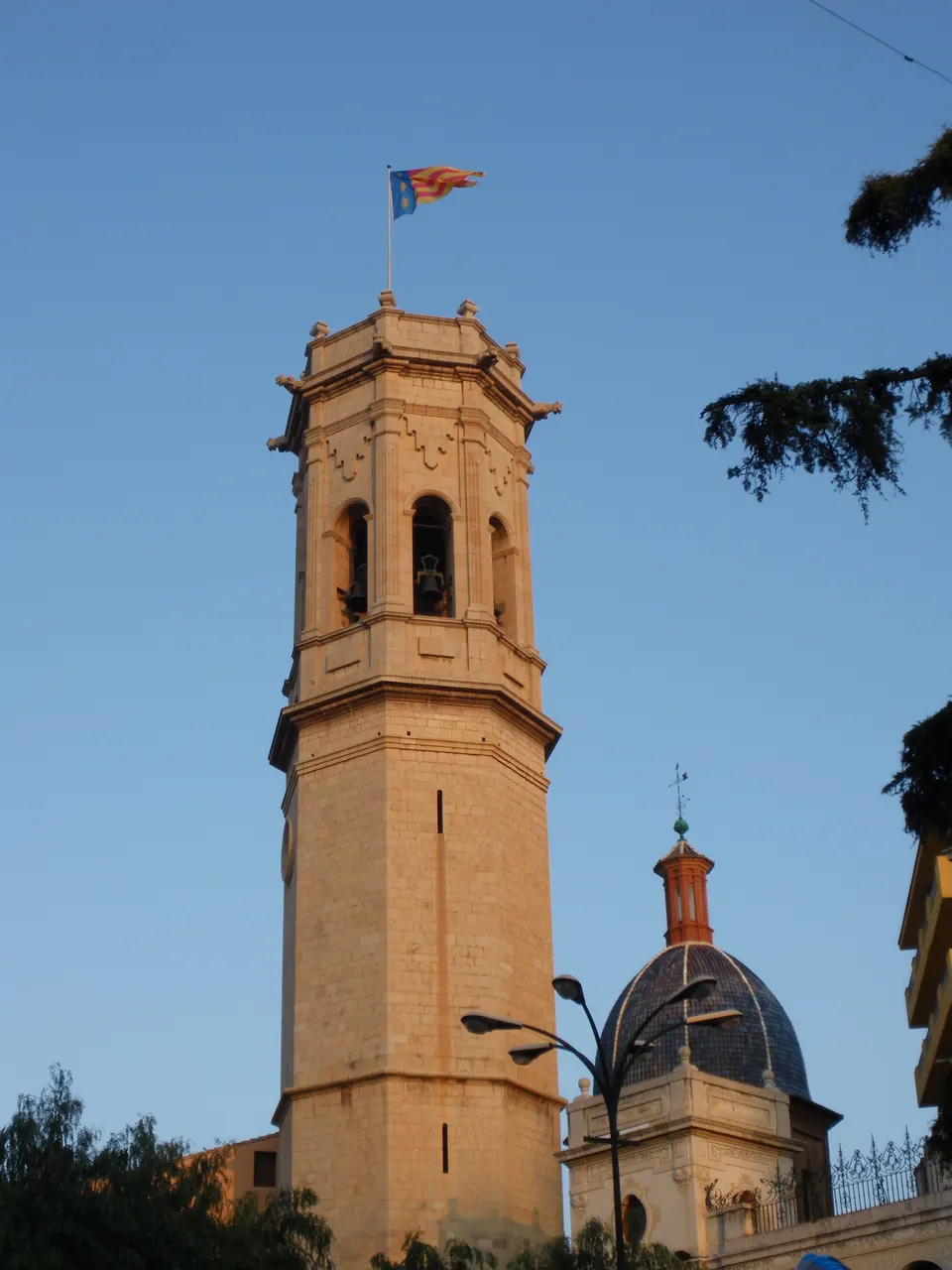
Church of El Salvador
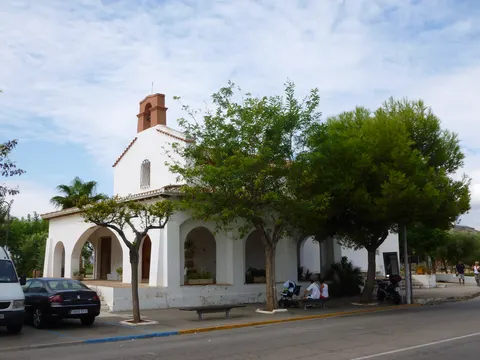
A church with an early Gothic apse and Romanesque elements, and a bell tower from the 15th century.
Sea Tower
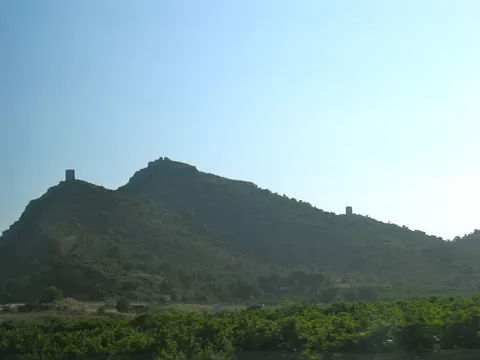
A tower from the 16th century, one of the town's historic monuments.
Modernist House
A house in the Modernist style, one of the town's architectural sights.
Orange Museum
A museum about the orange, the crop that fills the fields around the town.
Underwater Archaeology Center
A centre devoted to underwater archaeology.