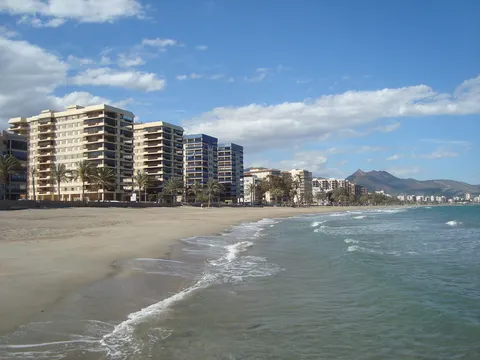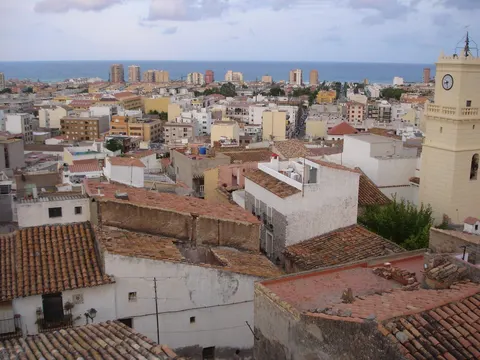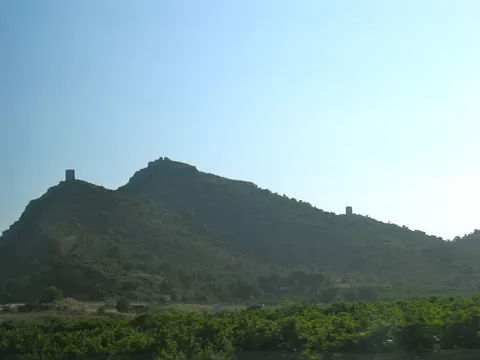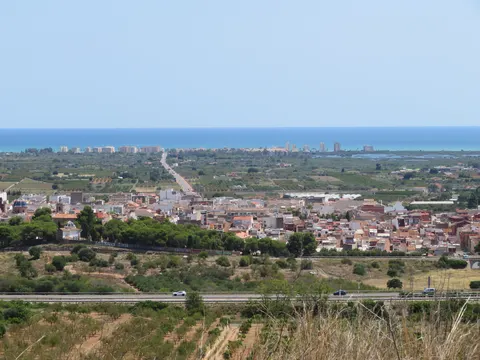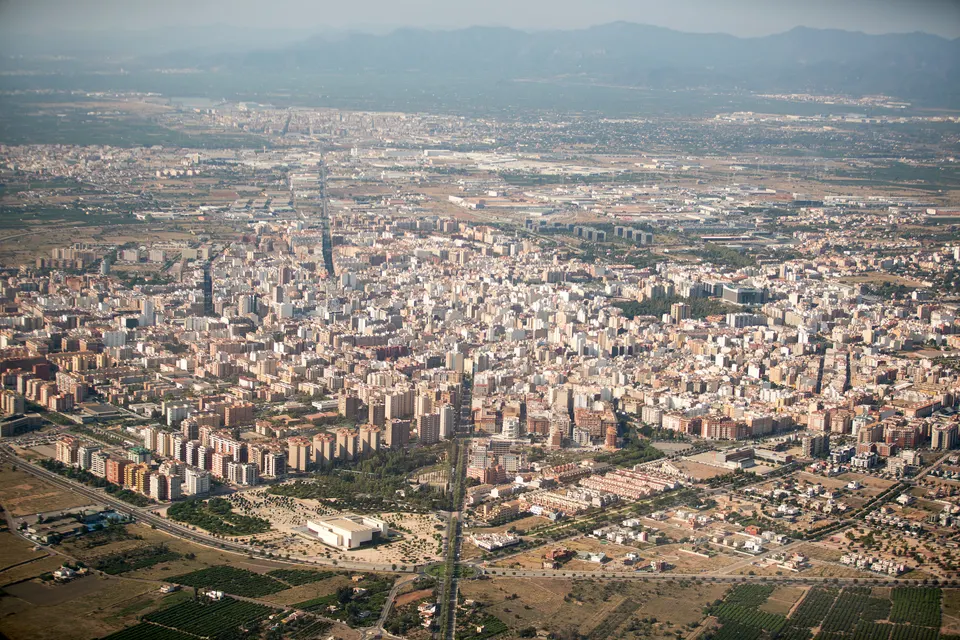

Castellón de la Plana is the capital of its province on Spain's Valencian coast, a short way inland from the Mediterranean. The old town clusters around the Plaça Major, while the district of Grau grew up around the port. Behind the city the Desert de les Palmes mountains rise to the north. Meridian Park holds a monolith marking where the Greenwich Meridian crosses the 40th parallel.
About 184,000 people live in Castellon, in Valencia, Spain, and its station is a rail hub.
Why go to Castellon?
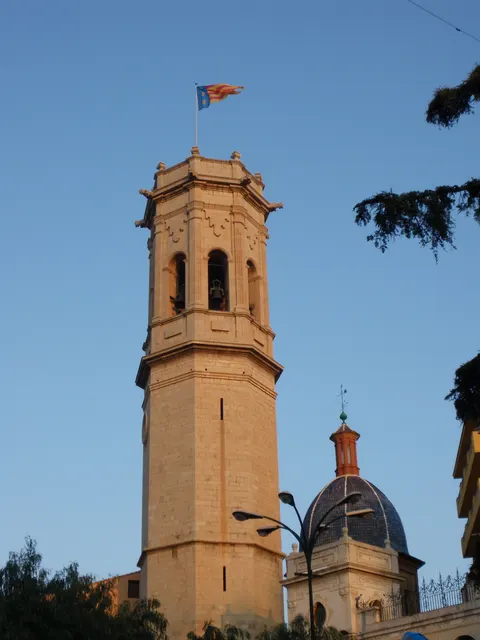
Castellón suits a slow stop rather than a headline trip. The historic centre is compact and built around the Gothic co-cathedral of Santa Maria, which was rebuilt after a fire and again after a demolition order during the Spanish civil war. Beside it stands the free-standing bell tower called El Fadrí. The old Hemp Exchange, the Llotja del Cànem, now serves the university for cultural events and temporary exhibitions. Beyond the old quarter, the Basilica of Santa Maria del Lledó stands at the end of a broad avenue lined with orange trees, built around an image of the Virgin that a farmer found while ploughing. The port district of Grau, the mountain range to the north and the Museum for Modern Art all add reasons to linger.
When is the best time to visit Castellon?
Expect daytime highs of about 28 °C in July and August, falling to 14 °C in January and February. For city breaks, any month of the year works.
How do I get to Castellon without flying?
You can get to Castellon without changing from 10 destinations, by bus or train. With changes, Castellon is within 14 hours of 1,202 destinations without flying. From Barcelona, it takes 1h 56m by train with RENFE OPERADORA, with about 2.3 kg of CO₂ per person against 56 kg for the flight, 96% less. Travelling from Valencia, allow 41 min by train with RENFE OPERADORA; that is about 0.6 kg of CO₂ per person. Tarragona is 1h 37m away by train with RENFE OPERADORA, with about 1.6 kg of CO₂ per person against 38 kg for the flight, 96% less.
What to do in Castellon
Concatedral de Santa Maria
The Gothic co-cathedral on the Plaça Major was rebuilt after fire and again after a demolition order during the Spanish civil war.
El Fadrí
The free-standing bell tower of the co-cathedral, known as El Fadrí, the single man, was built in the 15th century.
Llotja del Cànem
A former hemp exchange built for traders in hempen cloth and rope, now used by the university for exhibitions.
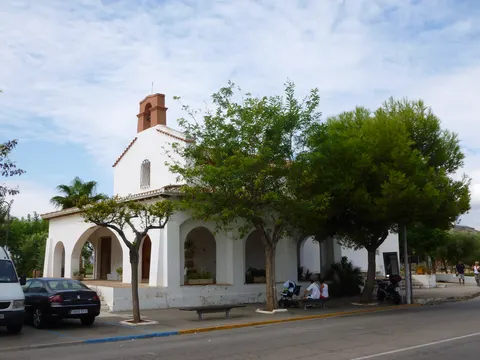
Basílica de Santa Maria del Lledó
A basilica on the northeast edge of town, at the end of an avenue lined with orange trees.
Meridian Park
A monolith in the park marks the exact spot where the Greenwich Meridian crosses the 40th parallel.