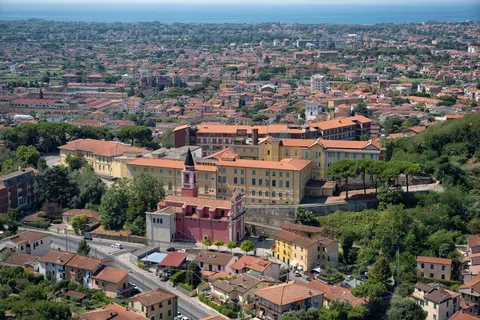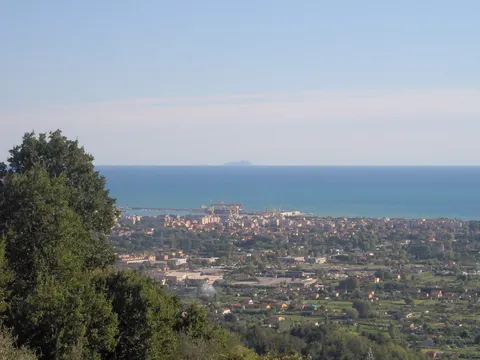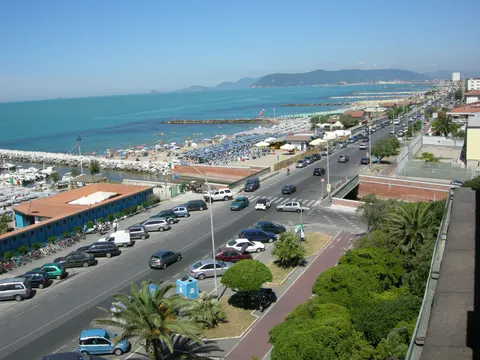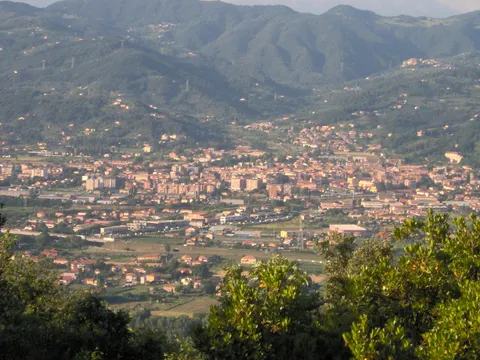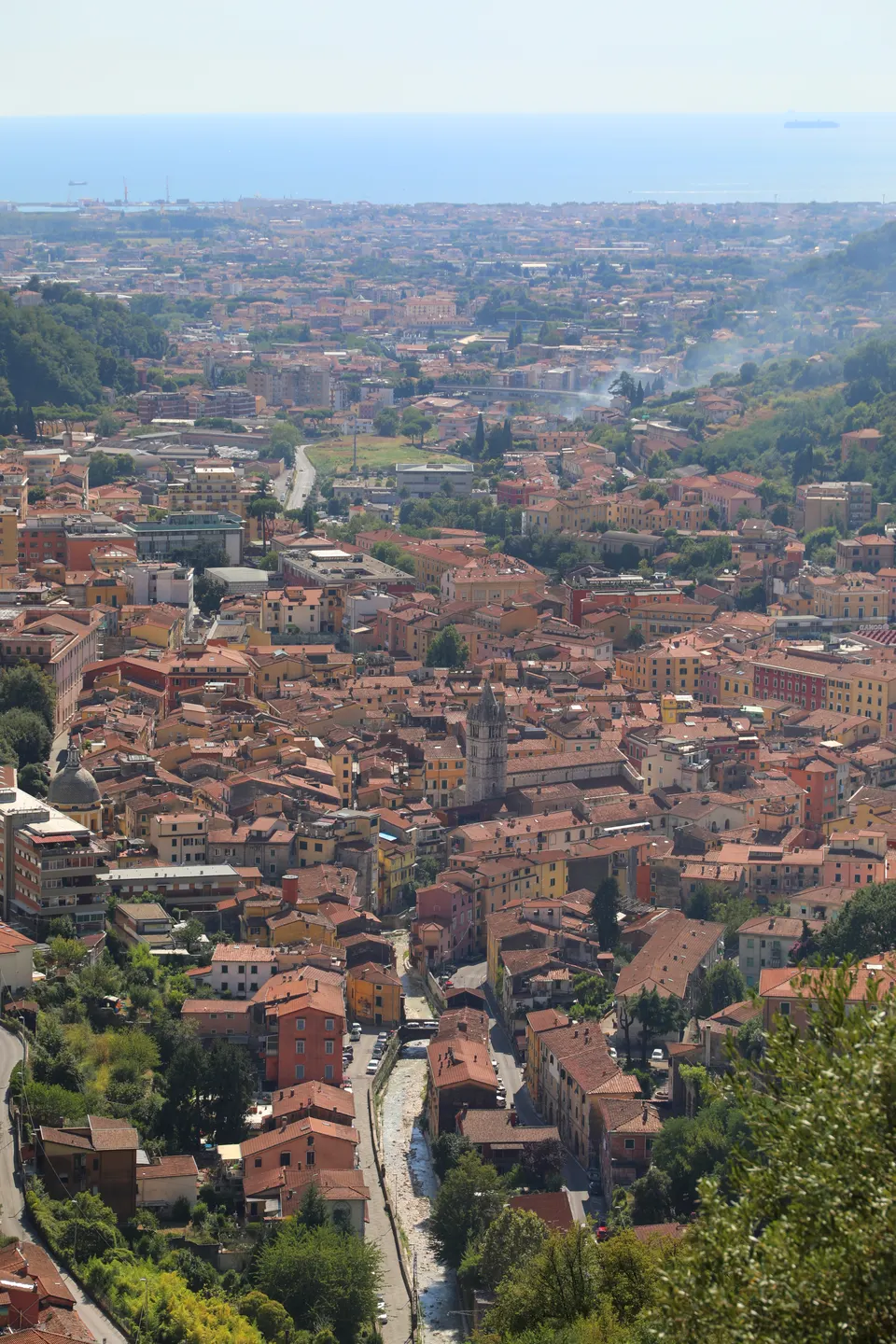

Carrara is a town in Tuscany, central Italy, notable for the white and blue-grey marble quarried there. It lies on the Carrione River, roughly 100 kilometres west-northwest of Florence. The town began as a borough built to house workers in the marble quarries the Romans opened, and quarrying and carving have shaped it ever since. Its wheel emblem recalls the carriages that hauled marble blocks.
Carrara is in Tuscany, Italy, and has a population of about 59,000.
Why go to Carrara?
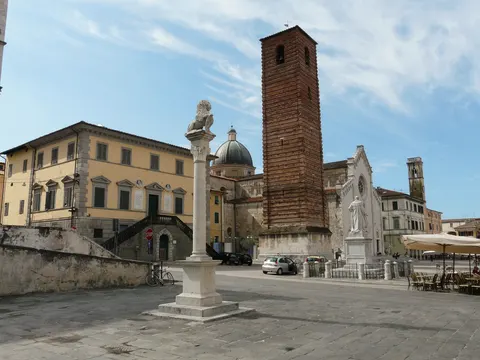
Visitors come for a marble town with a long history of carving and building. The Duomo is the town's cathedral, dating from the 12th century. The Ducal Palace, also called Palazzo Cybo Malaspina, now houses the Fine Arts Academy, and under its medieval loggia ancient Roman finds are displayed. The Church of the Suffragio has a large Baroque marble portal sculpted by Carlo Finelli. The Baroque church and convent of San Francesco were built by order of Carlo I Cybo-Malaspina. Carrara also has a radical past as the cradle of anarchism in Italy, and a congress held here in 1968 founded the International of Anarchist Federations.
When is the best time to visit Carrara?
July and August are the warmest, with highs of about 25 °C, and January and February are the coolest, at about 10 °C. Any month suits nature and hiking trips.
How do I get to Carrara without flying?
There are no direct train, bus or ferry links to Carrara yet. You can still search the trip planner for a route with changes.
What to do in Carrara
Duomo
The town's cathedral, known as the Duomo, dates from the 12th century and is one of its main sights.
Ducal Palace
A former Malaspina seat that joins a 13th-century castle to a Renaissance palace. Roman finds lie under its medieval loggia.
Church of the Suffragio
A Baroque church whose façade has a large marble portal sculpted by Carlo Finelli.