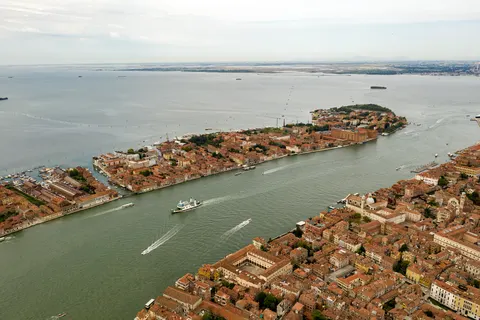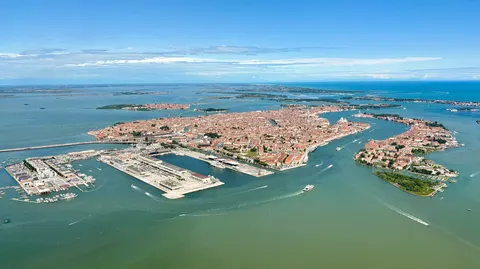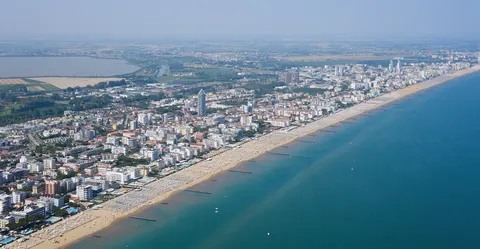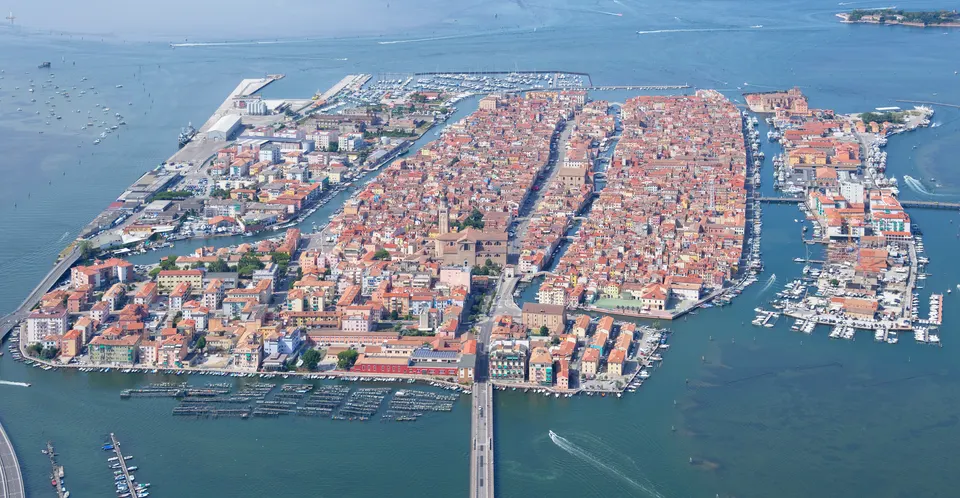

Chioggia is a coastal town on a small island at the southern entrance to the Venetian Lagoon, in the Veneto region of northern Italy. It lies about 25 kilometres south of Venice, and causeways join it to the mainland and to Sottomarina. Its history reaches back to Byzantine times, and it was a free commune and episcopal see from 1110, which gives the town a long maritime character.
With about 47,000 inhabitants, Chioggia lies in Veneto, Italy.
Why go to Chioggia?
Chioggia is often called Little Venice, a name that fits its few canals, chief among them the Canale Vena, and its narrow streets known as calli. The town is known for its lace, made on bobbins, and until the 19th century its women wore a dress that could be raised into a veil. Carlo Goldoni set his play Le baruffe chiozzotte here, a classic of Italian literature. Many of its medieval churches were reworked during the town's prosperous 16th and 17th centuries, which gives the old centre its character.
When is the best time to visit Chioggia?
Average highs range from 7 °C in January to 26 °C in July and August. June, July and August are the time for beach holidays. For city breaks, any month of the year works.
How do I get to Chioggia without flying?
Only one direct ferry link serves Chioggia. Allowing for changes, 1,640 destinations are no more than 14 hours away without flying. Venice is 1h 12m away by ferry with ACTV, with about 0.5 kg of CO₂ per person.
What to do in Chioggia
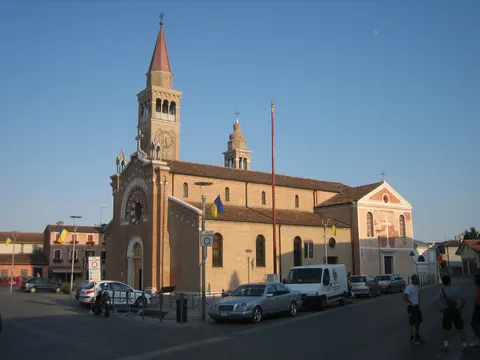
Chioggia Cathedral
The church of St Mary of the Assumption, founded in the 11th century and rebuilt from 1623 by Baldassare Longhena.
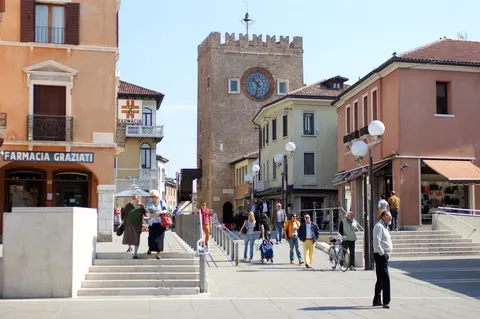
St Andrew's Church
A church whose bell tower, dating from the Middle Ages, is the most ancient tower watch in the world, with a Crucifixion by Palma the Elder inside.
Canale Vena
The main canal of the town, lined by the narrow calli that give Chioggia its Little Venice character.