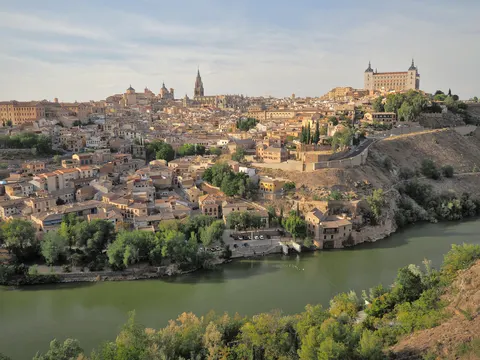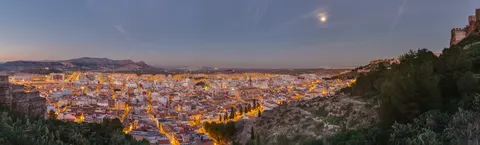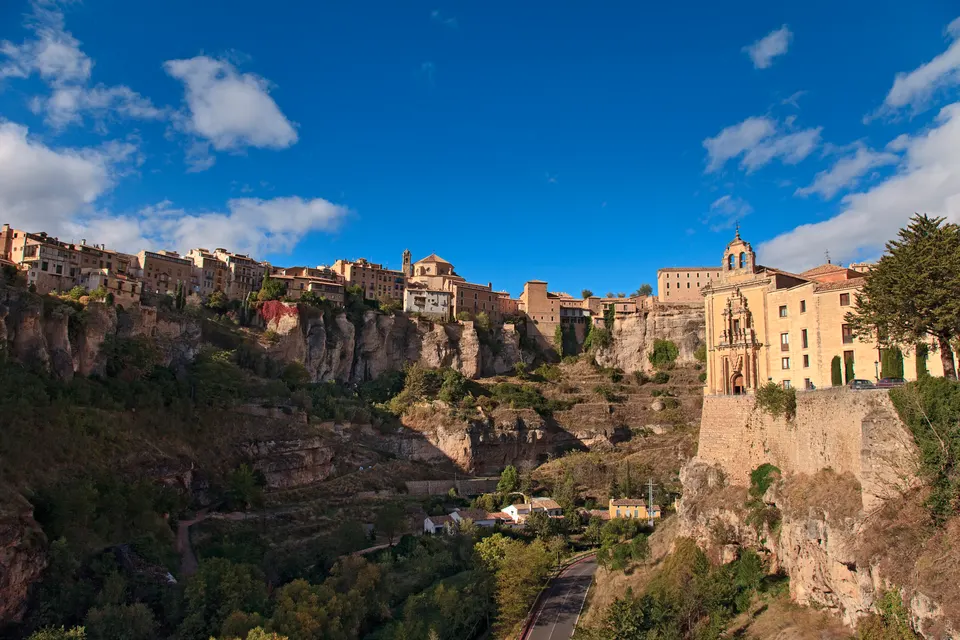

Cuenca is the capital of its province in Castilla-La Mancha. The old town sits on a narrow rocky escarpment between the Júcar and Huécar rivers, on the western fringes of the Iberian System mountains. A fortress here, Qal'at Kūnka, was conquered for the Kingdom of Castile in 1177, and the streets still follow that steep spine above the gorges.
With about 55,000 inhabitants, Cuenca lies in Castille-La Mancha, Spain.
Why go to Cuenca?
Cuenca is worth the trip for its setting alone. The city stands on a steep spur whose slopes drop into the deep gorges of the Júcar and Huécar rivers. The new town lies south-west of the old one, and the Huécar runs through the old town itself. In the early modern period the city was known for its textile and tapestry industry. Its museums cover a wide range, from the Museum of Spanish Abstract Art to the Holy Week Museum and the Diocese's Museum. The Archaeological Museum holds finds from Segóbriga, a Roman settlement in the province.
When is the best time to visit Cuenca?
Average highs range from 8 °C in January and December to 29 °C in July and August. For city breaks, any month of the year works.
How do I get to Cuenca without flying?
There are no direct train, bus or ferry links to Cuenca yet. The trip planner can still look for a route with changes.
What to do in Cuenca
Museum of Spanish Abstract Art
A museum devoted to abstract art by Spanish artists, set in the city that gave it a home.
Archaeological Museum
It holds items from the Archaeological Park of Segóbriga, a Roman settlement in the province.
Museum of Science of Castile-La Mancha
A science museum for the Castilla-La Mancha region, housed in the city.
Find tours and tickets: Museum of Science of Castile-La Mancha