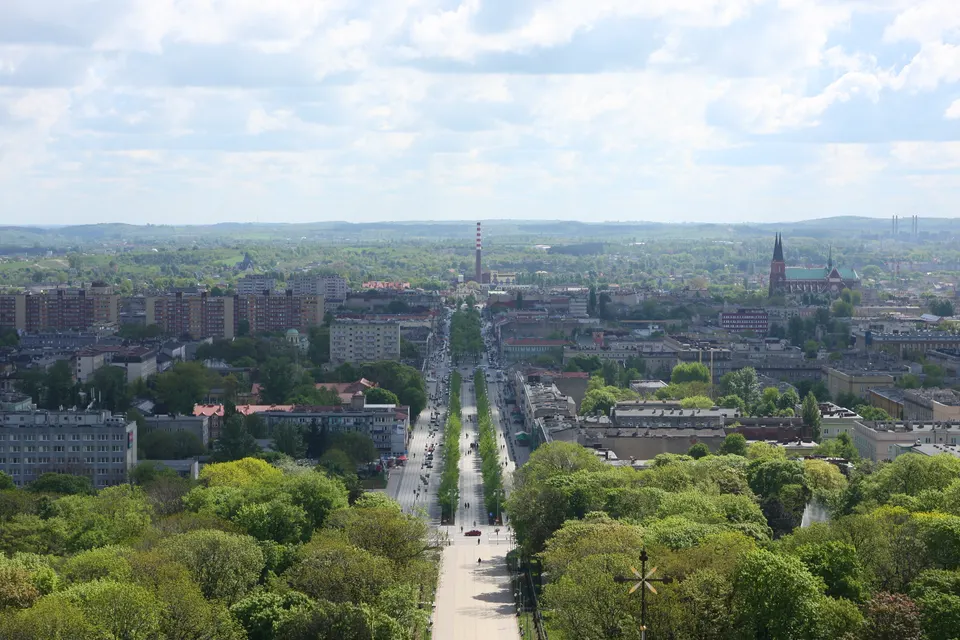

Częstochowa is a city in southern Poland on the Warta river, the thirteenth-largest city in the country. Although it lies in the Silesian Voivodeship, it is historically part of Lesser Poland. The city is best known for the Jasna Góra Monastery, home to the Black Madonna of Częstochowa, a shrine to Mary that draws millions of pilgrims every year. The city is sometimes called the little Nuremberg because of its souvenir shops.
Częstochowa, in Silesia, Poland, is home to about 248,000 people and works as a rail hub.
Why go to Częstochowa?
Jasna Góra Monastery draws the crowds, and the pilgrim trade shapes much of the city. The monastery has a museum of its own, and it is the city's most popular site for religious tourism. The Museum of Iron Ore Mining recreates mine corridors with equipment from a closed mine, and the Museum of Match Production occupies a former match factory with a historic machine park. The House of Poetry commemorates the poet Halina Poświatowska, who lived in the house after the Second World War. The Raków district holds an archaeological reserve, a Lusatian burial ground open to visitors since 1965.
When is the best time to visit Częstochowa?
In July and August the average high reaches 23 °C; in January it is closer to 0 °C. For city breaks, go in May, June and September.
How do I get to Częstochowa without flying?
Częstochowa has direct bus or train links to 15 destinations. Within 14 hours, travellers from 1,629 destinations can get here without flying. The train from Warsaw with PKP Intercity takes 1h 58m; that is about 6.7 kg of CO₂ per person, 86% less than the 47 kg of a flight. Wroclaw is 2h 58m away by train with PolRegio, with about 4.9 kg of CO₂ per person against 34 kg for the flight, 86% less. Travelling from Krakow, allow 1h 37m by train with PKP Intercity; that is about 3.3 kg of CO₂ per person.
What to do in Częstochowa
Jasna Góra Monastery
The monastery of the Order of Saint Paul the First Hermit, home to the Black Madonna and a museum of its own.
Częstochowa Town Hall
The former town hall, built in 1828 and the seat of the Regional Museum since 1967.
House of Poetry
The Halina Poświatowska Museum on Jasnogórska Street, with documents, photographs and scripts of her poems.
Museum of Iron Ore Mining
Corridors that resemble mine workings, equipped with mining equipment from a closed mine.
Archaeological Reserve of Lusatian Culture
A burial ground in the Raków district from the early Iron Age, kept as an archaeological reserve.
Find tours and tickets: Archaeological Reserve of Lusatian Culture