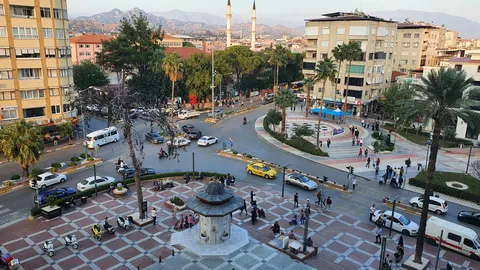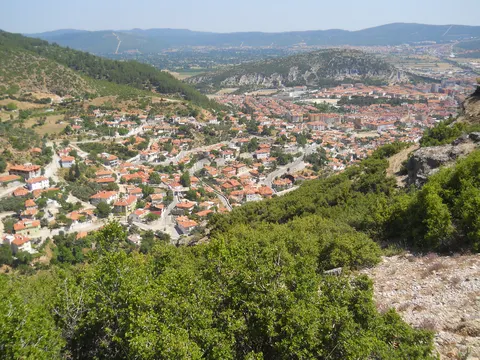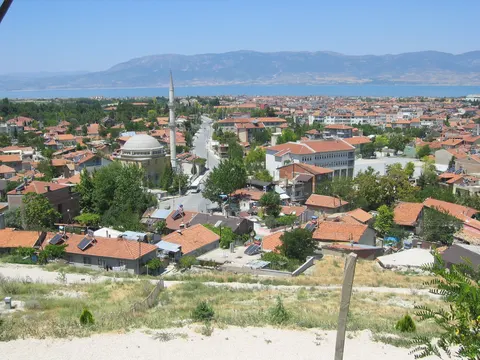

Denizli is a city in Turkey's Aegean region and the seat of the province that bears its name. Its urban area spans the districts of Merkezefendi and Pamukkale, and textile production and exports have driven its growth in recent decades. Hot summers are the norm, while the mountains around the city can carry snow in winter. Thermal water, mineral terraces and ancient ruins lie within reach.
About 313,000 people live in Denizli, in Turkey.
Why go to Denizli?
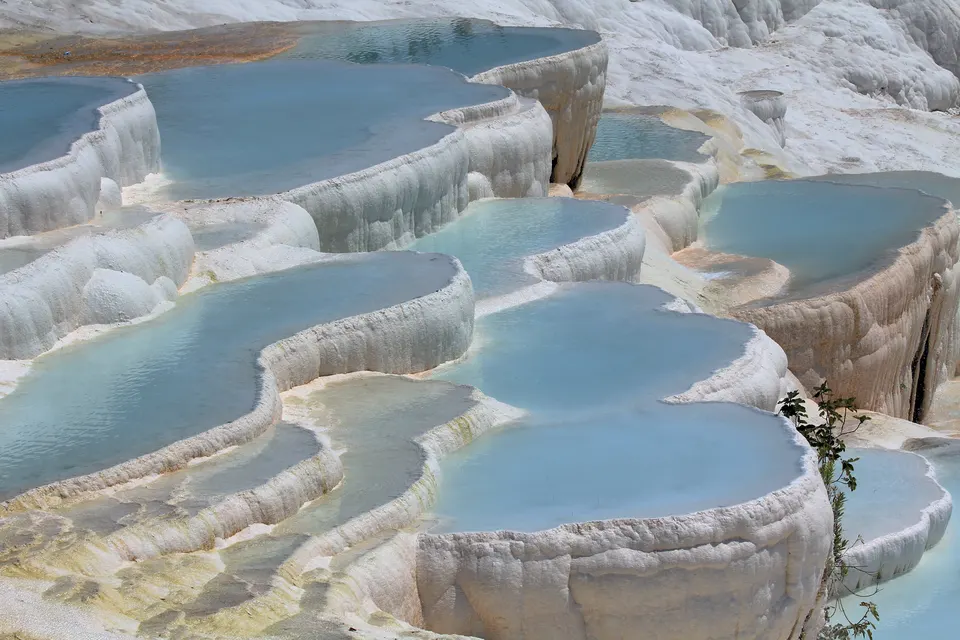
Most visitors come for Pamukkale, where mineral-coated terraces spill down the hillside, and for the ancient city of Hierapolis beside them. Hierapolis was founded by the Pergamon king Eumenes in 190 BC and reached its peak in the Roman and Byzantine periods. Laodicea on the Lycus lies north of Denizli, a trading city known for woollen and cotton cloth, with a stadium, an amphitheatre and the remains of one of the seven churches of Asia Minor. Karahayıt, just north of Pamukkale, has spa hotels that use red-coloured thermal water. Honaz mountain, to the west, is a popular picnic excursion for people from the city in summer.
When is the best time to visit Denizli?
Expect daytime highs of about 35 °C in July, falling to 11 °C in January.
How do I get to Denizli without flying?
You can get to Denizli without changing from 13 destinations, by bus. With changes, Denizli is within 14 hours of 87 destinations without flying. From Kemer, it takes 4h 15m by bus with FlixBus-tr, with about 5 kg of CO₂ per person against 42 kg for the flight, 88% less. Travelling from Burdur, allow 2h 26m by bus with FlixBus-tr; that is about 2.9 kg of CO₂ per person. Manavgat is 4h 50m away by bus with FlixBus-tr, with about 6.4 kg of CO₂ per person against 54 kg for the flight, 88% less.
What to do in Denizli
Pamukkale travertines
A hillside coated in mineral deposits from its hot springs, and a World Heritage Site.
Hierapolis
An ancient city built in Greek style, later rebuilt in stone in a Roman style after earthquakes.
Laodicea ad Lycum
A trading city known for its woollen cloth, with a stadium, amphitheatre and odeon among its remains.
Akhan caravanserai
A Seljuq caravanserai on the Ankara highway, much of it still standing after restoration.