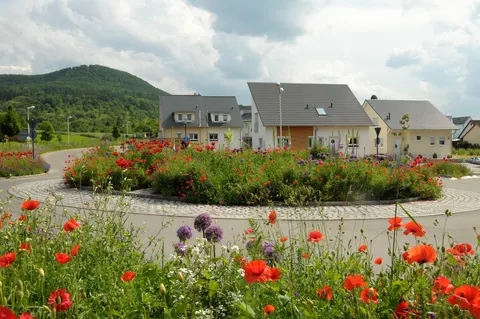
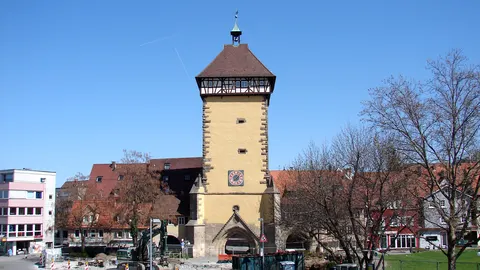
Dußlingen is a municipality in the district of Tübingen in Baden-Württemberg, Germany. The village is first recorded in 888 as Tuzzilinga, and its name comes from a personal name with the old Alemannic suffix -ingen. Finds from the Stone Age, the Hallstatt period, the La Tène period and the Roman era show that people lived here long before the village was named.
Dusslingen, in Baden-Wurttemberg, Germany, is home to about 5,286 people and works as a rail hub.
Why go to Dusslingen?
The village's appeal lies in its long history and above all in its medieval lords. The Knights of Dußlingen, subjects of the Counts of Tübingen, held the village under the family name Herter and served as its pastors. They kept the village property from generation to generation until their last male heir died in 1614. A part of the wall that surrounded the old castle still remains on the north edge of the village, built into the foundation of the old timber-frame mayor's house and town hall. Part of the castle moat is still visible.
When is the best time to visit Dusslingen?
In July and August the average high reaches 23 °C; in January and December it is closer to 4 °C.
How do I get to Dusslingen without flying?
Dusslingen has direct train links to 3 destinations. Within 14 hours, travellers from 2,475 destinations can get here without flying. The train from Tübingen with Südwestdeutsche Verkehrs-AG takes 4 min; that is about 0.1 kg of CO₂ per person. Mössingen is 3 min away by train with Südwestdeutsche Verkehrs-AG, with about 0.1 kg of CO₂ per person. Travelling from Hechingen, allow 11 min by train with Südwestdeutsche Verkehrs-AG; that is about 0.2 kg of CO₂ per person.
What to do in Dusslingen
Gomaringer Schloss
A castle in Dusslingen.
Travel on from Dusslingen
Direct links run to Tübingen, Mössingen and Hechingen.
Compare the trip with flying
The trip planner compares train, bus and ferry options to Dusslingen with a flight, including CO₂.