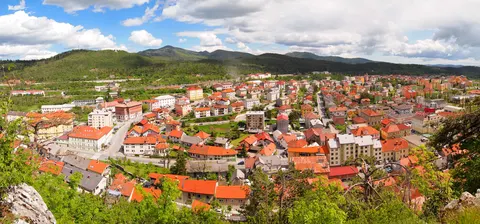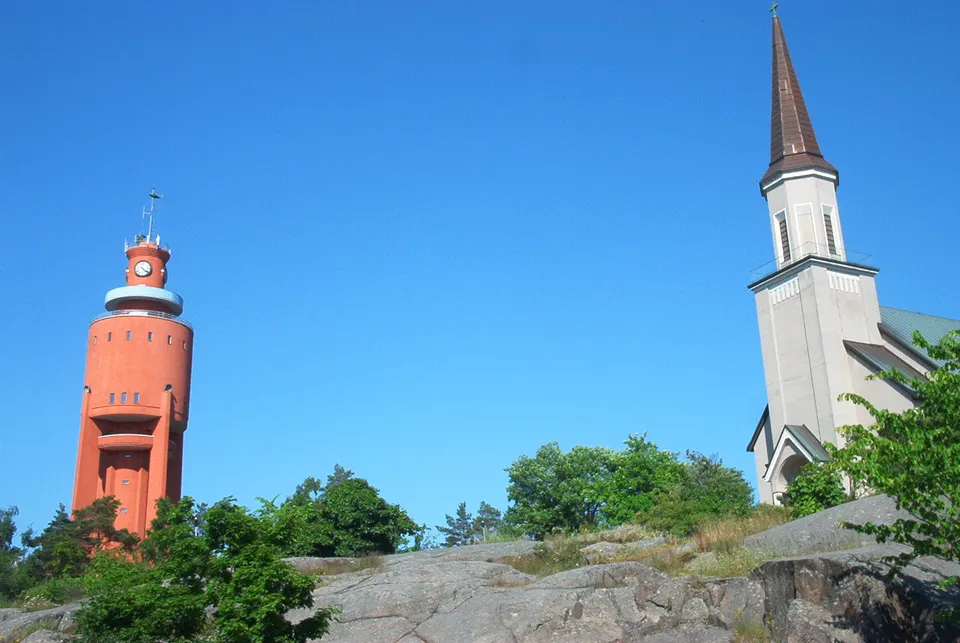

Hanko is a town on the southern coast of Finland, on the southernmost tip of the mainland peninsula. It is bilingual, with Finnish and Swedish as official languages, and it has about 8,000 inhabitants. The town's port is the fourth largest in Finland, and the skyline is dominated by its church and water tower. Hanko is known for its archipelago and its sandy beaches.
With about 9,962 inhabitants, Hanko lies in Uusimaa, Finland, and is a rail hub.
Why go to Hanko?
Hanko's history is tied to the sea. The Battle of Gangut was fought in the archipelago north of the peninsula in 1714, the first victory of the Russian regular fleet. Forts on the outlying islands were later taken over by Russia, and in the Russian imperial era Hanko became a spa for the Russian nobility. Granite quarried here went into buildings in Helsinki and St. Petersburg, and many emigrants bound for North America sailed from the port. Today the sandy beaches, the 90 small islands and the Bengtskär lighthouse draw visitors.
When is the best time to visit Hanko?
Average highs range from -3 °C in February to 17 °C in July and August. July, August and September are the time for nature and hiking trips.
How do I get to Hanko without flying?
Direct bus or train services link Hanko with 8 destinations. Allowing for changes, 137 destinations are no more than 14 hours away without flying. Raseborg is 24 min away by train with VR, with about 0.1 kg of CO₂ per person. The bus from Lohja takes 1h 48m; that is about 2.1 kg of CO₂ per person. From Turku, it takes 1h 48m by bus, with about 2.1 kg of CO₂ per person.
What to do in Hanko
Bengtskär lighthouse
The tallest lighthouse in the Nordic countries, located southwest of Hanko.
Hanko Casino
A former banquet hall from the spa era. It is not a gambling establishment, despite its name.
Emigrant memorial statue
A statue of birds in flight commemorates the emigrants who left Finland from the port of Hanko.