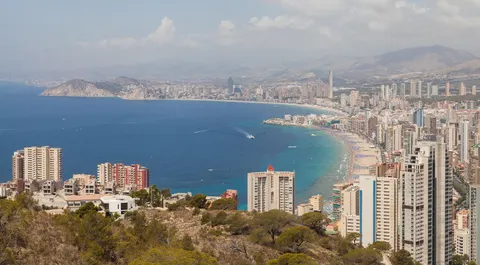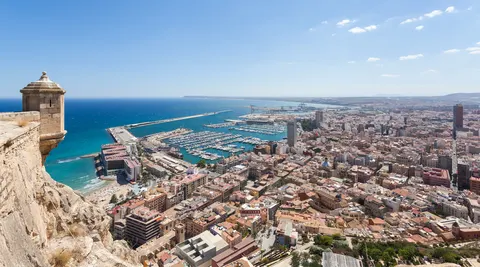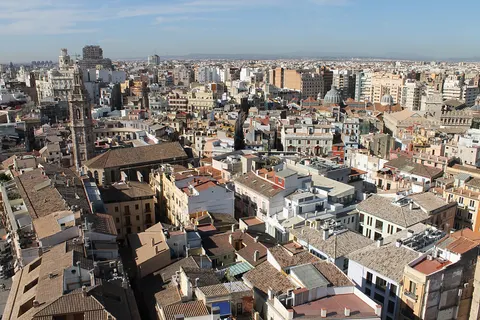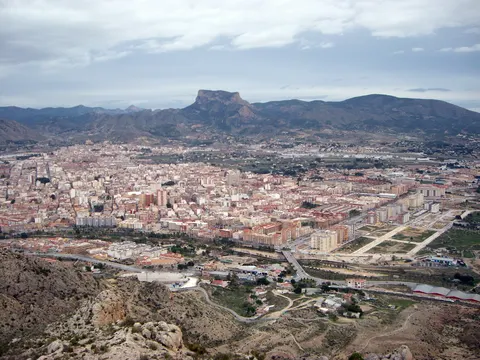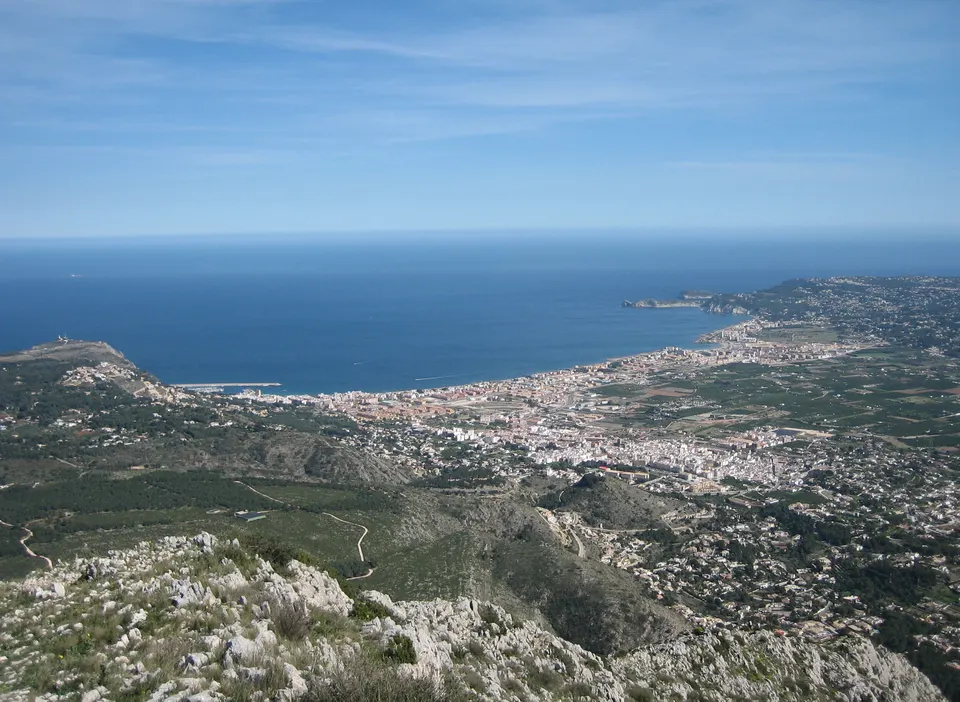

Xàbia, also called Jávea, is a coastal town and municipality in the Marina Alta comarca of the province of Alicante, on the Mediterranean. It sits on the side of the Montgó Massif, behind a wide bay and between two rocky headlands. The town has grown into a small seaside resort and market town, and half of its residents are foreigners, as are over two thirds of its visitors.
About 28,000 people live in Javea, in Valencia, Spain.
Why go to Javea?
The bay and the Montgó massif give the town its setting, and the natural park on the mountain is one of its main draws. The park reaches the Cape San Antonio nearby, where the Foradada cave on the north face was used by hunter-gatherers long before the Romans. The coastline has four capes, among them Cap de la Nau, the largest, and on clear days the island of Ibiza can be seen to the east. The old wall built against pirate raids survives in places, and in some sections a replica stands in its place.
When is the best time to visit Javea?
Expect daytime highs of about 27 °C in August, falling to 14 °C in January and February. If you are after beach holidays, aim for July, August and September. For nature and hiking trips, any month of the year works.
How do I get to Javea without flying?
There are no direct train, bus or ferry links to Javea yet. The trip planner can still look for a route with changes.
What to do in Javea
Foradada cave
A cave on the north face of Cape San Antonio, used by hunter-gatherers from the end of the last Ice Age onwards.
Parque natural del Macizo del Montgó
A natural park on the Montgó massif, declared in 1987, which stretches out towards Cape San Antonio.
Find tours and tickets: Parque natural del Macizo del Montgó
Hermitage of Popol
A hermitage that dates to the 14th century, standing in the area around the town.
Town wall
The defensive wall built against pirate raids, where some sections have been rebuilt as a replica.