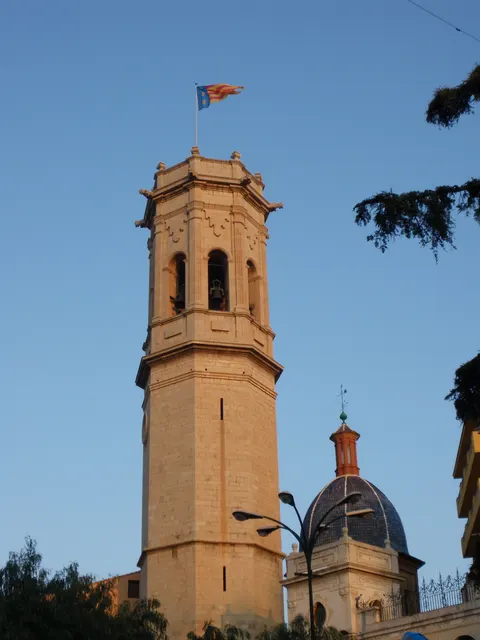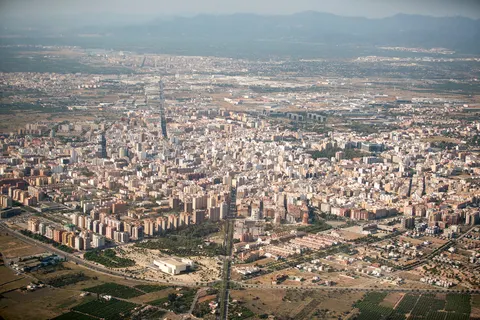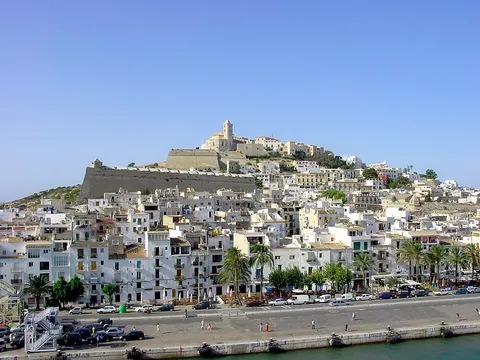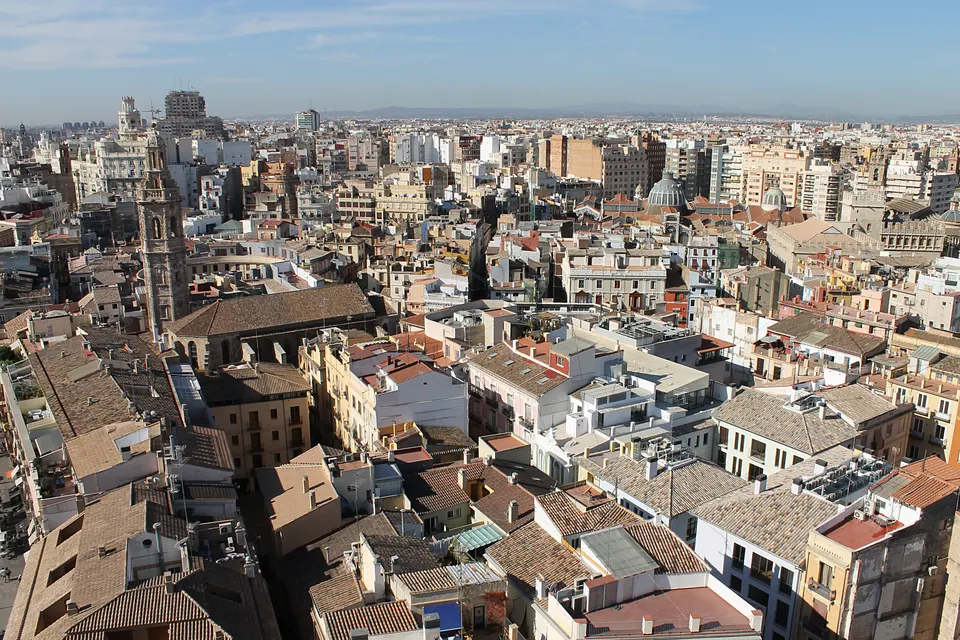

Valencia, the capital of the Valencian Community, is a city of wide avenues, old streets and a long coast. The Turia runs through the city, and the modern complex of the City of Arts and Sciences stands out against the older centre. The city has a cathedral, an old trading hall and a cluster of museums, and the beach is a short step from the centre. Its character is more open to the sea than that of the inland capital.
With about 824,000 inhabitants, Valencia lies in Spain and is a rail hub.
Why go to Valencia?
Go to Valencia for the mix of old and new. The City of Arts and Sciences and the L'Oceanogràfic give a modern stop, and the Museu de les Ciències Príncipe Felipe adds a science museum to the same complex. The Valencia Cathedral and the Basilica of Our Lady of the Forsaken cover the church side, and the Lonja de la Seda, a UNESCO listing, sits in the old town. The Palau de la Generalitat Valenciana and the Valencian Museum of Ethnology bring the city's public and cultural life into view. Valencia suits a Sun & Beach trip with a City & Culture programme, and the coast is an easy step from the old town.
When is the best time to visit Valencia?
Average highs range from 14 °C in January to 29 °C in July and August. June, July and September are the time for beach holidays. For city breaks, any month of the year works.
How do I get to Valencia without flying?
Direct bus, ferry or train services link Valencia with 13 destinations. Allowing for changes, 1,045 destinations are no more than 14 hours away without flying. Madrid is 2h 00m away by train with RENFE OPERADORA, with about 2.9 kg of CO₂ per person against 69 kg for the flight, 96% less. The train from Barcelona with Renfe takes 3h 00m; that is about 5 kg of CO₂ per person, 93% less than the 70 kg of a flight. From Alicante, it takes 1h 55m by train with RENFE OPERADORA, with about 1.2 kg of CO₂ per person.
What to do in Valencia
City of Arts and Sciences
The City of Arts and Sciences is a modern complex that stands out against the older centre. Walk the length of it, then go into the museum or the aquarium for a closer look.
Lonja de la Seda
The Lonja de la Seda is a UNESCO listing in the old town. Go in to see the hall and the way it was used for trade.
Valencia Cathedral
Valencia Cathedral is the city's main church, and it sits in the old town near the other sights. Step inside and look at the interior before moving on.
Museu de Belles Arts de València
The Museu de Belles Arts de València is the city's fine arts museum, and it fits a City & Culture day in the old town. Give it time to see the painting rooms.
The beach and the seafront
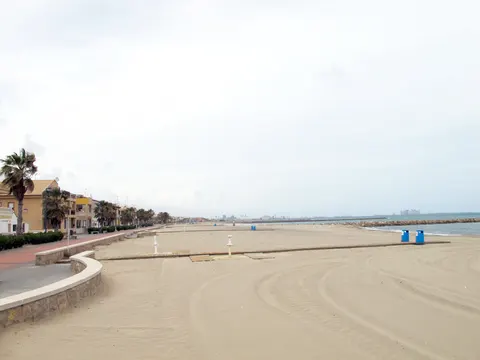
Valencia's beach runs along the coast, and the seafront is an easy break from sightseeing. Swim, walk the front, then head back to the old town.