
By train
89% less CO₂Valencia
By train from Paris
Route
France → Spain
Plan this tripPhoto: Nicolas Vollmer from Munich [Allemagne], CC BY 2.0, Wikimedia Commons
By train in 9h 27m with one change, 15 kg CO₂ per person — 89% less than the flight’s 136 kg CO₂e (door to door 5h 56m).
By train from Paris
By plane from Paris
136kg CO₂e
Per person, one way
5h56m
One way, door to door
It would take about 6 trees a full year to absorb the flight’s 136 kg CO₂e.
Only 1h56m of the 5h 56m is spent in the air.
Travel to the airport
Door to terminal
Check-in, security, boarding
Arrive early, queue, wait
Flight to Valencia
136 kg CO₂e per trip
Travel into the city
Terminal to city centre
Arrive in Valencia
5h56mFlight figures are CO₂e: they include the warming effect of emissions at altitude (radiative forcing). Train, bus and ferry figures are CO₂. How we calculate
Without flying, Paris to Valencia takes 9h 27m by train with one change in Barcelona. You travel with SNCF / Renfe and RENFE OPERADORA. That emits about 15 kg of CO₂ per person, 89% less than the flight's 136 kg CO₂e. Against the flight's door-to-door time, you spend 3h 31m more on the way.
Cheapest train or bus fare Omio lists for this trip. The price varies with the date and changes daily.
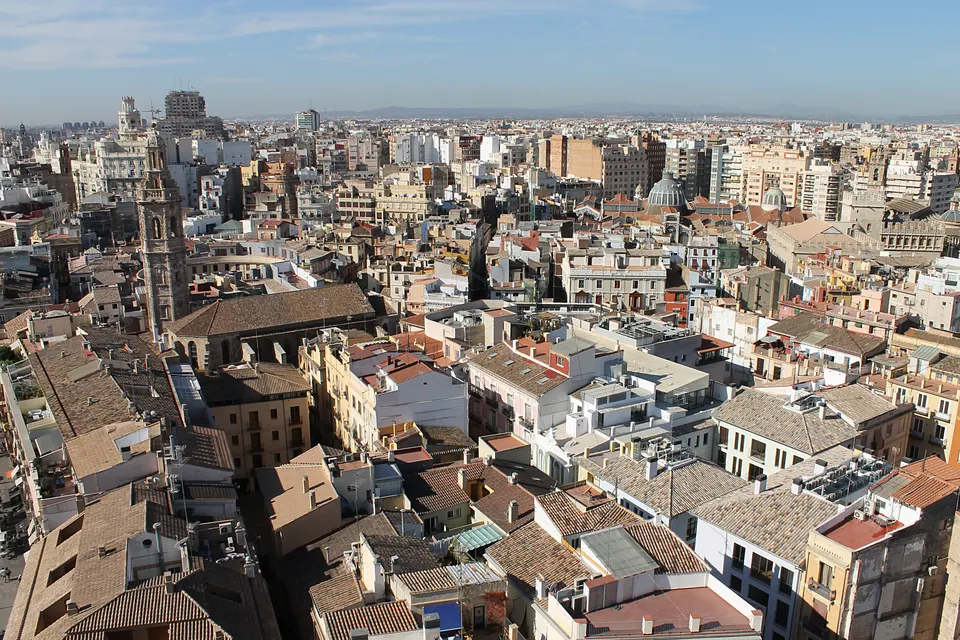
Valencia is known for its City of Arts and Sciences, a complex on the banks of the Turia, and for the Lonja de la Seda, a UNESCO site that shows the city's trading past. Valencia is the seat of the Valencian Community and its largest city, set on the Iberian Peninsula's eastern shore, facing the Mediterranean Sea. Valencia Cathedral, the Palau de la Generalitat Valenciana and the Basilica of Our Lady of the Forsaken add older layers to the city's centre. Coming from Paris, on the Seine, the route runs south through Barcelona to a city on the same sea.
Valencia is at its best for beach holidays in June, July and September; June averages 26 °C.
Going the other way? The figures here are for Paris to Valencia; the trip planner searches Valencia to Paris just as well, for your own dates.