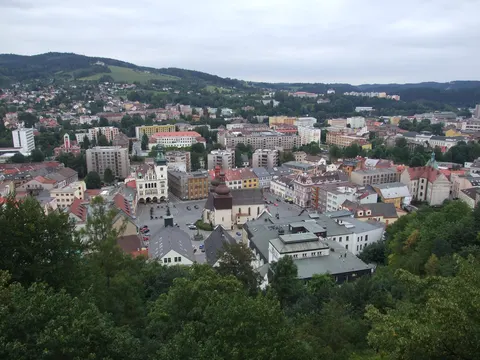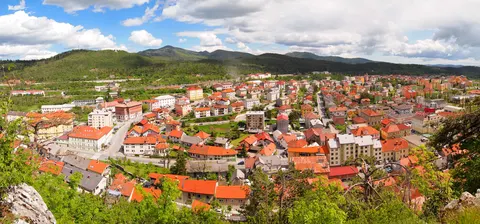

Kłodzko is a historic town in the Lower Silesia region of southwestern Poland, set in the centre of the Kłodzko Valley on the Eastern Neisse river. It is the seat of Kłodzko County and the main commercial and transport centre of the area. Culturally part of Bohemia for much of its history, it is one of the oldest towns in Poland.
Kłodzko, in Lower Silesia, Poland, is home to about 26,000 people and works as a rail hub.
Why go to Kłodzko?
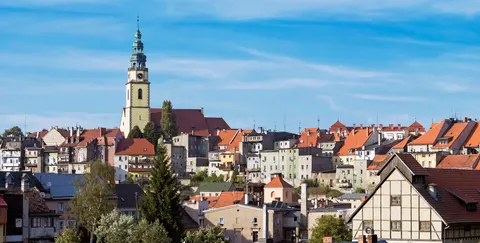
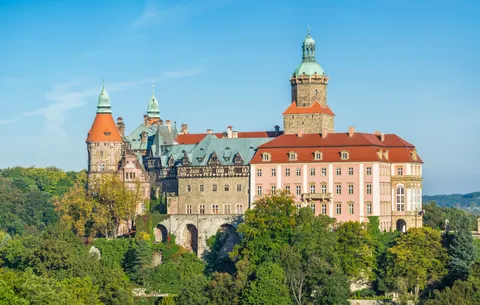
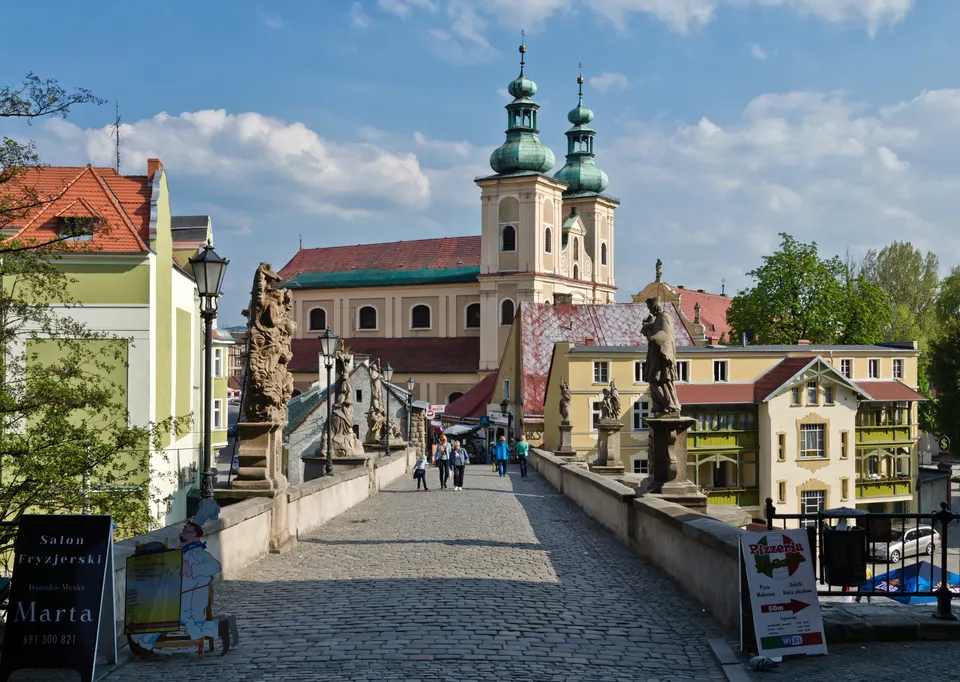
Kłodzko is often called Little Prague for its historic monuments, and its Gothic bridge is a miniature of Prague's Charles Bridge. The Collegiate Church of the Assumption is one of the most notable Gothic buildings in Poland and a burial place of the Piast dynasty. Above the town, a fortress on a high rock was first built in the early Middle Ages and later became one of the largest in Prussia under Frederick the Great, with memorials to its many former prisoners. Parts of the city tunnels, dug under the streets since the thirteenth century, are open to the public.
When is the best time to visit Kłodzko?
In July and August the average high reaches 22 °C; in January it is closer to 0 °C. Nature and hiking trips work best in May, June and September. For city breaks, go in May, June and September.
How do I get to Kłodzko without flying?
Kłodzko has direct bus or train links to 7 destinations. Within 14 hours, travellers from 1,776 destinations can get here without flying. The train from Wroclaw with Koleje Dolnośląskie takes 1h 04m; that is about 2.6 kg of CO₂ per person. Świdnica is 1h 23m away by train with Koleje Dolnośląskie, with about 1.5 kg of CO₂ per person. Travelling from Gliwice, allow 2h 31m by bus with FlixBus-eu; that is about 3.9 kg of CO₂ per person.
What to do in Kłodzko
Gothic bridge
A bridge that resembles a miniature Charles Bridge in Prague, and it survived the flood of 1997.
Collegiate Church of the Assumption
One of the most notable Gothic churches in Poland, built by the Order of Saint John and a burial place of the Piast dynasty.
Fortress
A stronghold on a high rock above the town, with memorials to the many prisoners it held.
Marian Column
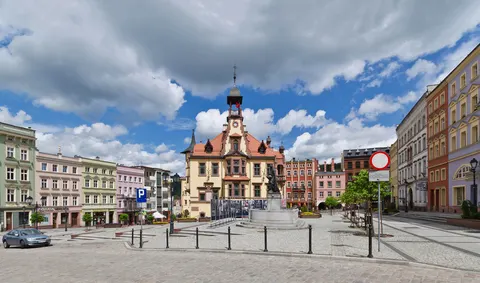
A column on the market square depicting the Virgin Mary, built after a plague in 1625.