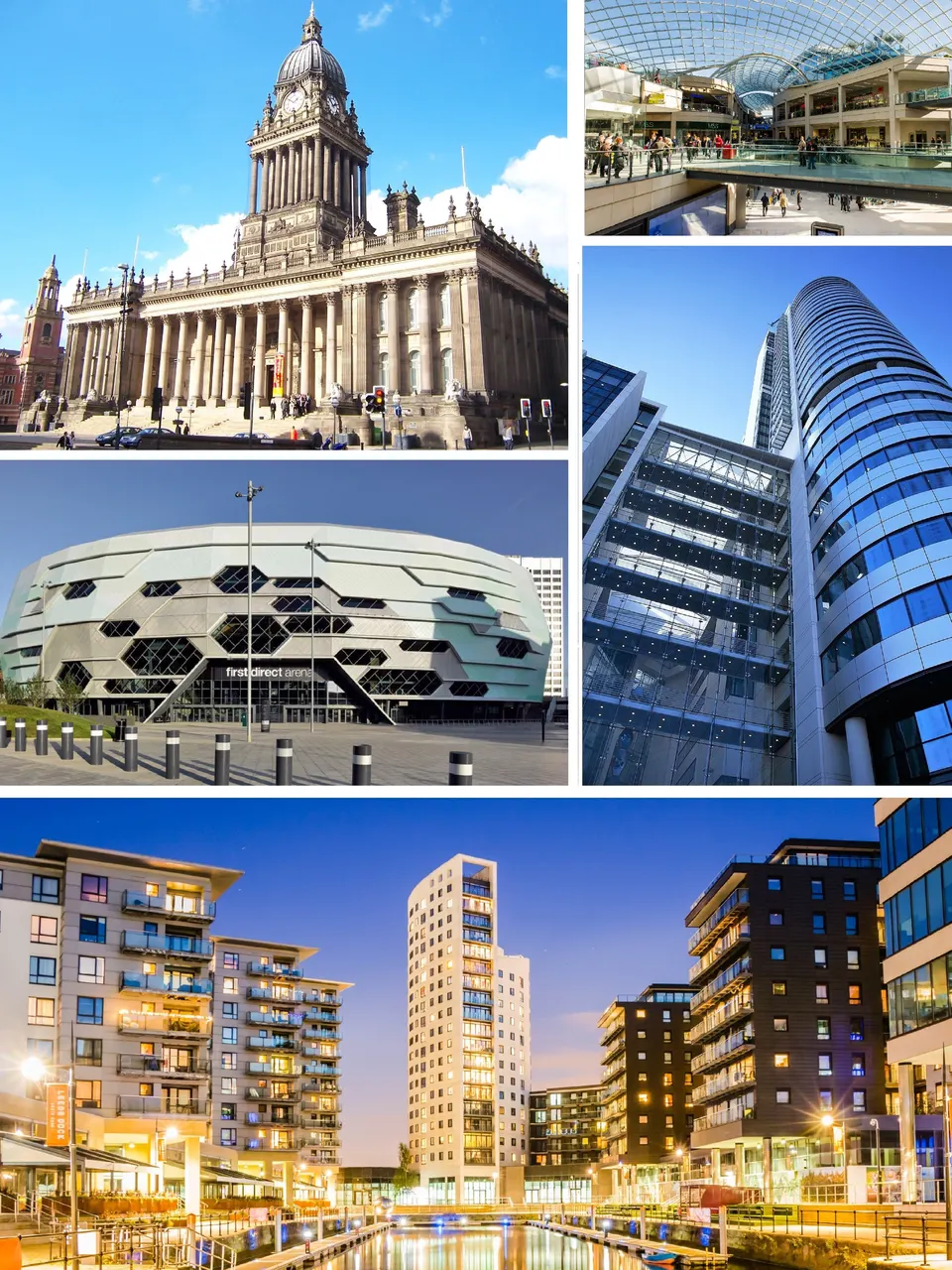

Leeds is a city in West Yorkshire, England, and the largest settlement in Yorkshire. It is built around the River Aire, in the eastern foothills of the Pennines, and is the administrative centre of the City of Leeds metropolitan borough. The city grew on wool and trade and became a mill town during the Industrial Revolution. Queen Victoria granted it a city charter in 1893.
About 536,000 people live in Leeds, in England, United Kingdom, and its station is a rail hub.
Why go to Leeds?
Leeds is the cultural, financial and commercial heart of West Yorkshire, and its student population gives it a lively nightlife. Its industrial past is still visible in Armley Mills, once the world's largest woollen mill, and in the Egyptian-style Temple Works. Kirkstall Abbey shows the beauty and grandeur of Cistercian architecture, and the Royal Armouries Museum, opened in 1996 in a modern building at Leeds Dock, holds the UK's national collection of arms and armour. The city's Victorian arcades, such as Kirkgate Market, show how Leeds became a centre for shopping.
When is the best time to visit Leeds?
Expect daytime highs of about 20 °C in July, falling to 6 °C in January and December. For city breaks, any month of the year works.
How do I get to Leeds without flying?
You can get to Leeds without changing from 15 destinations, by bus or train. With changes, Leeds is within 14 hours of 1,637 destinations without flying. From London, it takes 2h 12m by train with LNER, with about 3 kg of CO₂ per person against 62 kg for the flight, 95% less. Travelling from Birmingham, allow 2h 25m by bus with FlixBus-gb; that is about 4 kg of CO₂ per person. Manchester is 1h 07m away by bus with FlixBus-eu, with about 1.6 kg of CO₂ per person.
What to do in Leeds
Kirkstall Abbey
Its site and ruins display the beauty and grandeur of Cistercian architecture, and the former gatehouse houses Abbey House Museum.
Royal Armouries Museum
The UK's national collection of arms and armour, housed in a dramatic modern building on Leeds Dock.
Leeds Town Hall
Designed by Cuthbert Brodrick, it is one of a trio of civic buildings in the city centre, along with the Corn Exchange and Leeds City Museum.
Armley Mills
Housed in what was once the world's largest woollen mill, it shows the first known moving pictures, filmed in the city in 1888.
Kirkgate Market
One of several surviving Victorian arcades in the city.