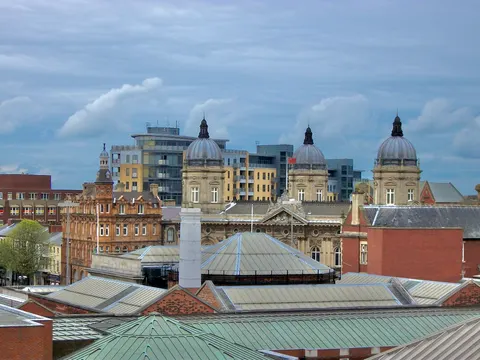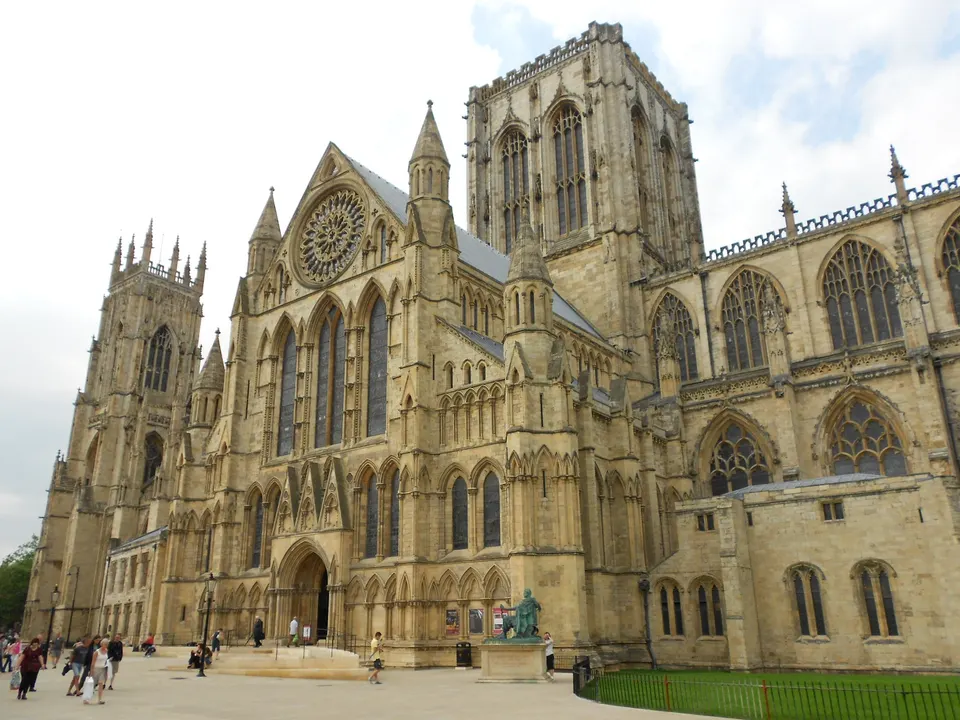

York is a cathedral city in North Yorkshire, England, sited where the rivers Ouse and Foss meet. The Romans founded it as Eboracum in AD 71, and it later became the capital of the kingdoms of Deira and Northumbria. It is the traditional county town of Yorkshire and is known for its many historic buildings, including the minster, the castle and the city walls, all listed at the highest grade.
With about 156,000 inhabitants, York lies in England, United Kingdom, and is a rail hub.
Why go to York?
York Minster, a large Gothic cathedral, dominates the city, and the remains of the Roman headquarters of the fortress lie beneath its foundations. The city walls are the most complete in England, retain all their principal gateways and make a popular walk around the centre. Central York is full of snickelways, narrow pedestrian routes that once led to its old market-places. The Shrine of Margaret Clitherow stands on the Shambles, a narrow medieval street where many former butchers' shops now house tea rooms and boutiques. The National Railway Museum has been in the city since 1975.
When is the best time to visit York?
Average highs range from 7 °C in January, February and December to 20 °C in July and August. For city breaks, any month of the year works.
How do I get to York without flying?
Direct bus or train services link York with 4 destinations. Allowing for changes, 1,658 destinations are no more than 14 hours away without flying. London is 2h 00m away by train with LNER, with about 3 kg of CO₂ per person against 64 kg for the flight, 95% less. The bus from Leeds with FlixBus-gb takes 50 min; that is about 1 kg of CO₂ per person. From Kingston upon Hull, it takes 1h 00m by train, with about 0.6 kg of CO₂ per person.
What to do in York
York Minster
A large Gothic cathedral dominating the city, with part of the Roman fortress headquarters revealed in its undercroft.
City Walls
Medieval walls that are the most complete in England, with all their principal gateways and a popular walk around the centre.
Shrine of Margaret Clitherow
A shrine on the Shambles, a narrow medieval street of former butchers' shops. It stands next to, not in, the house where she lived.
National Railway Museum
A museum of the railway heritage that made York one of the major railway centres of Britain.