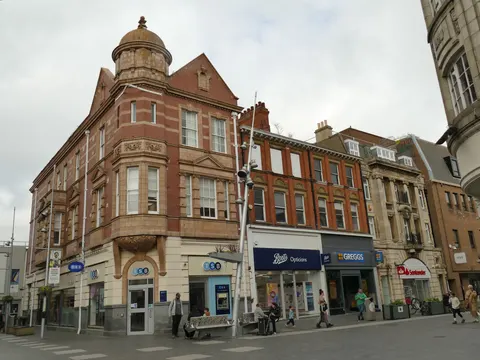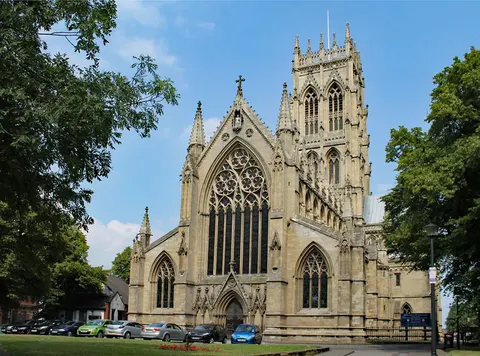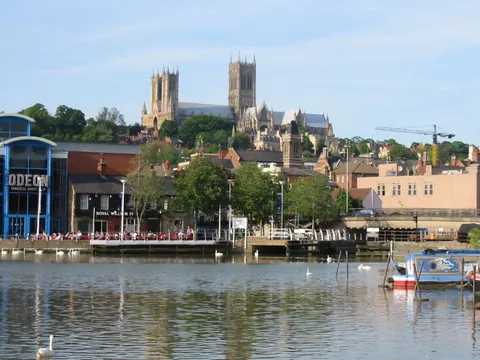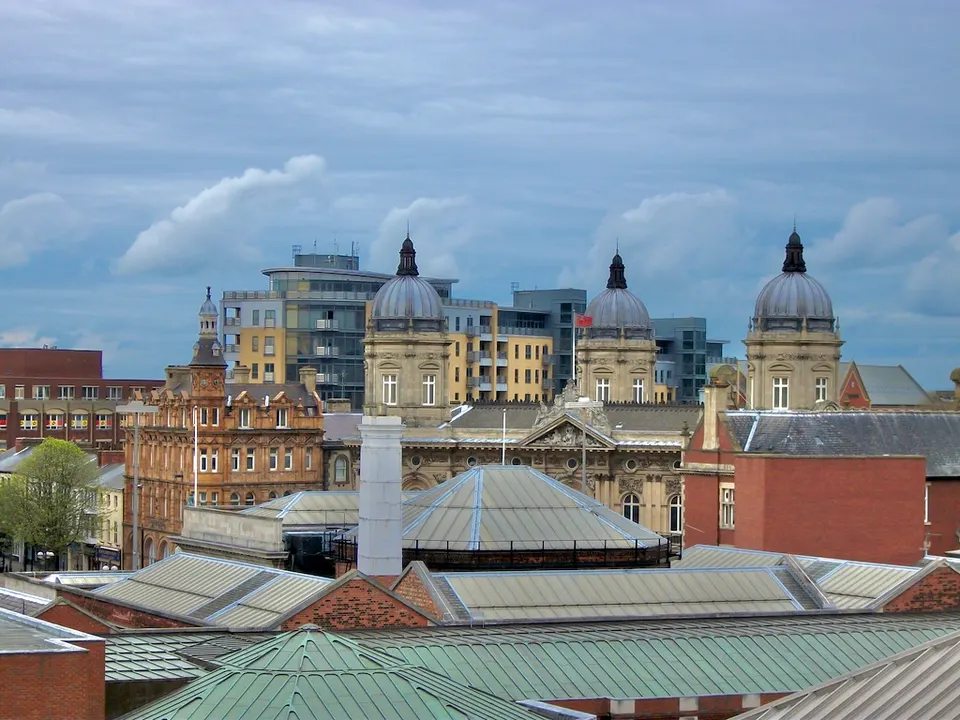

Kingston upon Hull, usually called Hull, is a port city in the East Riding of Yorkshire, England. It stands where the River Hull meets the Humber Estuary, some 40 km inland from the North Sea. Hull has more than 800 years of seafaring history and is known as Yorkshire's maritime city. It has a city centre marina, a historic old town and a thriving arts scene.
Kingston upon Hull is in England, United Kingdom, and has a population of about 314,000; it is also a rail hub.
Why go to Kingston upon Hull?
The Deep is the city's best-known attraction, a public aquarium with thousands of species. The old town survived the Second World War bombing with its historic streets intact, which has made it a favourite location for period dramas and earned the city its nickname Hullywood. The Museums Quarter on the High Street combines four museums around a garden: Wilberforce House, the birthplace of the abolitionist William Wilberforce, the Arctic Corsair trawler, the Hull and East Riding Museum and the Streetlife Museum of Transport. The Minster, the Ferens Art Gallery and the marina add to the centre.
When is the best time to visit Kingston upon Hull?
July and August are the warmest, with highs of about 20 °C, and January, February and December are the coolest, at about 7 °C. Any month suits city breaks.
How do I get to Kingston upon Hull without flying?
From 8 destinations you can travel to Kingston upon Hull directly by bus or train. Counting connections, 1,490 destinations can reach it within 14 hours without flying. Travelling from Scarborough, allow 2h 00m by bus; that is about 1.6 kg of CO₂ per person. From York, it takes 1h 00m by train, with about 0.6 kg of CO₂ per person. The train from Doncaster with Hull Trains takes 1h 00m; that is about 0.7 kg of CO₂ per person.
What to do in Kingston upon Hull
Scale Lane Bridge
A bridge in Kingston upon Hull.
The Deep
A park in Kingston upon Hull.
City breaks in Kingston upon Hull
June is the ideal month for city breaks, with average highs of 17 °C.