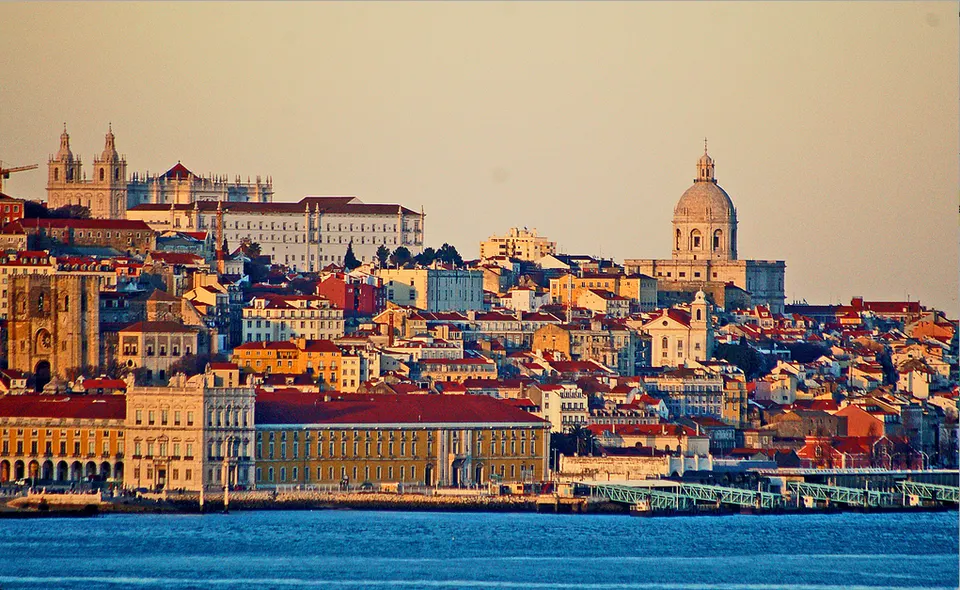

Lisbon spreads across steep hills above the River Tagus, and its viewpoints, old streets and wide river views make the city feel open and easy. It lies in the western part of the Iberian Peninsula, fronting the northern shore of the river, so the light and the breeze come off the water. Lisbon suits a trip that mixes city walks with time by the sea, with the Tagus always close at hand.
With about 518,000 inhabitants, Lisbon lies in Portugal and is a rail hub.
Why go to Lisbon?
Lisbon suits a trip that mixes culture, river views and long evenings out. The Castle of Saint George sits on a hill above the old quarters and offers one of the city's widest views. Lisbon Cathedral stands in the old town, and the Church of Santa Engrácia and the São Bento Palace show different sides of the city's history. The Calouste Gulbenkian Museum offers a calm, art-filled visit with gardens to sit in. The National Museum of Ancient Art holds paintings and objects, and the Águas Livres Aqueduct and the Monastery of São Vicente de Fora reward a long walk. Jerónimos Monastery is one of the city's great sights, and the Estrela Basilica offers a quieter pause.
When is the best time to visit Lisbon?
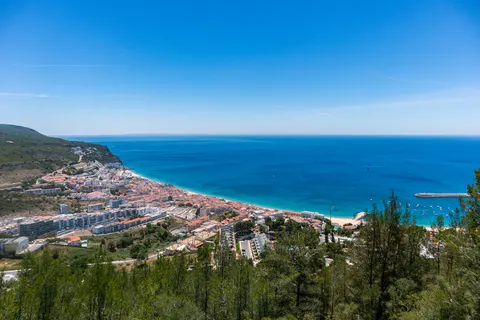
Average highs range from 14 °C in January and February to 26 °C in August. July, August and September are the time for beach holidays. For city breaks, any month of the year works.
How do I get to Lisbon without flying?
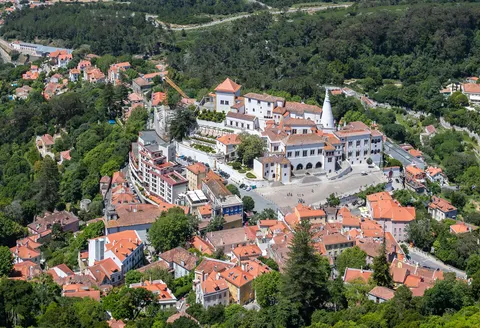
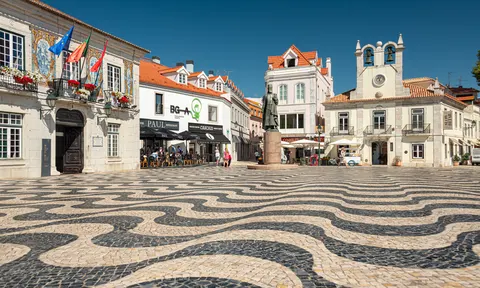
Direct bus or train services link Lisbon with 20 destinations. Allowing for changes, 241 destinations are no more than 14 hours away without flying. Sintra is 48 min away by train with CP, with about 1 kg of CO₂ per person. The train from Porto with CP takes 2h 48m; that is about 3 kg of CO₂ per person, 95% less than the 63 kg of a flight. From Cascais, it takes 28 min by train with CP - Comboios de Portugal, with about 0.3 kg of CO₂ per person.
What to do in Lisbon
Castle of Saint George
The Castle of Saint George sits on a hill above the old town, with walls and terraces that look out over the rooftops and the river. Go in the late afternoon for the softest light.
Jerónimos Monastery
Jerónimos Monastery is a UNESCO World Heritage Site with a richly carved front and a cloister to explore. Allow an hour, then walk down toward the river.
Calouste Gulbenkian Museum
The Calouste Gulbenkian Museum holds a broad collection in a garden setting, a calm place to spend a slow afternoon. Its gardens are a good spot to sit before heading back into the city.
Estrela Basilica
The Estrela Basilica sits in a quieter part of the city, a short climb from the busier streets. Step inside for a calm pause before exploring the surrounding streets.