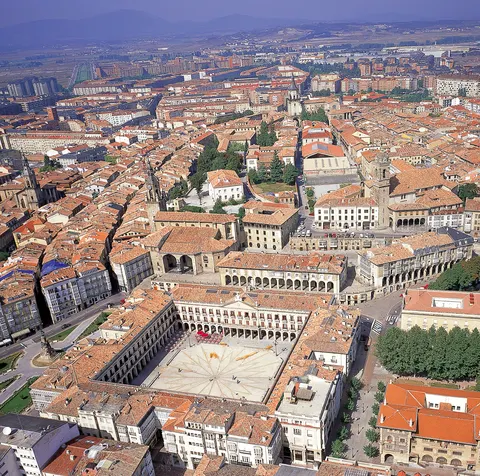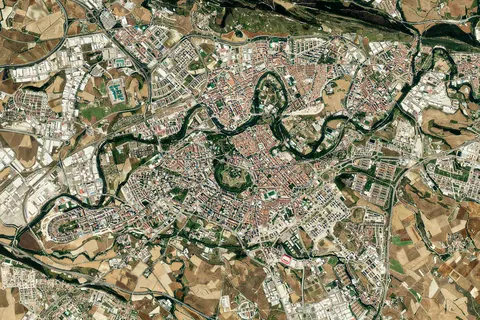

Logroño is the capital of the autonomous community of La Rioja in northern Spain, on the right bank of the Ebro River. It has long been a place of passage, and the Camino de Santiago runs through the city. It is a centre of trade for Rioja wine, the wine for which the area is noted.
Logroño is in La Rioja, Spain, and has a population of about 151,000; it is also a rail hub.
Why go to Logroño?
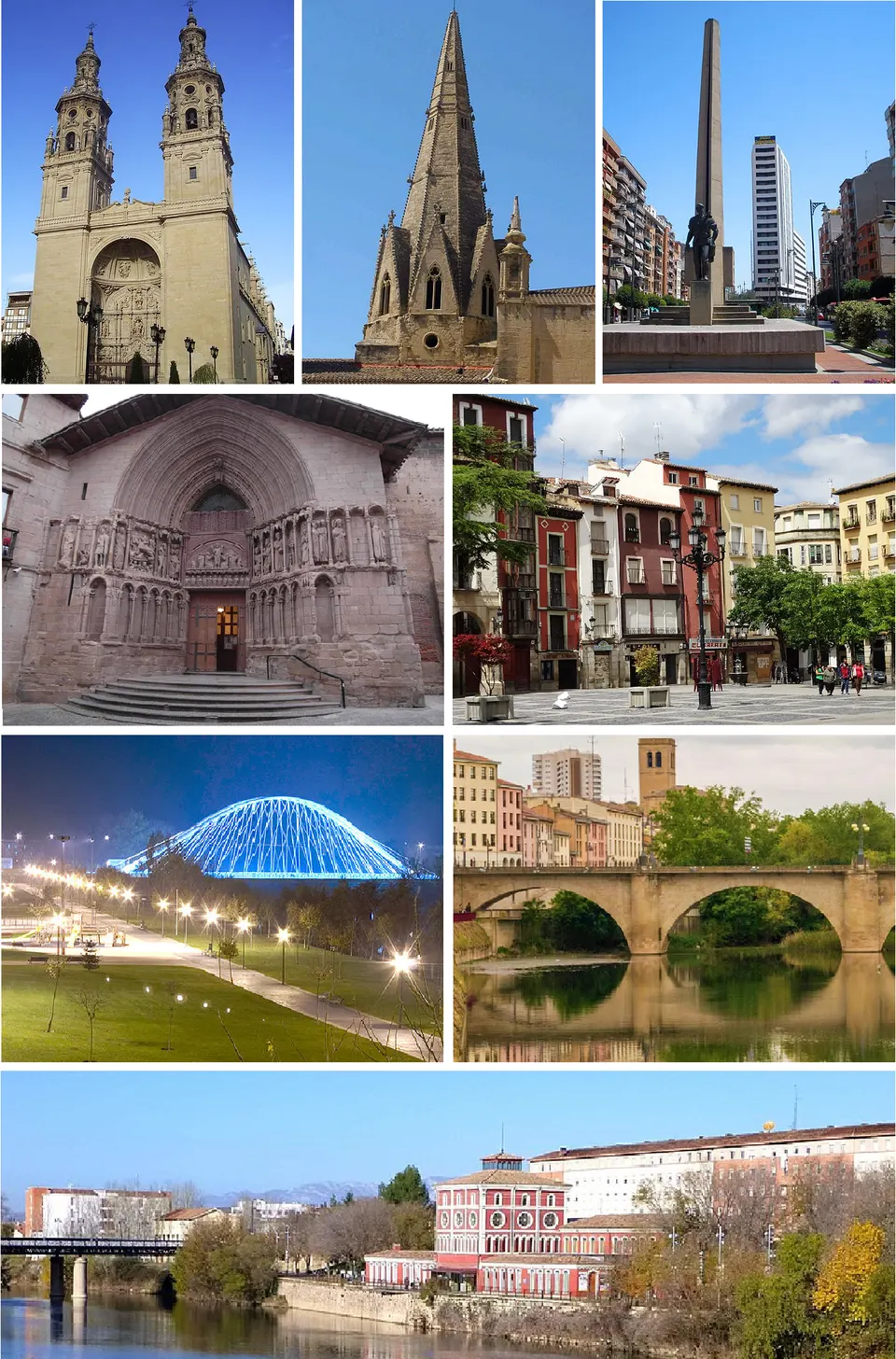
Logroño is a city of churches, bridges and walkers. The Camino de Santiago passes through it, and the Mantible bridge in the El Cortijo district was built in the Roman era. The churches of San Bartolomé and Santiago stand among its sights, and the Museo de La Rioja is one of its main attractions. The Fountain of the Illustrious Riojans shows royal figures in bronze, with water pouring down behind them, which is why it is nicknamed the one with wet backs. The parliament of La Rioja occupies an old tobacco factory.
When is the best time to visit Logroño?
July and August are the warmest, with highs of about 27 °C, and January and December are the coolest, at about 10 °C. Any month suits city breaks.
How do I get to Logroño without flying?
From 5 destinations you can travel to Logroño directly by bus or train. Counting connections, 854 destinations can reach it within 14 hours without flying. Travelling from Madrid, allow 3h 58m by train with RENFE OPERADORA; that is about 2.4 kg of CO₂ per person, 96% less than the 57 kg of a flight. From Bilbao, it takes 2h 55m by train with RENFE OPERADORA, with about 0.9 kg of CO₂ per person. The train from Zaragoza with RENFE OPERADORA takes 2h 10m; that is about 1.5 kg of CO₂ per person, 96% less than the 36 kg of a flight.
What to do in Logroño
Concatedral de Santa María de la Redonda
The co-cathedral of Santa María de la Redonda, listed first among the city's places of interest.
Find tours and tickets: Concatedral de Santa María de la Redonda
Fountain of the Riojans Illustrious
A fountain with bronze figures of royal figures connected with Logroño or La Rioja, with water falling behind them.
Bridge of Mantible
A bridge in the El Cortijo district, built in the Roman era and declared a Bien de Interés Cultural in 1983.
Muralla del Revellín
A surviving section of the city's wall.