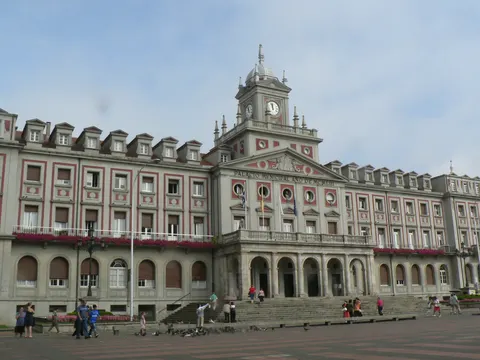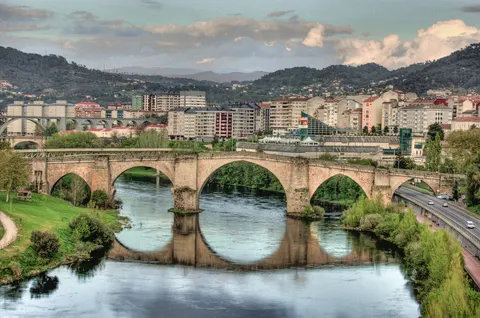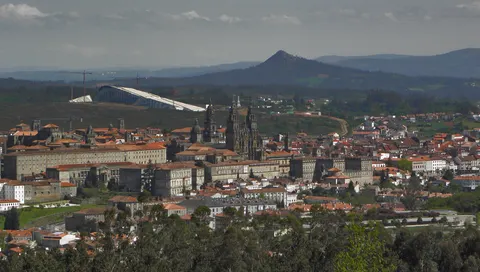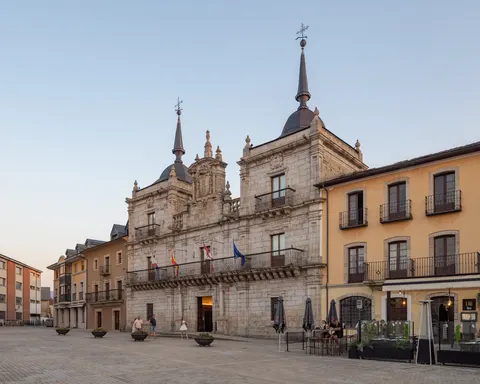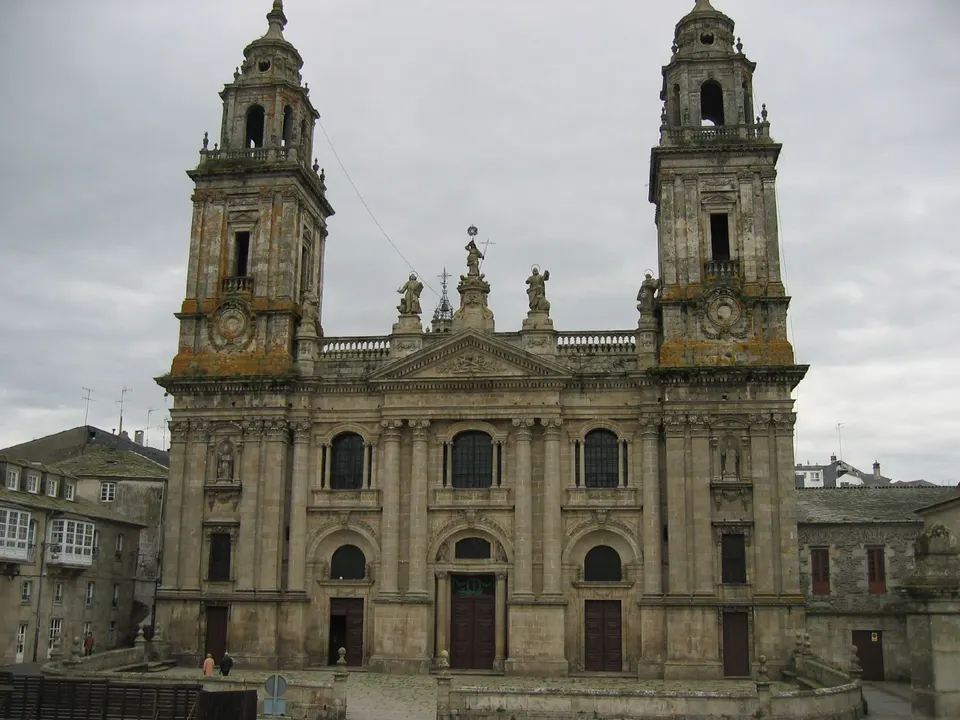

On a first walk through Lugo, the old bridge and the Roman walls are the first sights to see, and the streets of the old town run inside them. Lugo is the capital of the province of the same name in north-western Spain, in the autonomous community of Galicia, and it is the fourth most populous city in Galicia. The walls and the cathedral are the main reason to visit.
About 98,000 people live in Lugo, in Galicia, Spain, and its station is a rail hub.
Why go to Lugo?
Lugo suits a City & Culture trip built on a UNESCO wall, a cathedral and Roman remains. The Roman Walls of Lugo and the Lugo Cathedral are the two UNESCO sites of the town, and the Roman thermae of Lucus Augusti are the older remains on the walk. The Iglesia de San Froilán and the Iglesia de San Pedro add the church side, and the Old bridge of Lugo crosses the river on the way. The Museo Diocesano e Catedralicio de Lugo covers the church collections, and the University Museum A Domus do Mitreo is a museum to visit. The Parque de Rosalía de Castro is the green stop in the town.
When is the best time to visit Lugo?
Expect daytime highs of about 23 °C in July and August, falling to 10 °C in January and December. For city breaks, any month of the year works.
How do I get to Lugo without flying?
You can get to Lugo without changing from 2 destinations, by train. With changes, Lugo is within 14 hours of 330 destinations without flying. From Ourense, it takes 1h 34m by train with RENFE OPERADORA, with about 0.8 kg of CO₂ per person. Travelling from A Coruña, allow 1h 48m by train with RENFE OPERADORA; that is about 0.8 kg of CO₂ per person.
What to do in Lugo
Roman Walls of Lugo
The Roman Walls of Lugo are the UNESCO listing that surrounds the old town, and they give the walk a clear outline.
Lugo Cathedral
The Lugo Cathedral is the UNESCO-listed church of the town, and it stands inside the walls among the other churches.
Roman thermae of Lucus Augusti
The Roman thermae of Lucus Augusti are the older remains of the town, a site that adds an older layer to the walk.
Parque de Rosalía de Castro
The Parque de Rosalía de Castro is the green stop of the town, a park where the walk can pause between the walls and the churches.