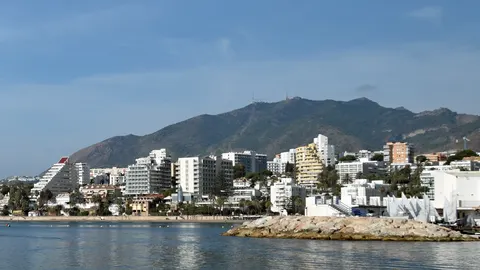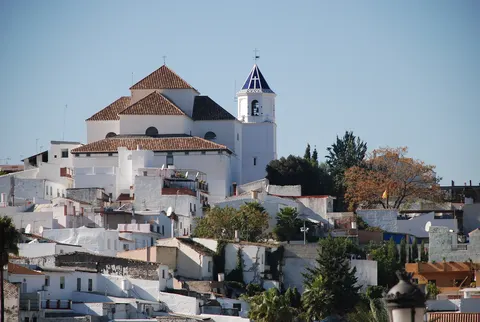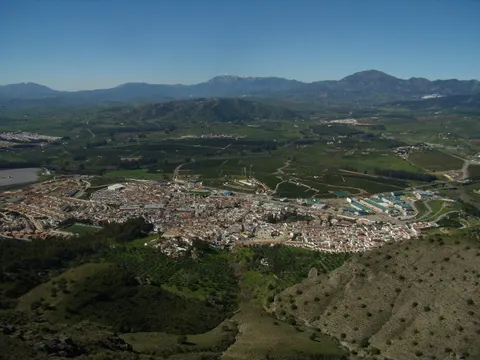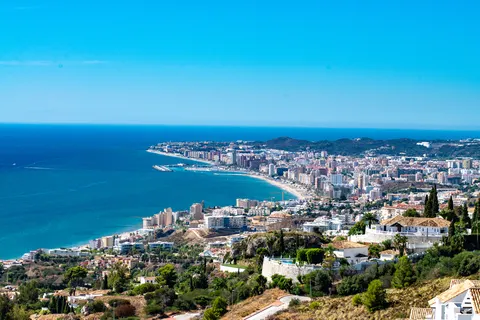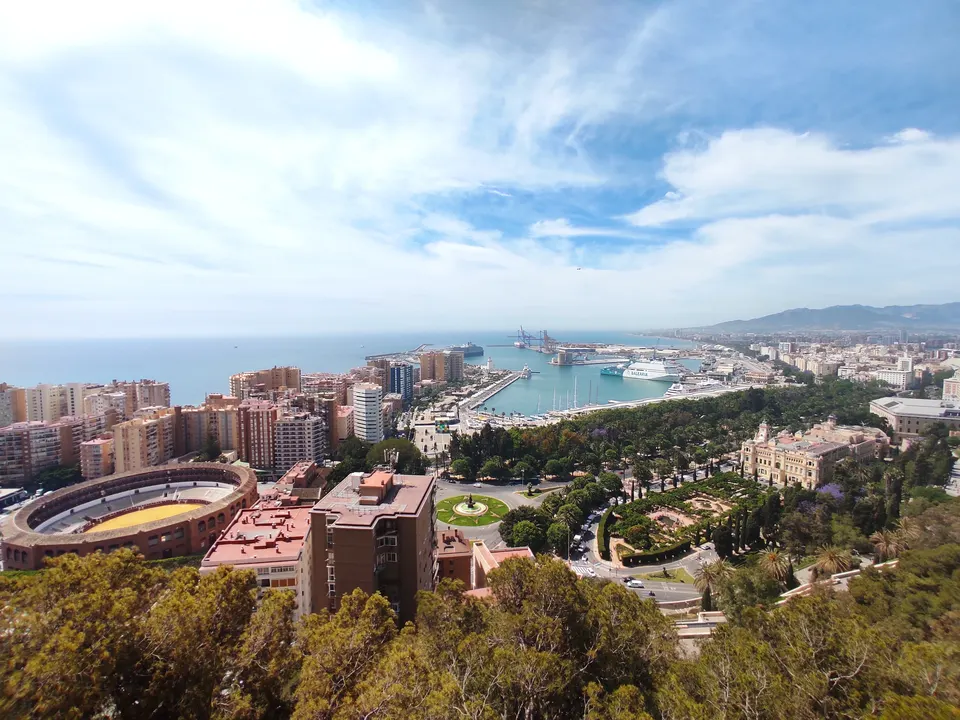

Málaga is the capital of its province and the main city of the Costa del Sol, on the Mediterranean coast of southern Spain. It lies on the left bank of the Guadalhorce, with the Gibralfaro hill rising above the old centre. The city's history reaches back about 2,800 years, to a Phoenician settlement, and it has since been ruled by Carthaginians, Romans, Visigoths and Islamic rulers. It is also the birthplace of Pablo Picasso.
About 592,000 people live in Malaga, in Andalusia, Spain, and its station is a rail hub.
Why go to Malaga?
Málaga's old centre is compact, and much of it is worth seeing on foot. The Gibralfaro Castle and the Alcazaba fortress overlook the city from the hill above, and the old Muslim palace sits next to the inner city. Below them, the Roman Theatre, the old Jewish quarter and the cathedral lie close together, alongside the Church of Santiago in mudéjar style. Picasso's birthplace and the Museo Picasso Málaga, housed in the Palacio de los Condes de Buenavista, give the city its artistic pull. Many more museums follow, including the Carmen Thyssen Museum and the Centre Pompidou Málaga in El Cubo.
When is the best time to visit Malaga?
Expect daytime highs of about 28 °C in July and August, falling to 15 °C in January, February and December. If you are after beach holidays, aim for June, July and September. For city breaks, any month of the year works.
How do I get to Malaga without flying?
You can get to Malaga without changing from 8 destinations, by bus or train. With changes, Malaga is within 14 hours of 430 destinations without flying. From Madrid, it takes 2h 55m by train with RENFE OPERADORA, with about 4 kg of CO₂ per person against 95 kg for the flight, 96% less. Travelling from Barcelona, allow 5h 30m by train with Renfe; that is about 6 kg of CO₂ per person, 97% less than the 176 kg of a flight. Seville is 3h 10m away by train with RENFE OPERADORA, with about 1.5 kg of CO₂ per person against 36 kg for the flight, 96% less.
What to do in Malaga
Gibralfaro Castle
A castle on the Gibralfaro hill, now a Parador, with panoramic views over the city.
Alcazaba
The old Muslim palace fortress, next to the castle and the inner city.
Museo Picasso Málaga
Housed in the Palacio de los Condes de Buenavista near the cathedral, and dedicated to Picasso, who was born in the city.
Roman Theatre
The city's Roman theatre, from the period when it was known as Malaca, lies close to the cathedral and the old Jewish quarter.