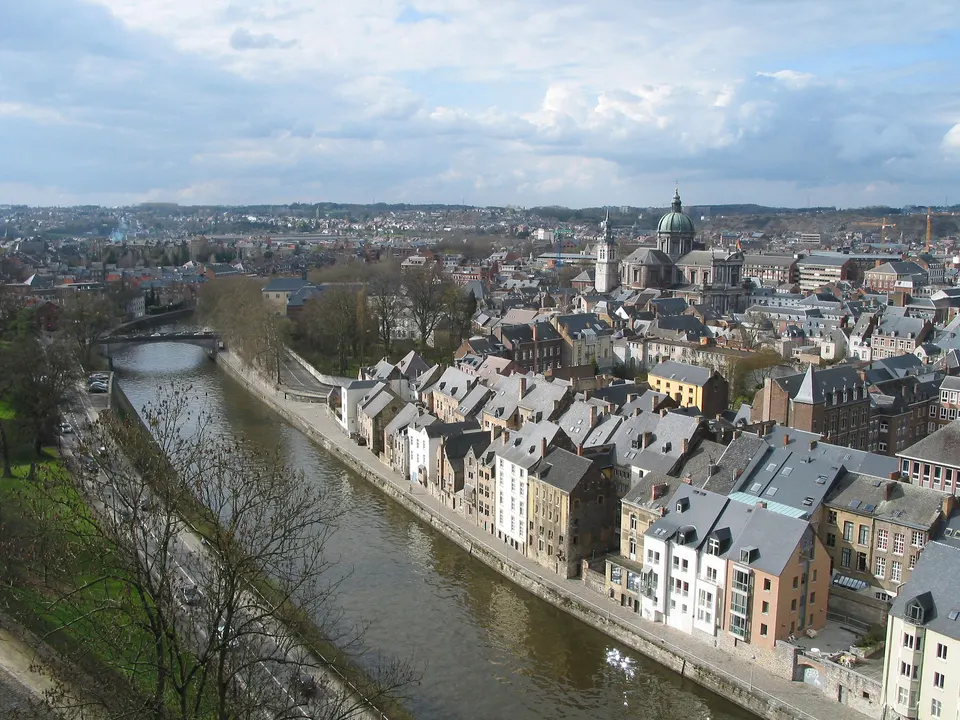

Namur is the capital of Wallonia in Belgium, and the Parliament of Wallonia and the Government of Wallonia sit in the city. It is both a city and a municipality, and it serves as the capital of the Namur province as well as of Wallonia. Its sights run from St Aubin's Cathedral and the Belfry of Namur to the Musée Archéologique de Namur and the Parc attractif Reine Fabiola.
About 111,000 people live in Namur, in Wallonia, Belgium, and its station is a rail hub.
Why go to Namur?
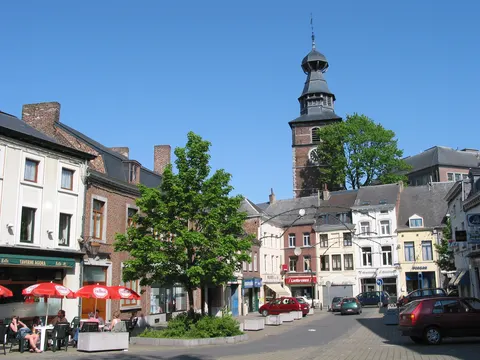
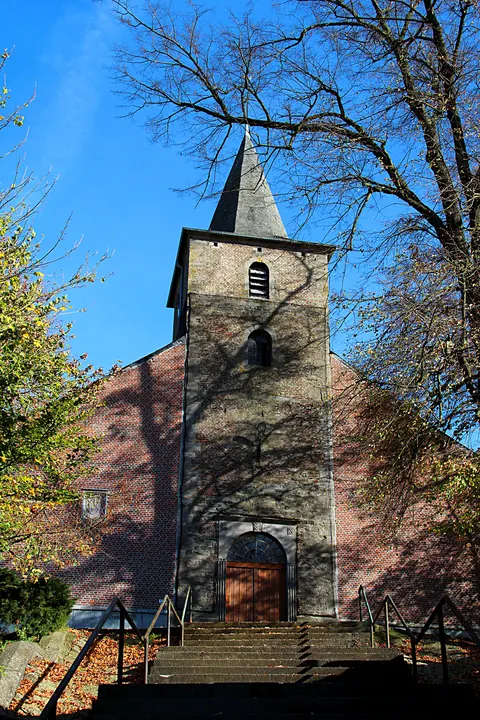
The Musée provincial des Arts anciens and the hôtel de Groesbeeck - de Croix give the city its museum side, while the Musée Archéologique de Namur covers the archaeology. The Saint Lupus Church and the Church of our Lady of Harscamp add the churches, and the Luxemburg-Brücke and the Pont de Jambes carry the city over the water. Rail services run to Brussels, Liege, Charleroi and Luxembourg City, and to Ciney, Gembloux and Seraing, so a City & Culture trip can take in several towns of Wallonia in a single journey. The Belfry of Namur rises above the old centre, and a walk from it down to the river takes in the main sights of the city in one loop.
When is the best time to visit Namur?
Expect daytime highs of about 22 °C in July and August, falling to 5 °C in January. For city breaks, any month of the year works.
How do I get to Namur without flying?
You can get to Namur without changing from 9 destinations, by bus or train. With changes, Namur is within 14 hours of 2,166 destinations without flying. From Brussels, it takes 42 min by train with NMBS/SNCB, with about 0.6 kg of CO₂ per person. Travelling from Luxembourg City, allow 2h 00m by bus with FlixBus-eu; that is about 3.5 kg of CO₂ per person. Liege is 42 min away by train with NMBS/SNCB, with about 0.5 kg of CO₂ per person.
What to do in Namur
St Aubin's Cathedral
St Aubin's Cathedral is the cathedral to see first, and it sets the church side of a City & Culture day before the museums.
Musée provincial des Arts anciens
The Musée provincial des Arts anciens is one of the museums in the city, and it suits a City & Culture stop between the churches.
Parc attractif Reine Fabiola
The Parc attractif Reine Fabiola is the park in the city, a green stop between the museums and the bridges over the river.
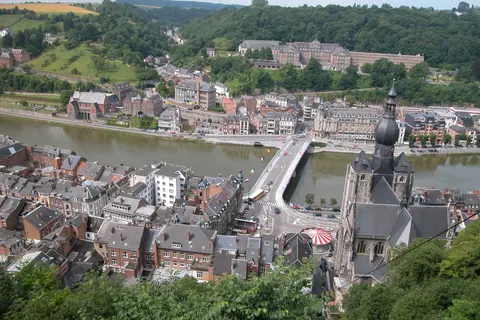
Luxemburg-Brücke and Pont de Jambes
The Luxemburg-Brücke and the Pont de Jambes are the bridges to cross, and the water seen from each makes the walk between the sights a pleasure.