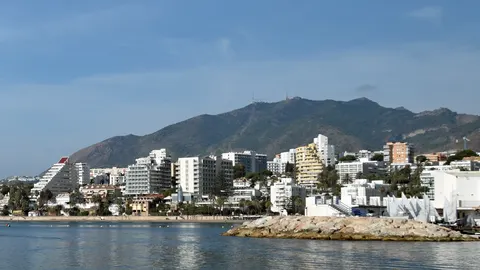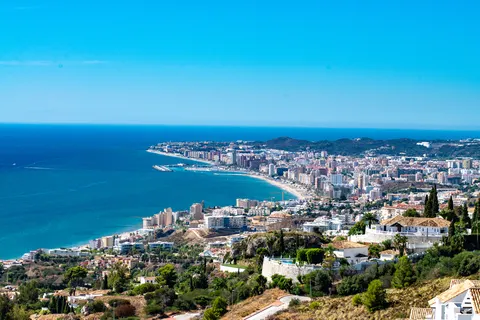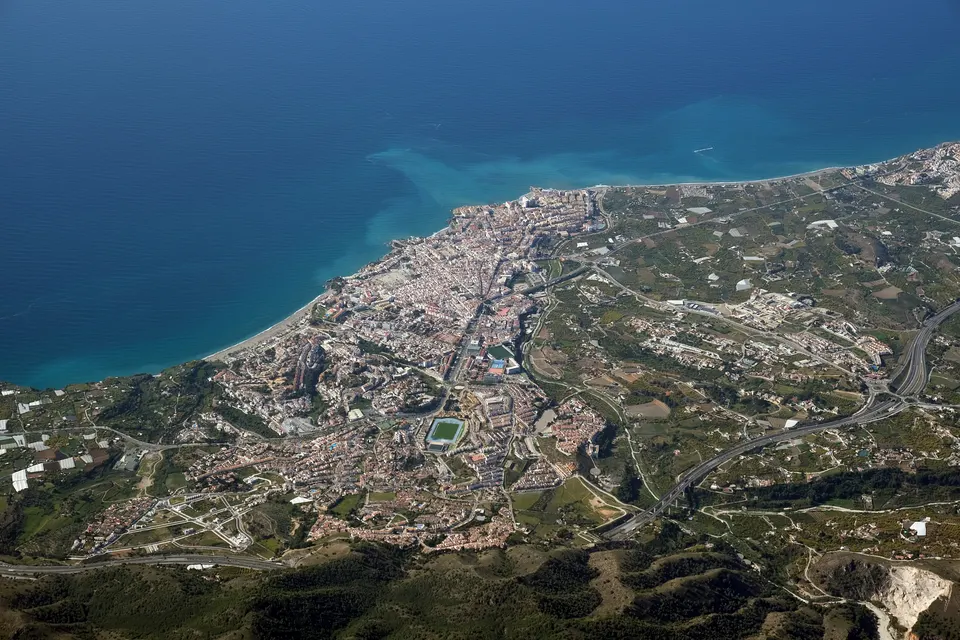

Nerja is a municipality on the Costa del Sol in Málaga province, part of the comarca of La Axarquía in Andalusia. It sits on the southern Mediterranean coast about 50 kilometres east of Málaga. Inland, the Sierras of Tejeda, Almijara and Alhama form a natural park. The town's name comes from the Moorish Narixa, a form the Arabs used after taking the area in the early 8th century.
Nerja, in Andalusia, Spain, is home to about 22,000 people.
Why go to Nerja?
The Caves of Nerja are the town's most famous sight. Prehistoric paintings were found there after the caves were discovered in 1959, and they are now believed to be just one entrance to a linked series of sinkholes reaching into the mountains toward Granada. The Balcón de Europa, a viewpoint in the centre of the old town, looks out over the sea, and the Peninsular War battery that once stood on its site is remembered by two rusty guns still in place. Inland, the Sierras of Tejeda, Almijara and Alhama form a natural park, with Navachica, the highest peak in the Sierra de Almijara. Frigiliana, a village on a nearby mountain, is known for its sugar cane honey factory, and the Torre de Maro, a coastal watchtower, stands within the Acantilados de Maro-Cerro Gordo Natural Park.
When is the best time to visit Nerja?
In August the average high reaches 27 °C; in January it is closer to 14 °C. Beach holidays work best in July, August and September. Any month suits nature and hiking trips.
How do I get to Nerja without flying?
There are no direct train, bus or ferry links to Nerja yet. You can still search the trip planner for a route with changes.
What to do in Nerja
Cueva de Nerja
A tourist attraction in Nerja.
Acueducto de Maro
A bridge in Nerja.
Beach holidays in Nerja
July is the ideal month for beach holidays, with average highs of 26 °C.
Nature and hiking trips in Nerja
April is the ideal month for nature and hiking trips, with average highs of 18 °C.