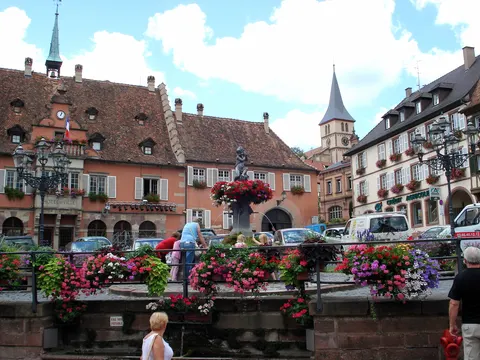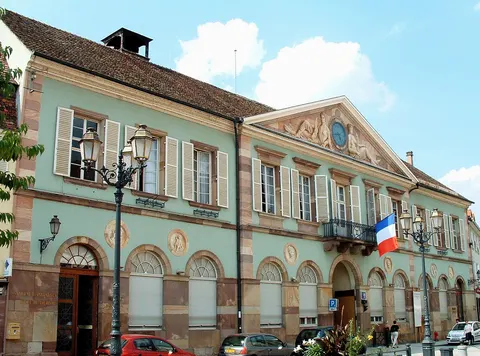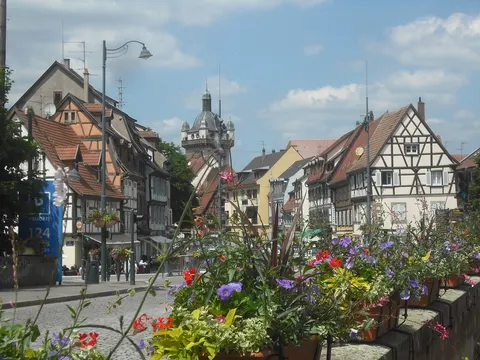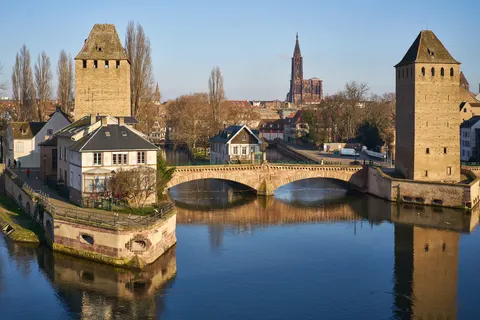

Obernai is a commune in the Bas-Rhin department of Alsace in northeastern France, on the eastern slopes of the Vosges mountains. It is a rapidly growing town with a long history. The Obernai region is the birthplace of Saint Odile, the patron saint of Alsace, and the town joined the Décapole, an alliance of imperial towns in the region. Its old centre holds a well-preserved set of sights from several centuries.
Obernai is in Grand Est, France, and has a population of about 12,000; it is also a rail hub.
Why go to Obernai?
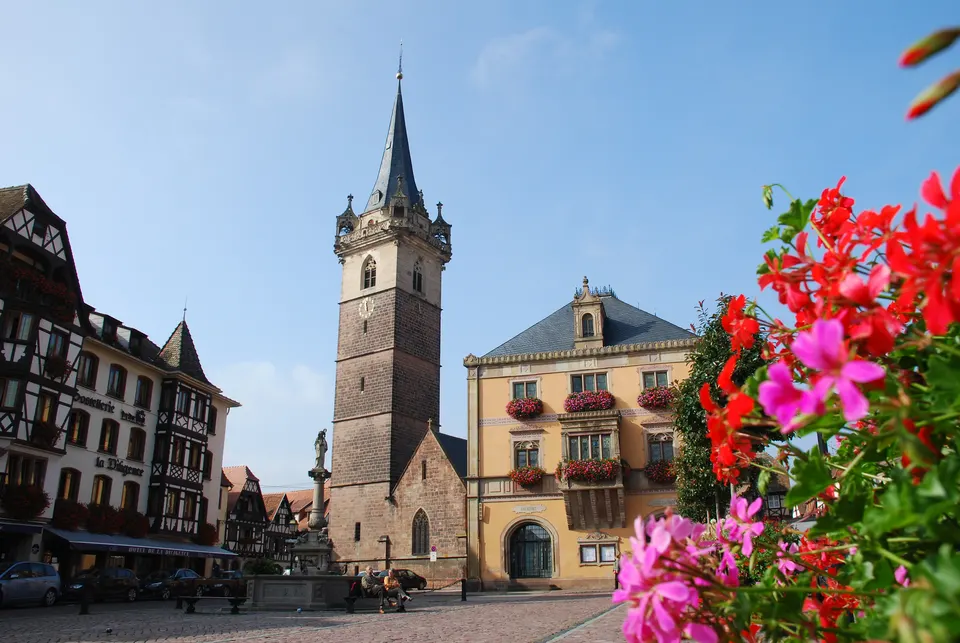
Obernai's old centre holds sights from many centuries. The Clocktower, known as the Kappelturm, and the Wheat Market stand in the old centre, and a Romanesque house on the rue des Pèlerins adds to the character. An old well dates from 1579. Gail Castle, a 19th-century castle, now houses the Freppel High School, and the Domaine de la Léonardsau is a museum of the horse and the horse carriage. The Truttenhausen abbey, in ruin near the town, adds another layer to the story.
When is the best time to visit Obernai?
July and August are the warmest, with highs of about 24 °C, and January and December are the coolest, at about 5 °C. Any month suits city breaks.
How do I get to Obernai without flying?
From 2 destinations you can travel to Obernai directly by train. Counting connections, 2,403 destinations can reach it within 14 hours without flying. Travelling from Molsheim, allow 6 min by train with SNCF VOYAGEURS; that is about 0 kg of CO₂ per person. From Barr, it takes 7 min by train with Société Nationale des Chemins de fer Français, with about 0 kg of CO₂ per person.
What to do in Obernai
Kappelturm
A church in Obernai.
St. Peter and St. Paul's Church
A church in Obernai.
City breaks in Obernai
May is the ideal month for city breaks, with average highs of 19 °C.