
Oświęcim is a town in the Lesser Poland Voivodeship in southern Poland, near the confluence of the Vistula and Soła rivers. It is a railway junction and a centre of chemical, electrical machinery and building materials industries. The town dates back to the twelfth century, when it was an important castellan seat, and it became a trade hub for salt from Wieliczka. The old town sits east of the Soła river.
Oświęcim is in Lesser Poland, Poland, and has a population of about 34,000.
Why go to Oświęcim?
Most visitors come for the Auschwitz-Birkenau State Museum, a UNESCO World Heritage Site in the village of Brzezinka, west of the railway station. In the interwar period the town was a garrison for the Polish Army, and under German occupation the former barracks were expanded to host the Auschwitz camp. The Main Market Square and the medieval Gothic churches, together with the Ducal and Royal Castle, are among the town's landmarks. Salt from Wieliczka passed through the town on the trade route to Silesia and Moravia. The town also marks the eastern edge of the Silesian language.
When is the best time to visit Oświęcim?
July and August are the warmest, with highs of about 23 °C, and January is the coolest, at about 1 °C.
How do I get to Oświęcim without flying?
From 7 destinations you can travel to Oświęcim directly by train. Counting connections, 1,433 destinations can reach it within 14 hours without flying. Travelling from Krakow, allow 46 min by train with Leo Express; that is about 1.7 kg of CO₂ per person. From Katowice, it takes 38 min by train with Koleje Śląskie, with about 0.9 kg of CO₂ per person. The train from Chrzanów with PKP Intercity takes 13 min; that is about 0.6 kg of CO₂ per person.
What to do in Oświęcim
Auschwitz-Birkenau State Museum
The former camp, a UNESCO World Heritage Site and now a state museum, in the village of Brzezinka.
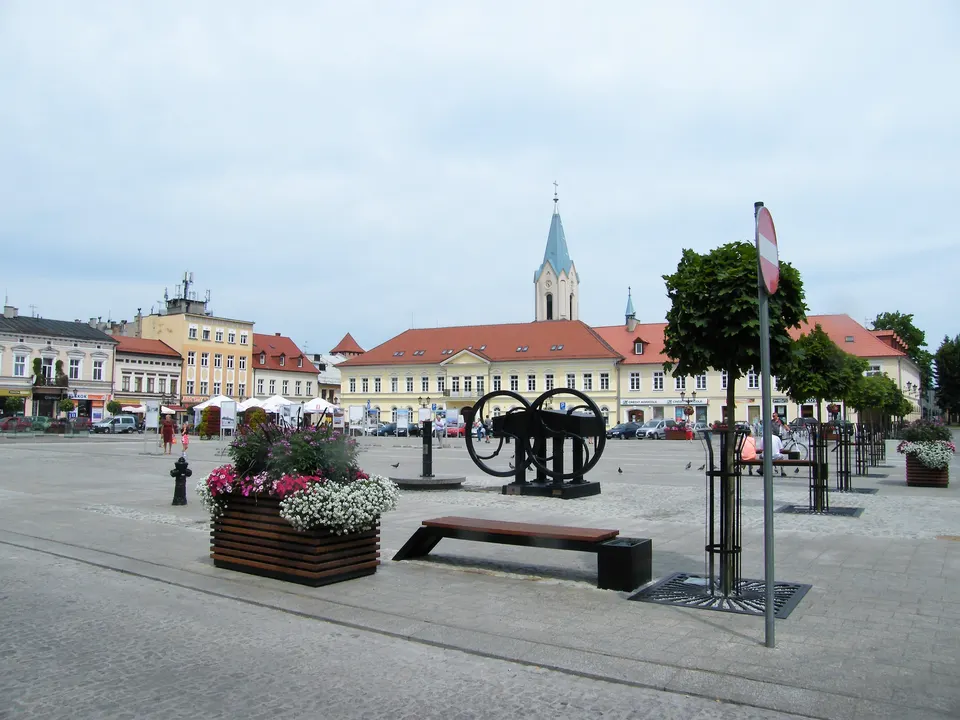
Main Market Square
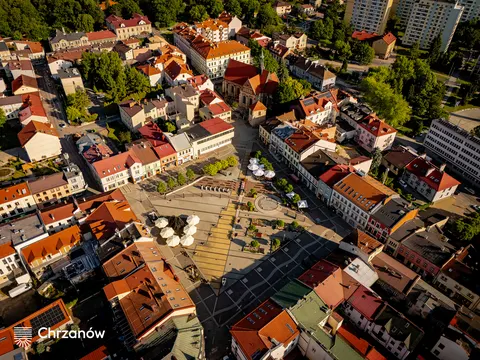
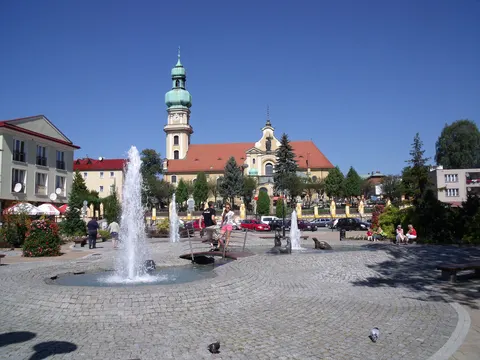
The Rynek Główny at the centre of the old town, east of the Soła river.
Ducal and Royal Castle
A castle named among the town's landmarks, alongside its medieval Gothic churches.