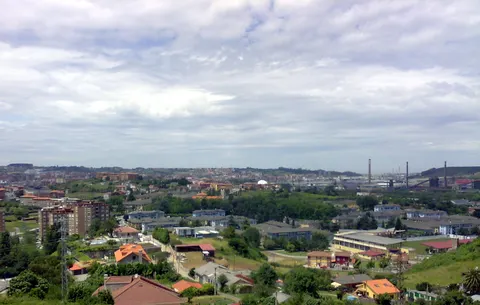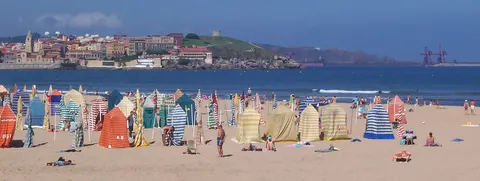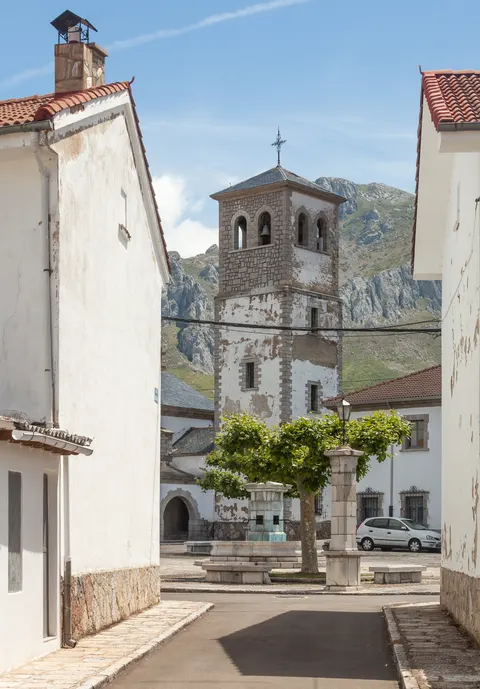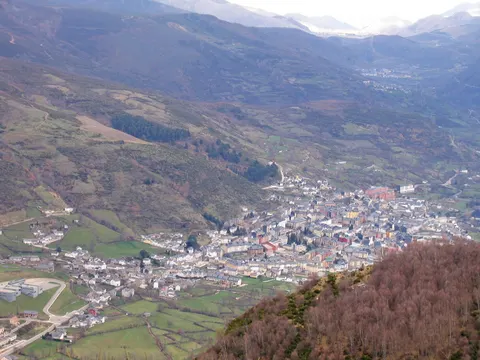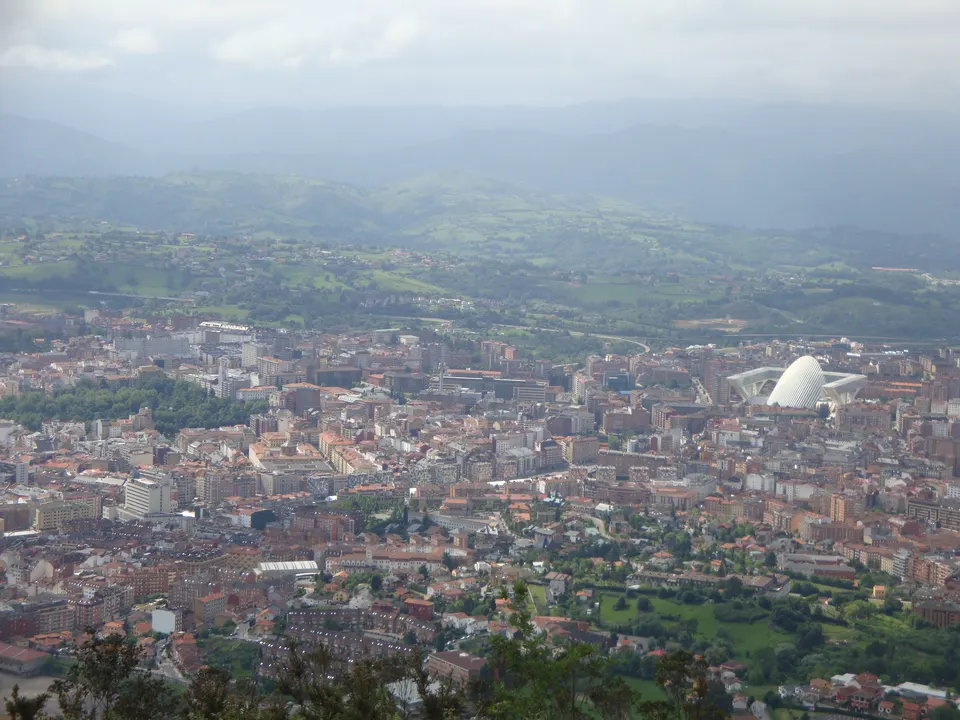

Oviedo is the capital of the Principality of Asturias in northern Spain and the administrative and commercial centre of the region. It lies a short distance inland from the Bay of Biscay, and parts of the city rise more than 300 metres above sea level. The city owes much of its character to the Asturian kings of the early Middle Ages, who made it their capital and built churches that still stand.
Oviedo, in Asturias, Spain, is home to about 220,000 people and works as a rail hub.
Why go to Oviedo?
Oviedo is best known for its early medieval buildings, from the reign of the Asturian kings. The Cámara Santa, a chamber attached to the cathedral's southern transept, is a UNESCO World Heritage Site and holds the Arca Santa reliquary. Outside the centre, the Santa María del Naranco hall was part of a palace complex built for King Ramiro I, and the small church of San Miguel de Lillo comes from the same period. The basilica of San Julián de los Prados keeps its frescoes and is one of the best-preserved Asturian churches. In the old town, the House of the Llanes has the strongest Baroque façade in Asturias, and the university, created in 1574, sits among the city's older monuments.
When is the best time to visit Oviedo?
In July and August the average high reaches 22 °C; in January it is closer to 11 °C. Any month suits city breaks.
How do I get to Oviedo without flying?
Oviedo has direct bus or train links to 9 destinations. Within 14 hours, travellers from 531 destinations can get here without flying. The bus from Santander with FlixBus-eu takes 2h 36m; that is about 4.5 kg of CO₂ per person, 88% less than the 38 kg of a flight. Gijon is 24 min away by train with RENFE OPERADORA, with about 0.2 kg of CO₂ per person. Travelling from León, allow 1h 01m by train with RENFE OPERADORA; that is about 0.8 kg of CO₂ per person.
What to do in Oviedo
Cámara Santa
A UNESCO World Heritage chamber attached to the cathedral that houses the Arca Santa, the reliquary of the Sudarium of Oviedo.
Cathedral of San Salvador
Built over an earlier church, with a tower on its south side and a north tower that was never completed.
Santa María del Naranco Hall
A large ninth-century pavilion that was part of a palace complex built for King Ramiro I.
La Foncalada
A ninth-century fountain, the only surviving pre-Romanesque civil work in Europe.
Basilica of San Julián de los Prados
One of the best-preserved Asturian churches, decorated with frescoes.
Find tours and tickets: Basilica of San Julián de los Prados