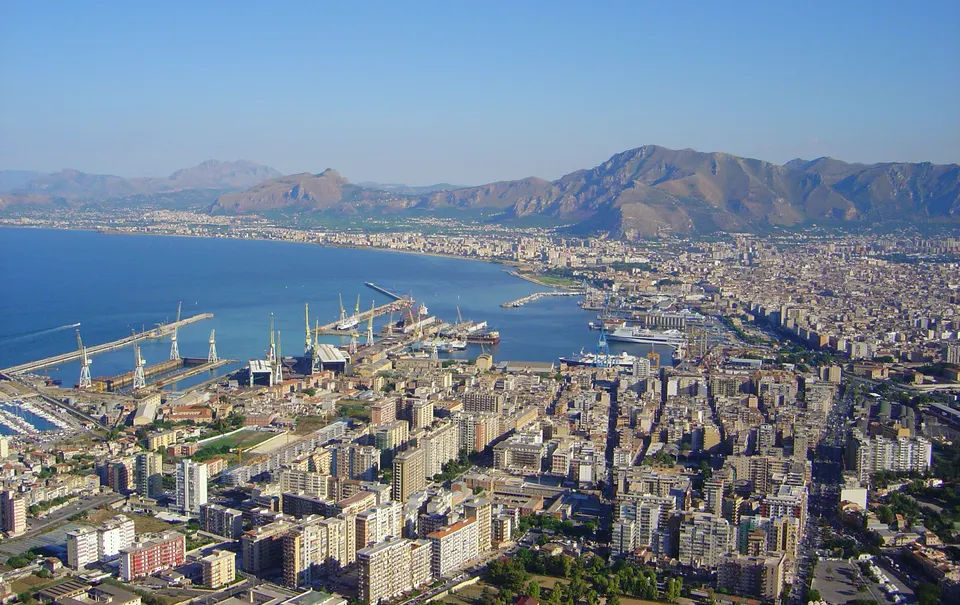

Palermo is a city of layers, the capital of Sicily and the largest city on the island, facing the Tyrrhenian Sea across its gulf. Its history, culture, architecture and food have been noted across a very long existence, and the mix shows in every quarter. The old streets, churches and palaces give the city its character from one district to the next.
Palermo is in Sicily, Italy, and has a population of about 648,000; it is also a rail hub.
Why go to Palermo?
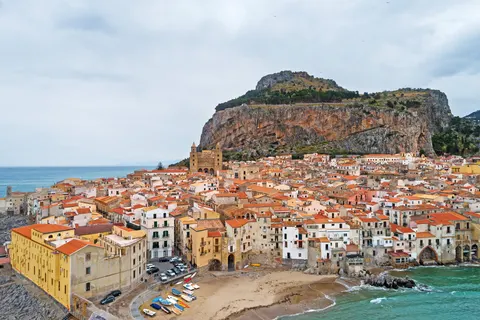
Palermo fits a City & Culture trip with a Sun & Beach side on the gulf. The Palazzo dei Normanni and the Cappella Palatina give the Norman layer of the city, and the Palermo Cathedral is the church to see. The Martorana and the Church of the Gesù add more churches to the walk, and the San Giovanni degli Eremiti and the Chiesa di San Cataldo are older stops. The Zisa Palace and the Catacombe dei Cappuccini give the visit a palace and a catacomb, and the Admiral's bridge is a crossing to walk. The Arab-Norman Palermo UNESCO listing covers these sites, linked with the cathedral churches of Cefalú and Monreale.
When is the best time to visit Palermo?
July and August are the warmest, with highs of about 29 °C, and January and February are the coolest, at about 14 °C. For beach holidays, go in June, July and September. Any month suits city breaks.
How do I get to Palermo without flying?
From 12 destinations you can travel to Palermo directly by bus, ferry or train. Counting connections, 172 destinations can reach it within 14 hours without flying. Travelling from Naples, allow 10h 30m by ferry with Tirrenia / GNV; that is about 20 kg of CO₂ per person, 72% less than the 72 kg of a flight. From Catania, it takes 2h 31m by bus with FlixBus-eu, with about 4.5 kg of CO₂ per person against 38 kg for the flight, 88% less. The bus from Trapani with FlixBus-eu takes 1h 35m; that is about 2 kg of CO₂ per person.
What to do in Palermo
Cappella Palatina
The Cappella Palatina is the chapel inside the Palazzo dei Normanni, a building whose interior shows the city's Norman and Arab past.
Palermo Cathedral
The Palermo Cathedral stands in the old quarter, a church that brings the city's layered history into one building. Look at the façade and the interior, which carry that history in stone.
Catacombe dei Cappuccini
The Catacombe dei Cappuccini is a catacomb under a church, one of the more unusual stops on the trip and a serious one.
Zisa Palace
The Zisa Palace is a palace in the city, a building with a Norman past that gives the walk a grand note away from the churches.