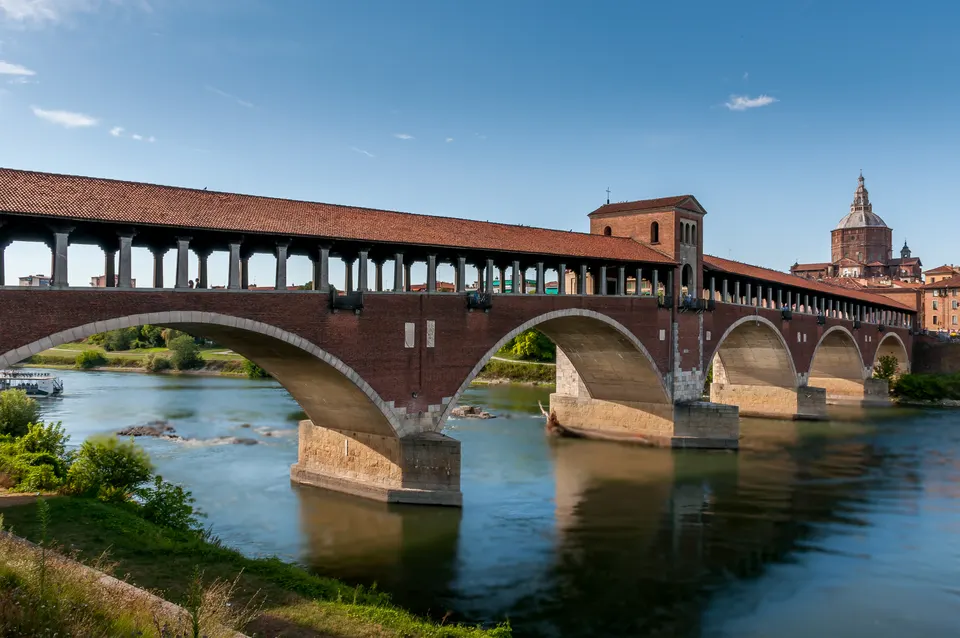

Pavia is a town in south-western Lombardy, northern Italy, on the lower Ticino river near its confluence with the Po. It lies about 35 kilometres south of Milan and has a population of about 73,000. The town was a major political centre in the medieval period, serving as capital of the Ostrogothic and Lombard kingdoms and later of the Kingdom of Italy. It is home to the ancient University of Pavia.
With about 66,000 inhabitants, Pavia lies in Lombardy, Italy.
Why go to Pavia?
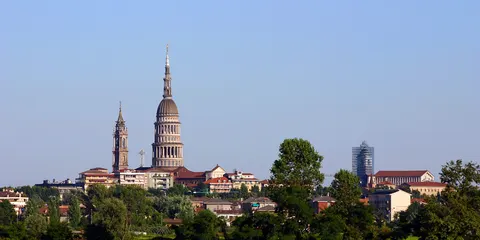
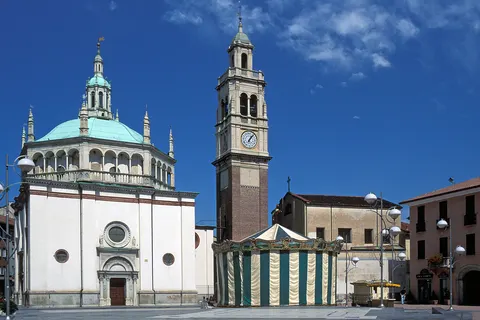
Pavia's cathedral was begun in the late 15th century and completed only at the end of the 19th, and its dome is the third-largest in Italy. The Certosa di Pavia, a Carthusian monastery north of the town, is one of the area's great cultural treasures. Beneath most of the historic centre's streets run the brick ducts of a Roman sewer system. The Ticino valley around the town is a nature reserve listed by UNESCO in the World Network of Biosphere Reserves, and it includes two forests.
When is the best time to visit Pavia?
Average highs range from 7 °C in January and December to 30 °C in July. For city breaks, any month of the year works.
How do I get to Pavia without flying?
There are no direct train, bus or ferry links to Pavia yet. The trip planner can still look for a route with changes.
What to do in Pavia
Certosa di Pavia
A Carthusian monastery founded in the late 14th century, located north of the town.
Pavia Cathedral
A cathedral whose dome, the third-largest in Italy, was completed at the end of the 19th century.
Visconti Castle
A castle in the town, behind which a long line of arcaded warehouses and inns once served inland navigation.
Bosco Siro Negri
A strict nature reserve, one of two forests in the municipality.