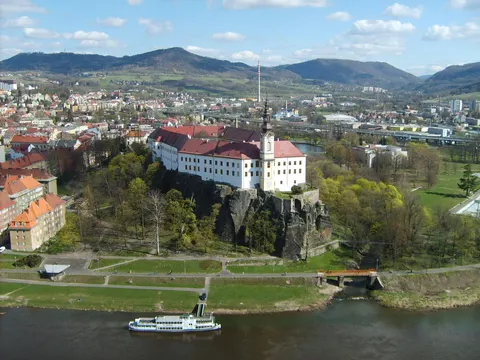
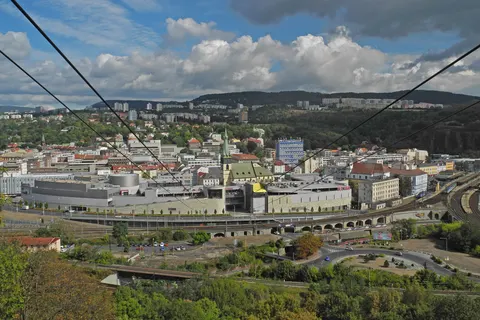
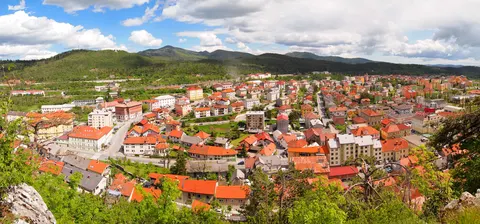
Pirna is a town in Saxony, Germany, and the capital of the Sächsische Schweiz-Osterzgebirge administrative district. Its population is over 37,000. The town lies near Dresden and is an important district town, as well as a Große Kreisstadt, a large district town with its own administrative status. Its museums cover local history, botany, East German memorabilia and the composer Richard Wagner.
Pirna is in Saxony, Germany, and has a population of about 40,000; it is also a rail hub.
Why go to Pirna?
Pirna's museums give a broad picture of the town. The municipal StadtMuseum sits alongside botanical collections at the Landschloß Zuschendorf, while the DDR Museum shows memorabilia from East Germany. The Richard Wagner sites at the Jagdschloss Graupa are devoted to the German composer. The Gedenkstätte Pirna-Sonnenstein is a memorial in the town. Because Dresden is close, a visit to Pirna is easy to combine with the city, and the town is the centre of its district.
When is the best time to visit Pirna?
July and August are the warmest, with highs of about 23 °C, and January is the coolest, at about 2 °C. For nature and hiking trips, go in May, June and September. City breaks work best in May, June and September.
How do I get to Pirna without flying?
Pirna has one direct link, by train. Counting connections, 2,213 destinations can reach it within 14 hours without flying. Travelling from Dresden, allow 16 min by train with DB Regio AG Südost; that is about 0.3 kg of CO₂ per person.
What to do in Pirna
StadtMuseum Pirna
The municipal museum of Pirna, which covers the history of the town.
DDR Museum Pirna
A museum devoted to East German memorabilia.
Gedenkstätte Pirna-Sonnenstein
The Sonnenstein memorial in Pirna, a place of remembrance within the town.
Richard-Wagner-Stätten
A museum dedicated to the German composer Richard Wagner, housed at the Jagdschloss Graupa hunting lodge.