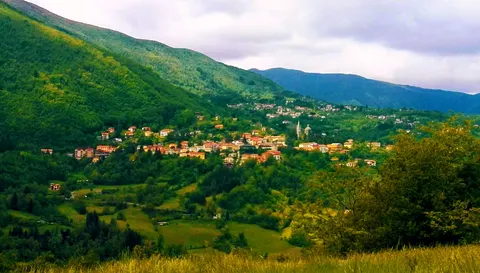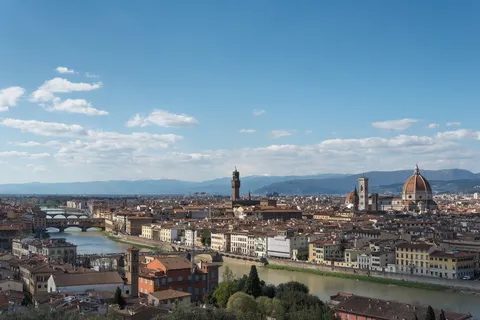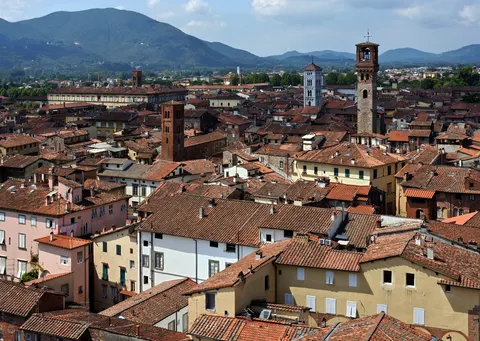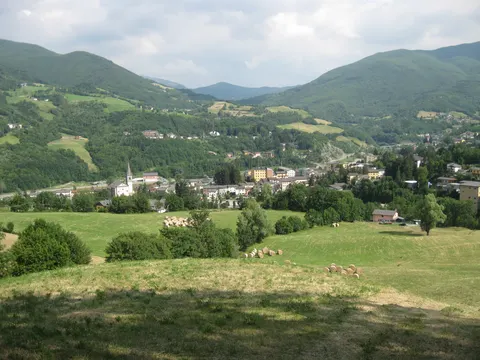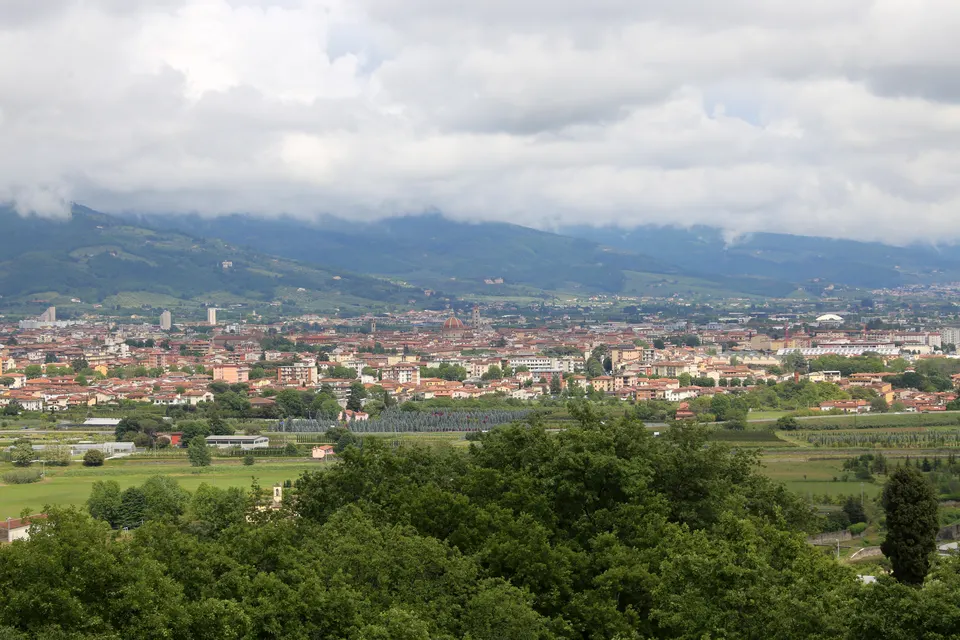

Pistoia lies in the countryside of Tuscany, crossed by a river that feeds into the River Arno. The setting is green and gently rolling, and the city's medieval streets and churches sit close to the countryside beyond. Its mood is calm and historic, busy in the summer and quiet in the cooler months. Visitors can spend a morning in the churches and an afternoon walking out of town.
About 74,000 people live in Pistoia, in Tuscany, Italy, and its station is a rail hub.
Why go to Pistoia?
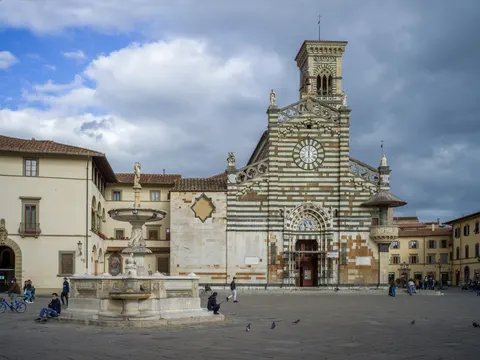
Come to Pistoia for a city of churches and old streets in Tuscany, known for its famous plant trade. Pistoia Cathedral is the main church, and the Church of Sant' Andrea and the Basilica of Our Lady of Humility add more interiors to see. The San Giovanni in Corte Baptistery is a small, striking building, and the San Giovanni Fuoricivitas and San Francesco are quiet stops. The Santa Maria del Carmine is another church in the old town. The Fortezza Santa Barbara is a fortress with a museum, and the Ospedale del Ceppo is a historic building that houses a museum too. The Chiesa del Tau adds a small museum visit. The town is famous across Europe for its plant nurseries, and it suits a slow visit of churches and streets with a day in the countryside.
When is the best time to visit Pistoia?
Expect daytime highs of about 29 °C in July and August, falling to 9 °C in January and December. For city breaks, any month of the year works.
How do I get to Pistoia without flying?
You can get to Pistoia without changing from 5 destinations, by bus or train. With changes, Pistoia is within 14 hours of 1,814 destinations without flying. From Lucca, it takes 40 min by bus with FlixBus-eu, with about 1 kg of CO₂ per person. Travelling from Lizzano in Belvedere, allow 2h 00m by bus; that is about 0.7 kg of CO₂ per person. Prato is 9 min away by train with TRENITALIA S.p.A., with about 0.2 kg of CO₂ per person.
What to do in Pistoia
Pistoia Cathedral
Pistoia Cathedral is the main church in the old centre, a calm place to pause on a walk. Step inside and take time with the stone.
Fortezza Santa Barbara
The Fortezza Santa Barbara is a fortress with walls and a museum, a good place to see how the town was defended. Allow an hour.
San Giovanni in Corte Baptistery
The San Giovanni in Corte Baptistery is a small, striking building near the cathedral. It makes a quiet, focused stop between churches.
Ospedale del Ceppo
The Ospedale del Ceppo is a historic building that now houses a museum, with a long façade on the street. Give it a short visit as part of the walk.