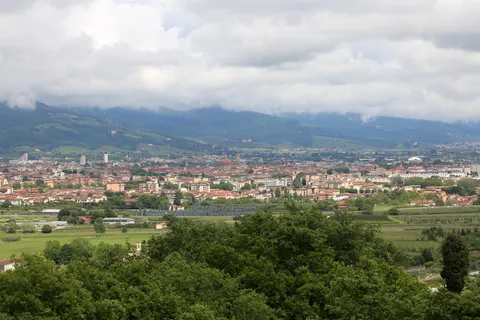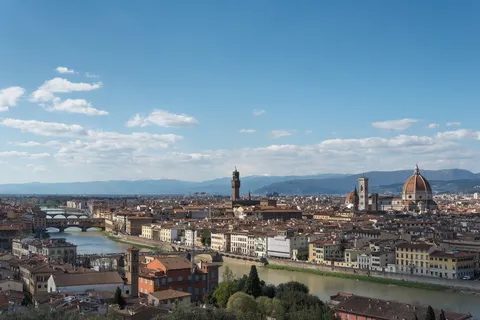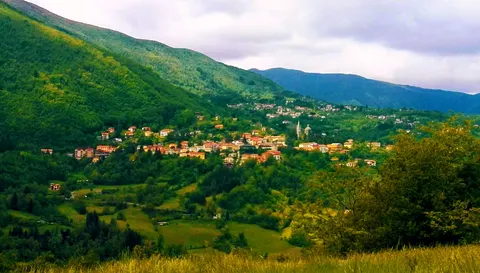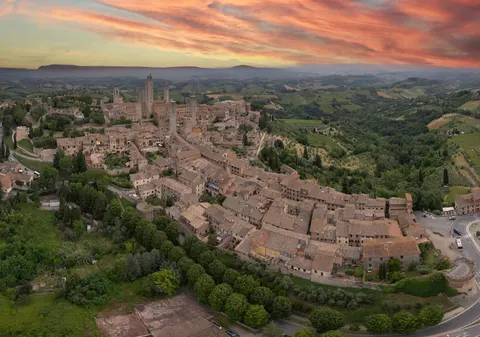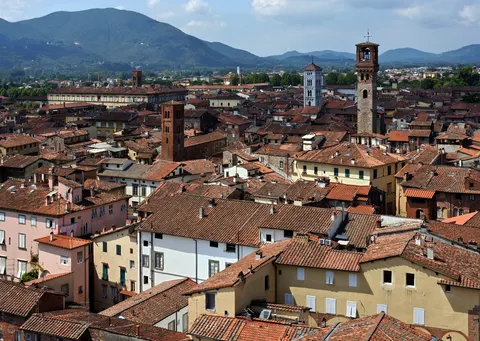

Prato is a city and municipality in Tuscany, and the capital of the province of the same name. It lies at the foot of Monte Retaia, the last peak in the Calvana chain, a short distance from Florence, about 15 to 17 kilometres away. It is the second largest city in Tuscany after Florence. Textiles have shaped its economy for centuries.
Prato, in Tuscany, Italy, is home to about 195,000 people and works as a rail hub.
Why go to Prato?
Prato's artistic heritage runs from the Etruscans to the Renaissance, when Donatello, Filippo Lippi and Botticelli worked in the city. The Datini archives, a collection of late medieval business papers from 1363 to 1410, are a major resource for the economic history of the period. Cantucci, a hard almond biscuit invented in Prato in the Middle Ages, are still baked by local bakers.
When is the best time to visit Prato?
In July and August the average high reaches 29 °C; in January and December it is closer to 9 °C. Any month suits city breaks.
How do I get to Prato without flying?
Prato has direct bus or train links to 9 destinations. Within 14 hours, travellers from 1,852 destinations can get here without flying. The bus from Siena with FlixBus-eu takes 1h 16m; that is about 1.8 kg of CO₂ per person. Munich is 8h 30m away by bus with FlixBus-eu, with about 13 kg of CO₂ per person against 61 kg for the flight, 79% less. Travelling from Rome, allow 3h 42m by bus with FlixBus-eu; that is about 6.7 kg of CO₂ per person, 88% less than the 57 kg of a flight.
What to do in Prato
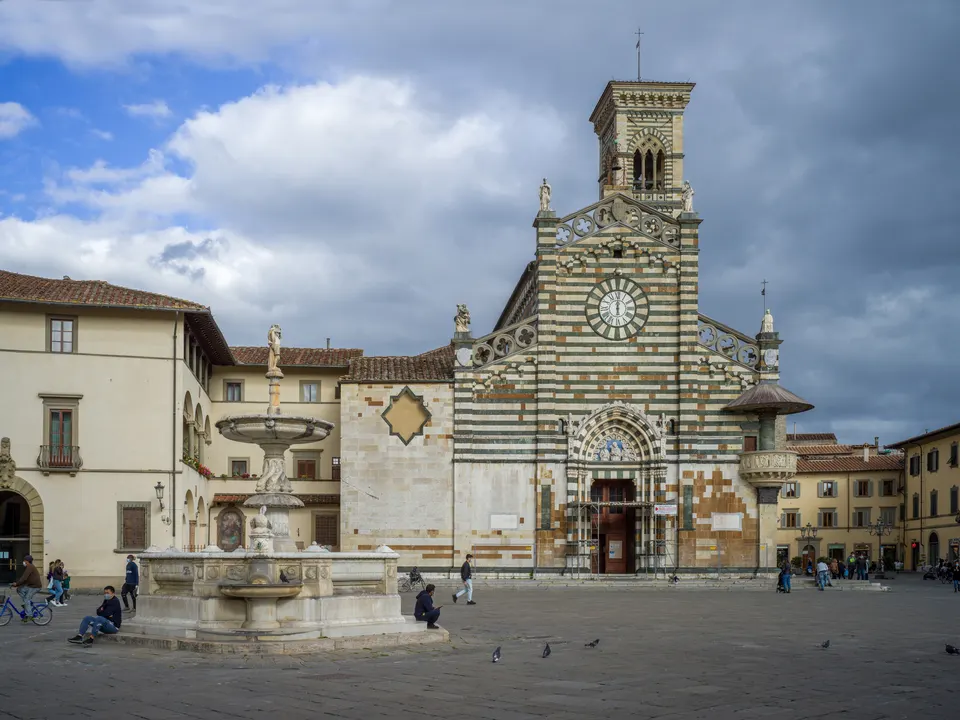
Prato Cathedral of Santo Stefano
The cathedral has Filippo Lippi's frescoes, recently restored, and an external pulpit by Donatello and Michelozzo from which the Sacra Cintola is shown.
Centro per l'arte contemporanea Luigi Pecci
A museum of contemporary art, with a centre for information and documentation and an education department, covering the last decades of the visual arts.
Find tours and tickets: Centro per l'arte contemporanea Luigi Pecci
Teatro Metastasio
The city's main theatre for opera and other performances, built in the early nineteenth century.
Prato textile museum
A museum and library that recalls the textile tradition of the city and is part of the European Route of Industrial Heritage.