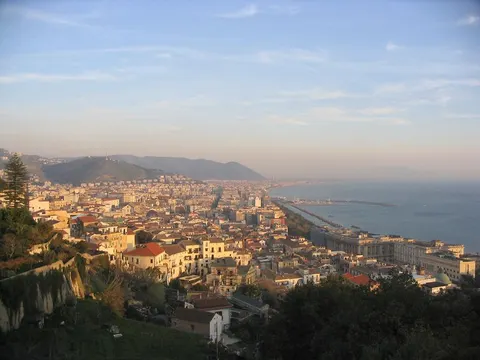
Pontecagnano Faiano, also known simply as Pontecagnano, is a town in the province of Salerno in the Campania region of south-western Italy. It lies in the south-eastern suburbs of Salerno, a few kilometres from the coast. The municipality includes the hill town of Faiano, which is locally known for its abundance of water sources. The area was settled as early as the Copper Age, and the Romans later established a town called Picentia here.
About 11,000 people live in Pontecagnano, in Campania, Italy, and its station is a rail hub.
Why go to Pontecagnano?
The National Archaeological Museum of Pontecagnano holds artifacts from the Etruscan and Roman periods. The Romans founded Picentia here as a new town for a group of deported Picentini, and its ruins remain. Before them, an Etruscan centre ruled the land from Salerno to the Sele river, and a temple there was dedicated to the Argive Juno. Villa Pignatelli, a noble residence, and the Church of St. Benedict add to the historic landmarks. In the Middle Ages much of the population moved up to Faiano, a hill town with defensible position.
When is the best time to visit Pontecagnano?
Expect daytime highs of about 28 °C in July and August, falling to 12 °C in January and February. If you are after beach holidays, aim for June, July and September.
How do I get to Pontecagnano without flying?
Only one direct train link serves Pontecagnano. With changes, Pontecagnano is within 14 hours of 1,180 destinations without flying. From Salerno, it takes 12 min by train with Trenitalia, with about 0.1 kg of CO₂ per person.
What to do in Pontecagnano
National Archeological Museum of Pontecagnano
A museum in Pontecagnano.
Find tours and tickets: National Archeological Museum of Pontecagnano
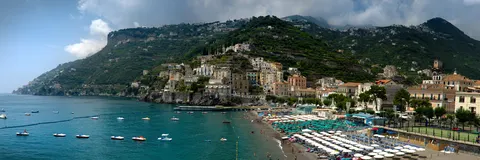
Beach holidays in Pontecagnano
June is the ideal month for beach holidays, with average highs of 25 °C.
Travel on from Pontecagnano
Direct links run to Salerno.