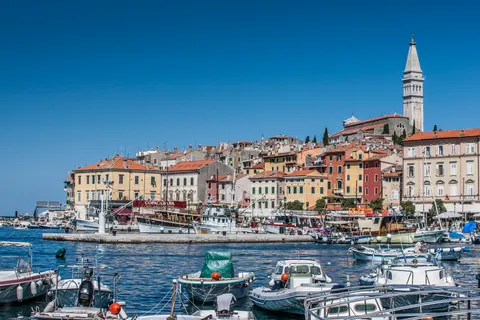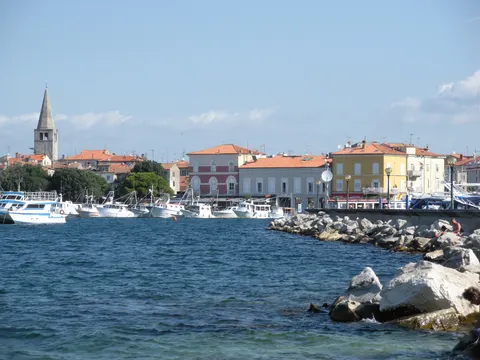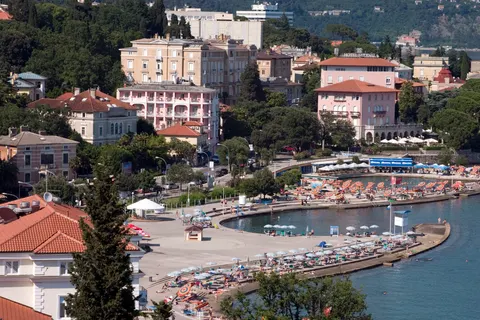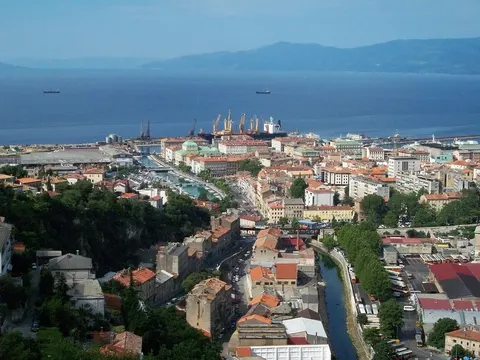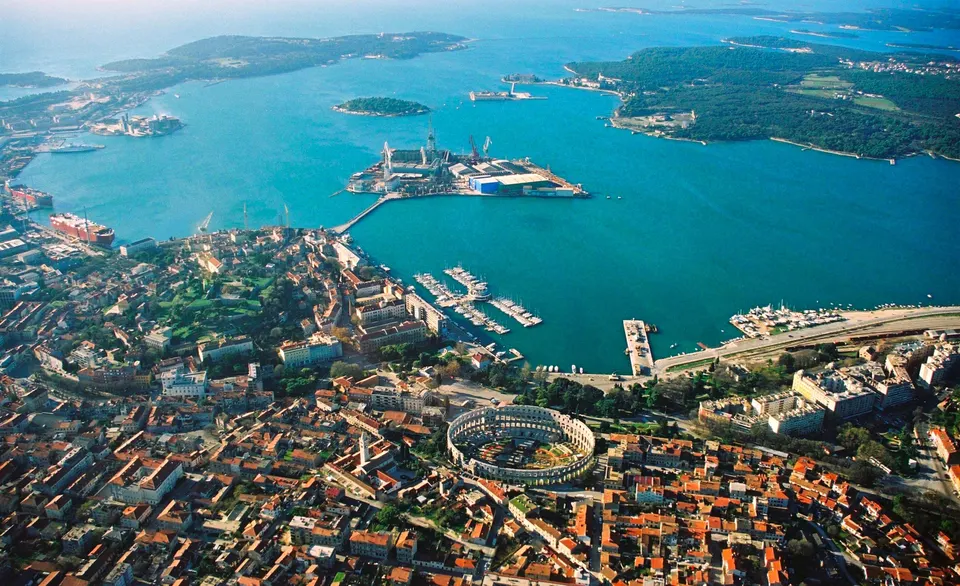

Pula is a working port town at the southern tip of Istria, where Roman ruins stand close to modern streets and fishing boats share the harbour with ferries. It feels unhurried and sun-warmed, with an easy mix of history and seaside life. Walk the old quarter and you will find the streets narrow, the squares small and the sea never far from view.
Pula is in Istria, Croatia, and has a population of about 52,000; it is also a rail hub.
Why go to Pula?
Pula is known for its ancient Roman buildings, and the Pula Arena is the one to see first. Its amphitheatre is remarkably well preserved, a dramatic presence in the city. Beyond it, the Arch of the Sergii and the Pula Cathedral add more layers to a walk through the old town, while the Archaeological Museum of Istria and the Historical and Maritime Museum of Istria explain the region's long story. The Chapel of St. Mary Formosa and the Crkva Gospe od Mora are quiet stops, and the Naval Cemetery, Pula offers a reflective look at the city's maritime past. The sea is never far away, and the beaches and coast make Pula a natural choice for a summer trip that mixes sun, swimming and sightseeing.
When is the best time to visit Pula?
July and August are the warmest, with highs of about 26 °C, and January and February are the coolest, at about 9 °C. For beach holidays, go in June, July and August. Any month suits city breaks.
How do I get to Pula without flying?
From 4 destinations you can travel to Pula directly by bus. Counting connections, 1,121 destinations can reach it within 14 hours without flying. Travelling from Trieste, allow 3h 00m by bus; that is about 5 kg of CO₂ per person. From Rijeka, it takes 1h 30m by bus with FlixBus-eu, with about 1.9 kg of CO₂ per person. The bus from Rovinj with FlixBus-eu takes 40 min; that is about 0.8 kg of CO₂ per person.
What to do in Pula
Pula Arena
The Pula Arena is the city's great Roman monument, an amphitheatre you can walk around at your own pace. Plan a slow circuit of its walls and imagine the crowds it once held.
Pula Cathedral
Pula Cathedral stands in the old quarter, a short walk from the Arch of the Sergii. Step inside for a cool, quiet break, then carry on through the narrow streets.
Beach days on the coast
Swim from the beaches around Pula, then return to the old town for seafood and an evening stroll. It is a simple rhythm that suits long summer days.
Historical and Maritime Museum of Istria
The Historical and Maritime Museum of Istria shows how the sea and the region shaped the city. It pairs well with a walk out to the Naval Cemetery, Pula.
Find tours and tickets: Historical and Maritime Museum of Istria