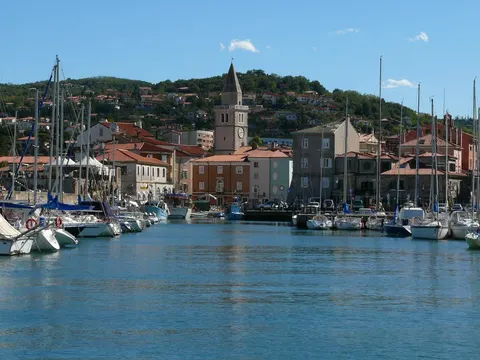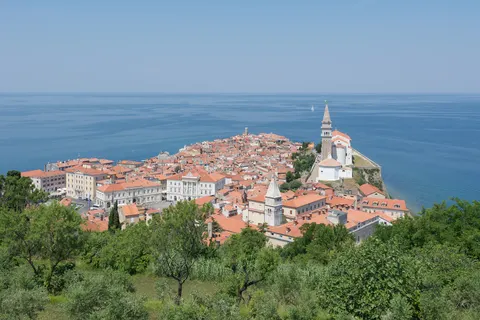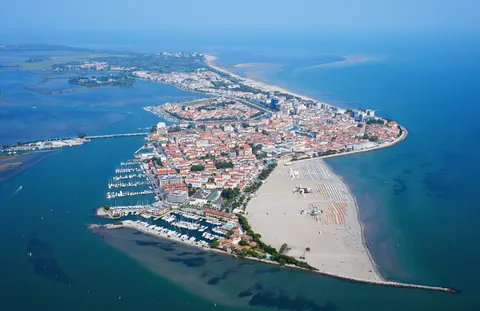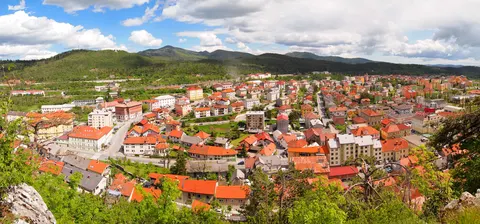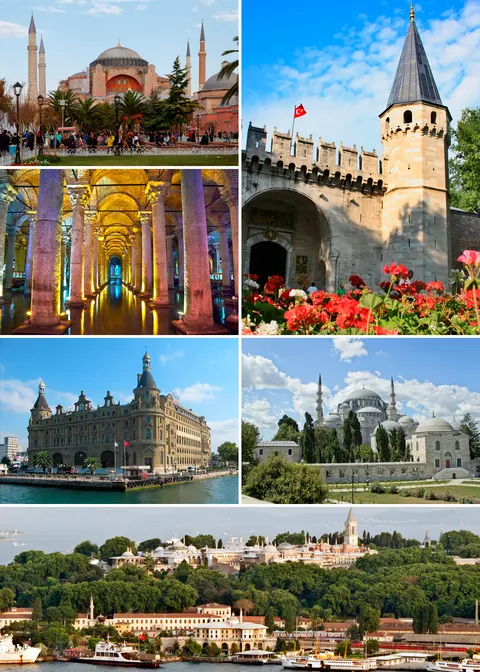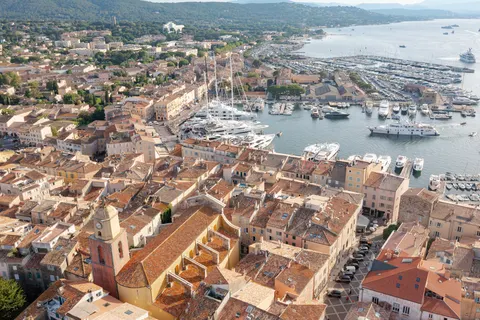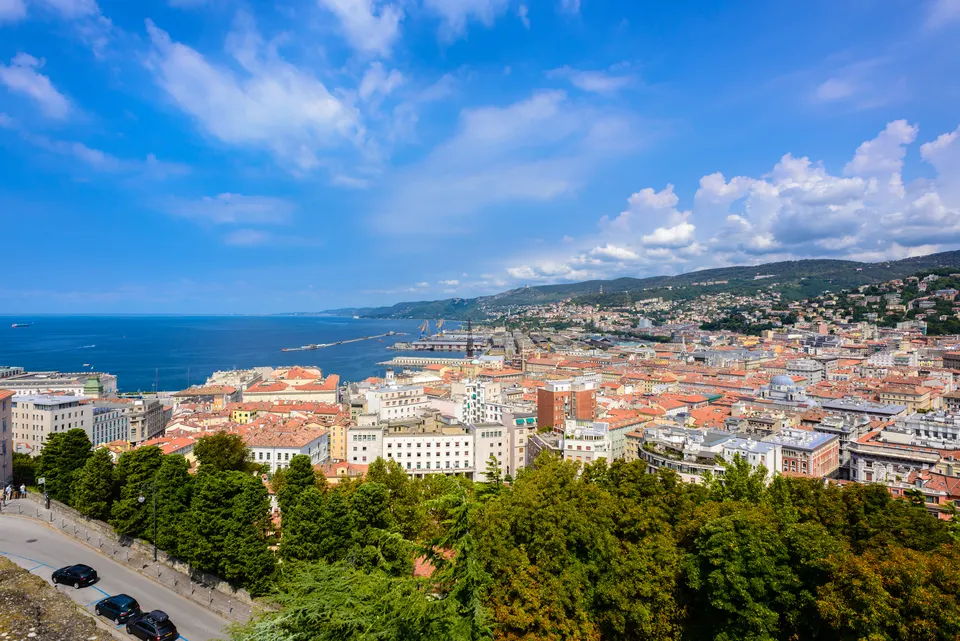

Trieste is a seaport on a narrow strip of Italian land at the head of the Gulf of Trieste, with Slovenia close by to the east. The city is built on a hillside below an escarpment that drops from the Karst plateau to the sea. Once the most important seaport of the Habsburg monarchy, it still carries Vienna-like architecture. Its position where Latin, Slavic and Germanic cultures meet shows in its people and traditions.
Trieste is in Friuli Venezia Giulia, Italy, and has a population of about 204,000; it is also a rail hub.
Why go to Trieste?
Trieste's character comes from its years as a trading port under the Habsburgs. The Austrian Quarter was built largely during the Austro-Hungarian period, in Neoclassical, Art Nouveau and Liberty styles. The old town has narrow streets of medieval houses, almost all closed to traffic. Coffee is a city tradition: Caffè San Marco is a historical coffee house, and Caffè Stella Polare in Piazza Ponterosso was frequented by the writers Umberto Saba and James Joyce. Barcola, a suburb with a long seafront promenade towards Miramare Castle, is where locals sunbathe and swim.
When is the best time to visit Trieste?
July and August are the warmest, with highs of about 27 °C, and January is the coolest, at about 7 °C. For beach holidays, go in June, July and August. Any month suits city breaks.
How do I get to Trieste without flying?
From 22 destinations you can travel to Trieste directly by bus or train. Counting connections, 1,863 destinations can reach it within 14 hours without flying. Travelling from Vienna, allow 9h 00m by train with ÖBB EuroCity; that is about 11 kg of CO₂ per person, 75% less than the 44 kg of a flight. From Venice, it takes 2h 00m by train with Trenitalia, with about 2 kg of CO₂ per person. The bus from Bologna with FlixBus-eu takes 3h 25m; that is about 6.2 kg of CO₂ per person, 88% less than the 53 kg of a flight.
What to do in Trieste
Vittoria Light
The northernmost lighthouse in the Mediterranean, standing above Barcola and dominating the skyline there.
Stazione Rogers
A petrol station designed by Ernesto Nathan Rogers, regarded as an important building of Italian rationalism and now a centre for culture and architecture.
Antico Magazzino Vini
A warehouse built in 1902 to store wine from Dalmatia and Istria, now revitalised and home to an Eataly beside Piazza Venezia.
Caffè San Marco
A historical coffee house in the centre, part of a coffee culture that the Austro-Hungarian nobility helped to build.