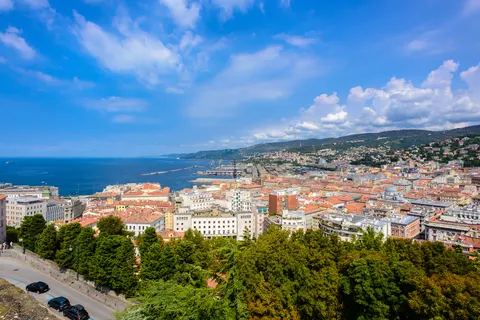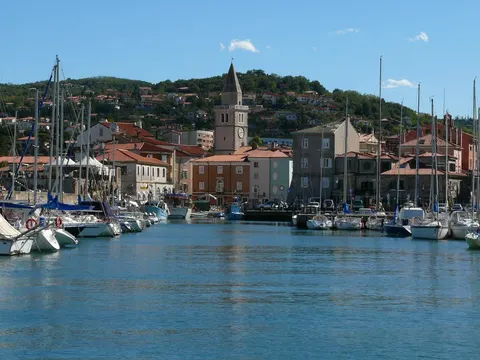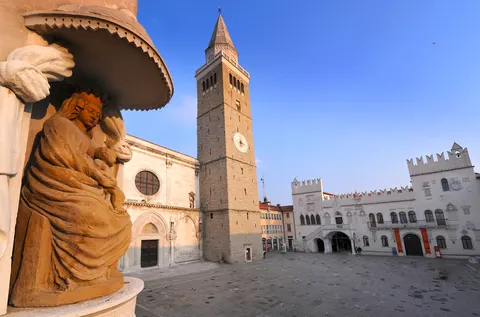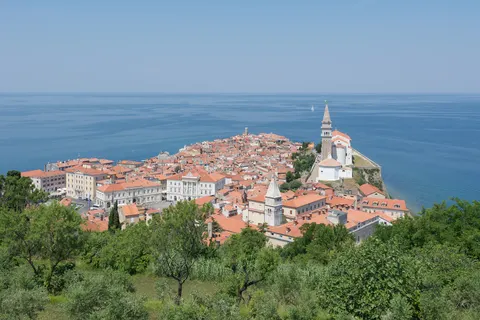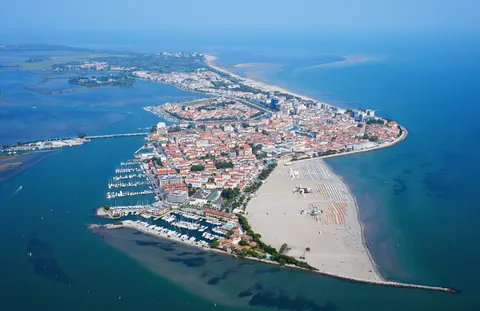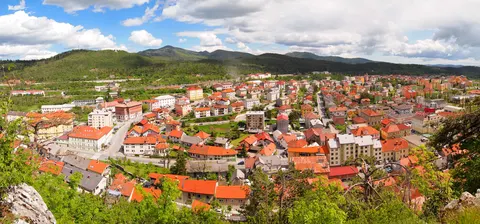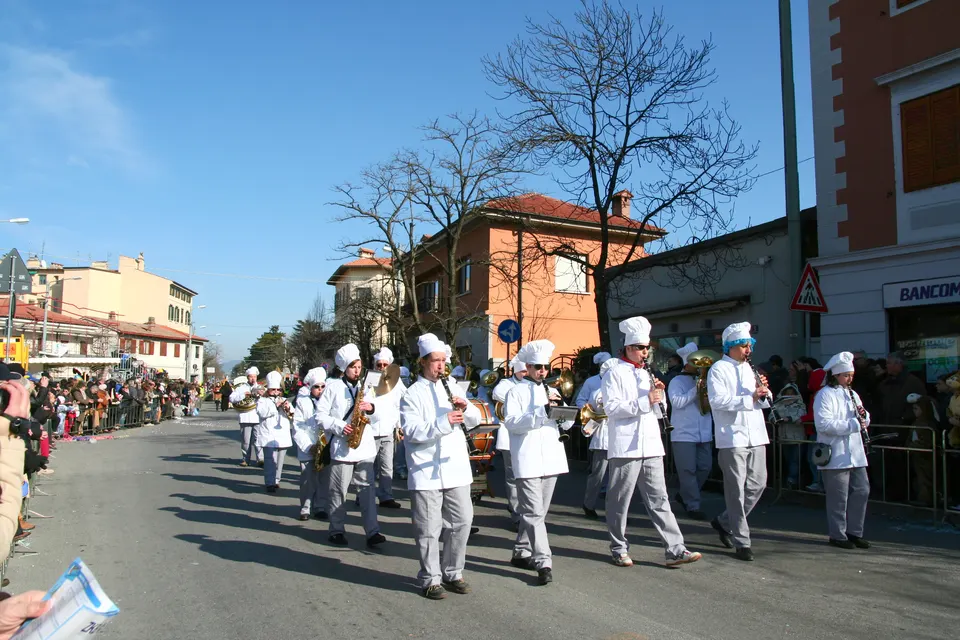

Opicina is a town in northeastern Italy, close to the Slovenian border at Fernetti. It is a frazione of Trieste, the provincial and regional capital, and it lies on the Karst Plateau a few kilometres north of the Adriatic seaport. Slovene has a large community here, and it is used widely alongside Italian in private and public institutions.
About 8,009 people live in Opicina, in Friuli Venezia Giulia, Italy, and its station is a rail hub.
Why go to Opicina?
Opicina's identity is shaped by its position on the Karst Plateau above Trieste and close to the Slovenian border. Slovenian is used alongside Italian in private and public life, giving the town a bilingual character. The first town across the border is Sežana in Slovenia, and the town is well placed for travel in both directions. The town was once known in Italian as Poggioreale del Carso, a name it carried before its present form. Trieste, a seaport on the Adriatic Sea, lies below the plateau.
When is the best time to visit Opicina?
Expect daytime highs of about 25 °C in July and August, falling to 5 °C in January. If you are after beach holidays, aim for June, July and August.
How do I get to Opicina without flying?
You can get to Opicina without changing from 7 destinations, by bus. With changes, Opicina is within 14 hours of 1,721 destinations without flying. From Trieste, it takes 18 min by bus, with about 0.1 kg of CO₂ per person. Travelling from Muggia, allow 36 min by bus; that is about 0.3 kg of CO₂ per person. Koper is 48 min away by bus, with about 0.4 kg of CO₂ per person.
What to do in Opicina
Trieste Cathedral
A cathedral in Opicina.
Saint Spyridon Church
A church in Opicina.
Civico museo del Castello di San Giusto
A castle in Opicina.
Find tours and tickets: Civico museo del Castello di San Giusto
Beach holidays in Opicina
July is the ideal month for beach holidays, with average highs of 25 °C.