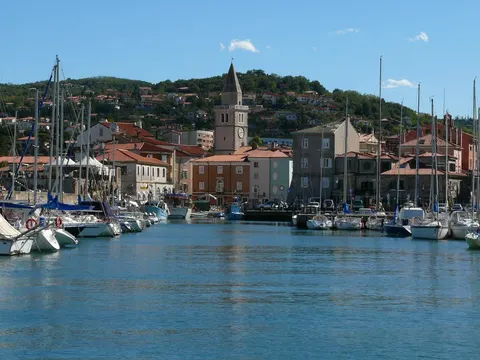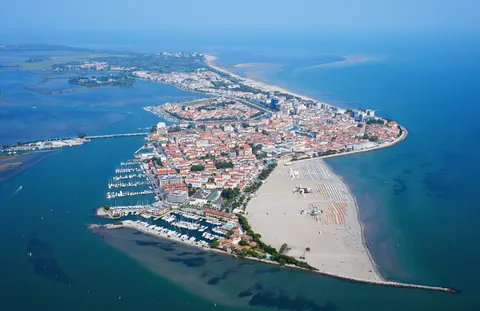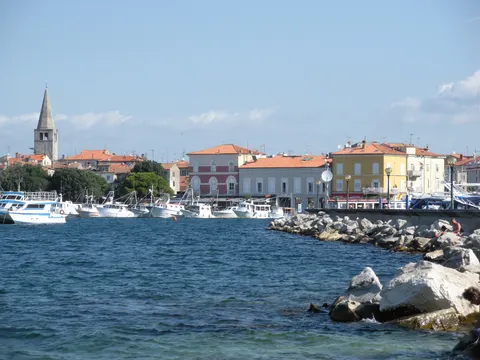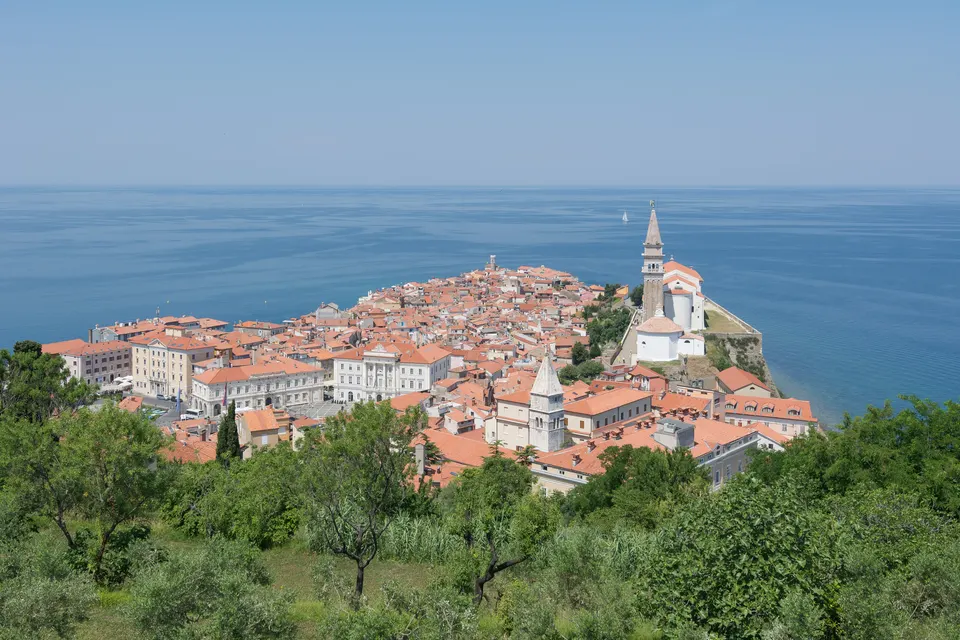

Piran is a resort town on the Gulf of Piran in south-western Slovenia, on the Adriatic coast. It is one of the three major towns of Slovenian Istria and a bilingual place, with Slovene and Italian speakers. Its medieval architecture, with narrow streets and compact houses, is what it is best known for. Piran is also one of Slovenia's major tourist attractions, and it is the seat of its municipality.
Piran, in Municipality of Piran, Slovenia, is home to about 4,192 people.
Why go to Piran?
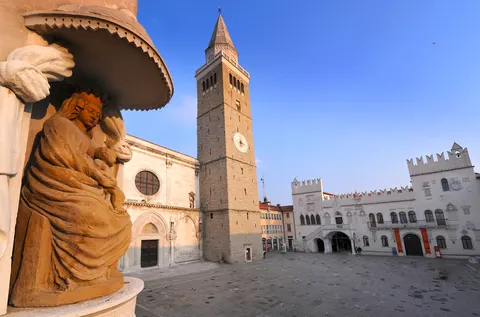
Piran's appeal lies in how strongly its old town reflects Venetian and Austro-Hungarian rule. The town walls, built to guard against Ottoman incursions, still run in parts around the centre, and they show different eras of building. In the middle of town, Tartini Square is named after the violinist and composer Giuseppe Tartini, who was born here, and his bronze statue dominates the space. Above it stands the Cathedral of Saint George, and a Franciscan monastery sits nearby. The Piran Coastal Galleries, a group of contemporary art galleries, add a modern layer to the medieval streets, and the promenade along the beach links the town to Fiesa.
When is the best time to visit Piran?
In July and August the average high reaches 26 °C; in January and February it is closer to 8 °C. Any month suits city breaks.
How do I get to Piran without flying?
Piran has direct bus links to 10 destinations. Within 14 hours, travellers from 1,599 destinations can get here without flying. The bus from Trieste takes 1h 00m; that is about 0.6 kg of CO₂ per person. Poreč is 48 min away by bus, with about 0.9 kg of CO₂ per person. Travelling from Muggia, allow 54 min by bus; that is about 0.5 kg of CO₂ per person.
What to do in Piran
Sergej Mašera Maritime Museum
A museum in Piran.
Aquarium Piran
A park in Piran.
City breaks in Piran
May is the ideal month for city breaks, with average highs of 19 °C.